


HowD 3 Furniture Rendering Makes Furniture Concepts Easier To Visualize And Present
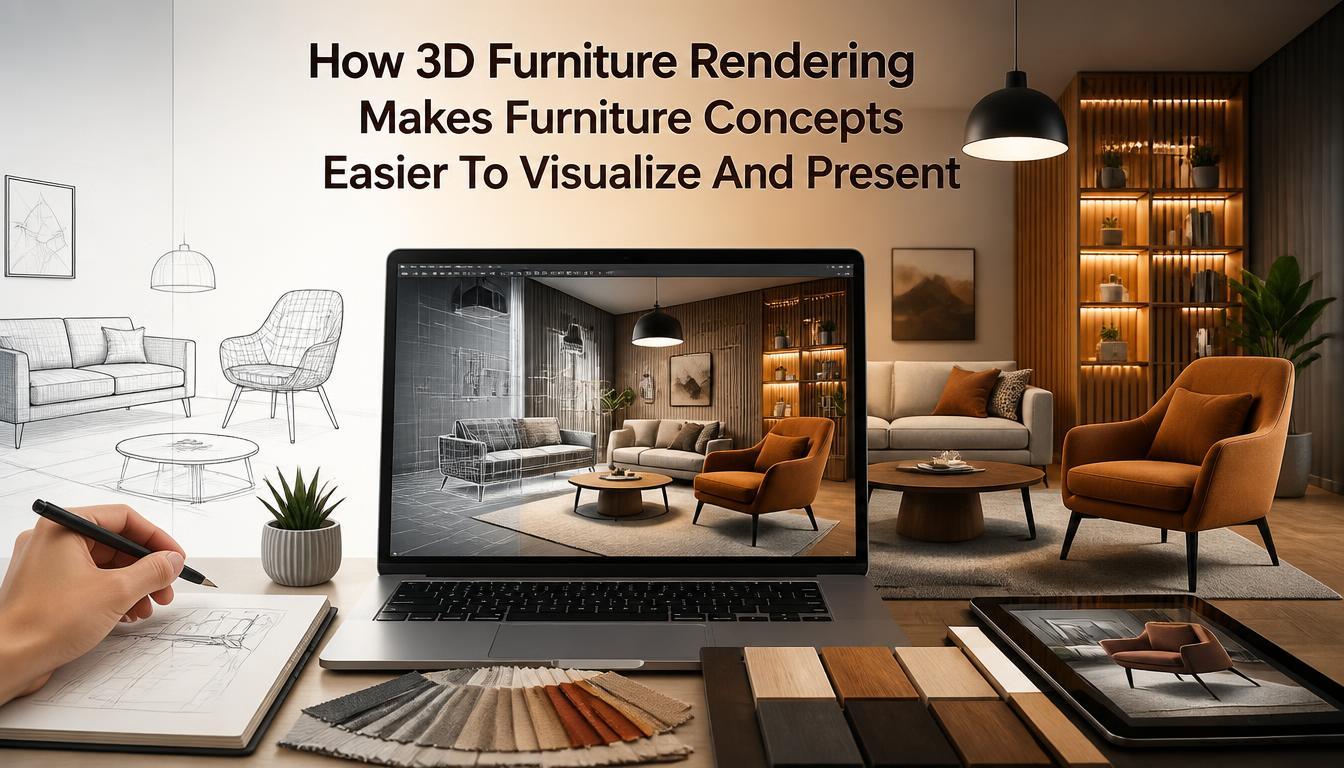
A lounge chair prototype was revised fourteen times last quarter before a single physical unit reached the factory. The changes included different arm shapes, two upholstery changes, and one leg-height change. Every version was reviewed as a render before anything was built. This shows how furniture design is changing. 3D furniture rendering can now give a concept its first realistic look before a physical prototype is made.
SMA Archviz offers 3D furniture rendering services that allow furniture brands to get an idea of how the furniture will look before going into production.
Why Are Sketches No Longer Enough For Furniture Concepts?
A flat sketch cannot convey how the light falls on a rounded armrest or how the fabric will look on the finished chair, which can lead to misunderstanding by clients of the design intended.
3D rendering removes this problem by showing the design in a realistic way before the product is built:
-
Materials, grain, and stitching render at near-photographic accuracy.
-
Lighting can be tested for a showroom, a catalog shoot, or a living room.
-
Dimensions and proportions are locked before any wood is cut.
This is where furniture concept visualization becomes useful. This is not only a design tool but also a way for designers and clients to review the concept and make decisions before proceeding to manufacturing.
Does 3D Furniture Rendering Actually Change Buying Behavior?
The return-rate data also shows why accurate product visuals matter. Furniture already has a relatively low online return rate. In a recent 12-month period, about 8% of U.S. digital buyers returned furniture or home furnishings, as compared to 24% of online fashion shoppers (Statista).
Photorealistic furniture rendering may be helpful in reducing returns due to providing an image of a product close to reality. It allows buyers to see a piece of furniture or household items' size, materials, and texture and assess its quality and overall appearance. By contrast, an unrealistic image may make the product appear different from the actual one, leading to a return.
What Does A Faster Concept-To-Presentation Timeline Look Like?
A physical prototype for one chair version can take a week of shop time. A rendered version can take only a few hours. The time difference becomes much bigger when a designer needs to test five finishes in three different room settings. A furniture design presentation can show all these options side by side, allowing the client to compare them and approve a choice without visiting a showroom.
How Big Is the Industry Behind These Renders?
Furniture manufacturing is a large industry with clear employment data and measurable workforce numbers:
|
Metric |
Figure |
|
Cabinetmakers & bench carpenters employed (US, 2024) |
58,220 |
|
Furniture finishers employed (US, 2024) |
9,780 |
|
Real GDP, furniture & related product manufacturing (US, 2024) |
$23.6 billion |
Sources: BLS, FRED
A large industry, producing and shipping so many products, has a strong reason to find design problems before production starts. Fixing a problem early is easier than finding it after the product has already been made.
What Should You Actually Look For In A Rendering Partner?
Not every rendering studio provides the same level of detail or quality. Before choosing one, check the following:
-
A materials library deep enough to match real fabric and wood-grain suppliers.
-
Lighting setups matched to your actual retail or catalog environment.
-
Turnaround speed that fits iterative design, not just final hero shots.
At SMA Archviz, this review is part of every project brief from the start. This helps ensure the render is not only realistic but also clear and detailed enough for a manufacturer to build the product from.
Final Thoughts
3D furniture rendering is more than a way to make a furniture concept look better. It allows designers to review the product, make changes, and approve it prior to going into production. This can streamline the design process, reduce the need for initial physical prototyping, and addressing design flaws before placing factory order. For furniture companies, the application of 3D rendering at the early design stage allows creating products faster, reducing the cost and complexity of design reviews, and getting high-quality visualizations at relatively low prices.

 English
 Arabic
 Spanish
 Portuguese
 Deutsch
 Turkish
 Dutch
Dutch
 Italiano
 Russian
 Romaian
 Portuguese (Brazil)
 Greek
Greek