


 About
 Terms
 Privacy
How to Choose an Essential Oil Manufacturer and Bulk Supplier
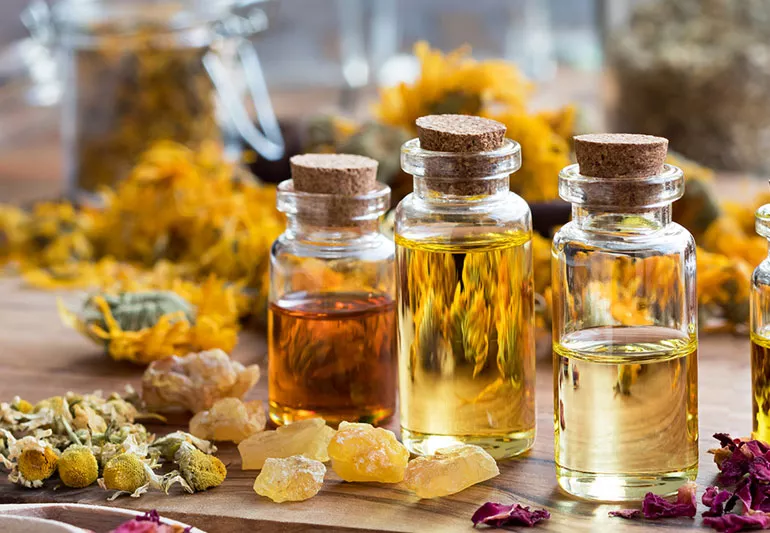
Buying essential oils at wholesale scale is different from purchasing small retail quantities. A professional procurement program should evaluate botanical identity, extraction method, batch consistency, analytical testing, safety documentation, manufacturing controls, packaging, minimum order quantities, lead times, export capability, and commercial terms before approving a supplier. International standards such as ISO 9235 define terminology for aromatic natural raw materials, while ISO standards also provide methods for essential-oil sampling, refractive-index testing, optical-rotation measurement, packaging, storage, and chromatographic analysis.
For B2B buyers, the objective of essential oil wholesale purchasing should therefore be repeatable quality rather than simply securing the lowest price. A capable essential oil manufacturer and bulk supplier should be able to connect every commercial batch with appropriate specifications, test results, traceability information and safety documentation while meeting the buyer's delivery and packaging requirements. Applicable regulatory requirements depend on the destination country and the intended use of the oil, particularly where oils become ingredients in cosmetics, fragrances, pharmaceuticals, foods or other regulated products.
Sourcing and Conventional Quality Control
Essential oils are complex aromatic materials, so buyers should define the required product precisely before requesting quotations. ISO 9235:2021 provides internationally standardized terminology for aromatic natural raw materials, while ISO 3218 establishes principles for naming essential oils. Clear specifications can therefore include the botanical name, plant part, extraction process, geographic origin when commercially relevant, appearance, odor profile and agreed physicochemical limits.
For conventional, non-organic essential oils, quality evaluation should focus on identity, composition, consistency, contamination risk and conformity to the buyer's specification rather than on organic certification. Sampling itself matters: ISO 212 provides general rules for obtaining samples suitable for laboratory examination, and ISO 356 provides guidance on preparing essential-oil test samples for analysis.
Gas chromatography is one of the most important analytical tools used to characterize essential oils. ISO's current work on chromatographic profiling describes capillary gas chromatography as a method for evaluating the relative proportions of components in an essential oil and notes that chromatographic profiles can form part of quality assessment alongside physicochemical characteristics. Buyers may therefore request a GC or GC-MS profile where appropriate, together with specification-based testing.
Other useful tests depend on the individual oil. ISO 280 specifies determination of refractive index, ISO 592 covers optical rotation, and additional ISO methods exist for properties such as ester value. These measurements can help establish whether a batch behaves within the agreed profile for that particular material.
A buyer should avoid treating any single test as proof of complete authenticity. A stronger quality program combines supplier traceability, representative sampling, organoleptic inspection, physicochemical testing and chromatographic analysis against a predetermined specification.
| Documentation or test | What the buyer should verify | Typical procurement purpose |
|---|---|---|
| Certificate of Analysis (COA) | Batch number, specification limits, actual results and approval status | Confirms the supplied batch was tested against agreed requirements |
| Safety Data Sheet (SDS/MSDS) | Product identification, hazards, handling, storage and transport information | Workplace, shipping and safety review |
| GC/GC-MS profile | Characteristic component pattern and unusual deviations | Identity and compositional consistency |
| Refractive index | Result against the agreed specification | Physicochemical quality check |
| Optical rotation | Result where relevant to the specific oil | Identity/consistency assessment |
| Botanical and batch identification | Botanical name, plant part, extraction method and lot reference | Traceability |
| Packaging specification | Container material, closure, fill size and labeling requirements | Storage and handling control |
| Manufacturing/GMP evidence | Scope, validity and relevance to the supplied operation | Supplier qualification where applicable |
The exact test panel should be determined product by product; not every method is relevant to every essential oil.
Documentation, Safety and Compliance
A professional essential oil manufacturer should be able to provide documentation appropriate to the product, market and application. One of the most important documents is the Safety Data Sheet. The United Nations Globally Harmonized System addresses chemical hazard classification and harmonized hazard communication through labels and safety data sheets. The internationally recognized SDS structure contains 16 sections covering matters such as identification, hazards, composition, first aid, firefighting, handling, exposure controls, physical properties, transport and regulatory information.
Terminology also matters: although many businesses still say "MSDS," modern GHS-based systems generally use "Safety Data Sheet" or SDS. Requirements are jurisdiction-specific. For example, ECHA explains that under EU REACH rules an SDS is required for specified hazardous substances and mixtures and must provide information concerning hazards, handling, disposal and transport.
ISO or GMP claims should be evaluated carefully. ISO 22716 provides Good Manufacturing Practice guidance covering the production, control, storage and shipment of cosmetic products; it is therefore particularly relevant when the manufacturing operation falls within the cosmetic-products supply chain. It should not automatically be presented as a universal certification requirement for every raw essential-oil transaction.
Fragrance buyers should also understand IFRA documentation correctly. IFRA states that its Certificates of Conformity are generally prepared for fragrance mixtures rather than raw materials, and an official IFRA Certificate of Conformity is not normally issued for an essential-oil raw material. Essential oils can nevertheless contain constituents subject to IFRA Standards, so suppliers and formulators may need to exchange compositional information relevant to the finished product.
End-use regulation can change dramatically according to claims. In the United States, for example, FDA explains that an essential-oil product promoted solely for cosmetic purposes is treated differently from one marketed with therapeutic claims, which may cause it to be regulated as a drug. Buyers should therefore confirm requirements in the destination market rather than assuming that one documentation package works worldwide.
Bulk Pricing, Packaging and International Logistics
Wholesale pricing usually needs to be evaluated as a complete landed-cost proposal rather than a price-per-kilogram figure alone. Buyers should ask suppliers to quote defined quantities and clearly state what is included: packaging, testing, documentation, inland freight, export handling and international transportation where relevant.
Useful negotiation variables include annual purchase volume, order frequency, MOQ, drum or container size, payment schedule, forecast commitments, production lead time and whether the buyer is purchasing a standard grade or requesting a customized specification. Price discussions are more meaningful when competing quotations use the same oil specification, packaging configuration and trade term.
For bulk packaging and storage, container compatibility and protection from deterioration are essential considerations. ISO 210:2023 provides general requirements and guidance concerning the packaging, conditioning and storage of essential oils. Depending on the oil, quantity and transport mode, suppliers may offer smaller metal containers, drums or other suitable industrial packaging; the appropriate option should be confirmed against the product's compatibility, hazard classification and shipping requirements.
Export buyers should also agree on the Incoterms® rule used in the sales contract. ICC's Incoterms® 2020 rules allocate responsibilities between seller and buyer for matters such as carriage, risk, export/import clearance and, for certain rules, insurance. ICC recommends identifying the chosen rule and the named place or port clearly in the contract.
Some essential oils or preparations may also fall within dangerous-goods transport rules depending on their properties and classification. IATA emphasizes that dangerous goods transported by air must be correctly classified, packed, marked, labeled and documented, while international road transport may be subject to ADR requirements in applicable jurisdictions. The supplier's SDS and transport classification should therefore be reviewed before freight is booked.
Industrial uses for essential oils can include fragrance products, cosmetic formulations and aromatherapy-related products, with regulatory treatment depending on the intended use and claims of the finished product. Buyers serving other sectors should establish their own application-specific specifications and regulatory requirements.
Selecting an Essential Oil Manufacturer and Bulk Supplier
The best supplier is not necessarily the one quoting the lowest initial price. A B2B buyer should evaluate whether the supplier can repeatedly supply material matching the required specification, maintain batch traceability, deliver credible analytical documentation and support the required order volume.
| Supplier attribute | Questions to ask | Strong purchasing signal |
|---|---|---|
| Production capacity | What is the normal monthly or annual capacity for this oil? | Capacity comfortably supports forecast demand |
| Traceability | Can each shipment be linked to production and batch records? | Clear lot-based traceability |
| Testing | Which analyses are conducted for each batch? | Documented methods and batch-specific results |
| COA/SDS availability | Are documents provided before shipment? | Current, product-specific documents |
| MOQ | What is the minimum commercial order? | MOQ aligns with inventory plans |
| Lead time | Is lead time measured from PO, deposit or specification approval? | Clearly defined production and dispatch schedule |
| Packaging | Which bulk pack sizes and materials are offered? | Packaging suitable for product and transport |
| Payment terms | Deposit, balance, LC or other terms? | Terms documented in the quotation or contract |
| Export capability | Which shipping documents can be supplied? | Demonstrated ability to meet destination requirements |
| Quality systems | Which standards or GMP systems apply to the facility? | Relevant scope can be verified rather than assumed |
Before approving a supplier, buyers should also request a representative sample and compare its testing profile with the commercial specification. Maintaining approved specifications and lot records creates a practical benchmark for subsequent shipments.
Define oil and specification
Shortlist wholesale suppliers
Request sample and documents
Evaluate COA, SDS and traceability
Perform laboratory and sensory checks
Agree MOQ, pricing and payment terms
Confirm packaging and Incoterms
Issue purchase order
Pre-shipment batch approval
Dispatch and export documentation
Incoming quality inspection
A structured process like this makes essential oil supplier purchasing more predictable and reduces the risk of discovering specification, documentation or shipping problems after production has begun.
Frequently Asked Questions About Essential Oil Wholesale
What does essential oil wholesale mean?
It generally refers to purchasing essential oils in commercial quantities for manufacturing, formulation, repacking or distribution rather than buying finished retail units.
What should I request from an essential oil manufacturer and bulk supplier?
Request a product specification, batch-specific COA, current SDS, botanical identity, extraction-method information, packaging details, MOQ, lead time, payment terms and applicable quality-system documentation.
Is a COA enough to confirm essential-oil quality?
No. A COA is useful, but supplier qualification should also consider traceability, sampling, analytical methods, specifications and, where appropriate, independent verification.
Which laboratory tests are commonly relevant to essential oils?
Depending on the oil, buyers may use chromatographic profiling, refractive index, optical rotation and other specification-specific physicochemical tests. ISO publishes standardized methods for several of these measurements.
What is the difference between an SDS and a COA?
An SDS communicates hazards, safe handling, storage and related safety information, while a COA records quality-control results for a particular batch or lot. The GHS provides a harmonized structure for SDS information.
Do bulk essential oils require an IFRA certificate?
Not usually in the way finished fragrance mixtures do. IFRA states that Certificates of Conformity are generally not issued for raw materials, although suppliers should communicate relevant restrictions or constituent information where IFRA Standards apply.
How should buyers negotiate bulk essential-oil prices?
Compare quotations at equivalent specifications and volumes, then negotiate around MOQ, annual demand, order frequency, packaging, payment terms, testing requirements and freight responsibilities.
Which packaging is suitable for wholesale essential oils?
The answer depends on the oil, volume, chemical compatibility, storage conditions and transport classification. ISO 210 provides general guidance covering packaging, conditioning and storage of essential oils.
What should an international buyer check before shipment?
Confirm the approved batch, COA, SDS, packing details, dangerous-goods classification where applicable, invoice and shipping documentation, agreed Incoterms® rule and destination-country import requirements.
How do I choose a reliable essential oil wholesale supplier?
Evaluate production capacity, traceability, testing capability, batch documentation, consistency, MOQ, lead time, packaging, payment terms, regulatory awareness and ability to support the intended market. A supplier that can document these areas provides a stronger basis for long-term B2B procurement than price alone.
❤️ Support Friends Aim! View a sponsored ad to help cover our website costs. Thanks!
Support Us — Ad 1 Support Us — Ad 2- Arts, Culture & Design
- Automotive & Transport
- Accounting & Finance
- Advertising & Marketing
- Agriculture & Farming
- Business & Consulting
- Books & Publishing
- Building & Construction
- Beauty & Personal Care
- Baby, Kids & Parenting
- Charity & Social Causes
- Crafts & Handmade
- Careers & Jobs
- Computers & Laptops
- Consumer Electronics
- Entertainment & Events
- Food & Beverages
- Delivery & Logistics
- Digital Media & Content
- Dating & Relationships
- E-Commerce & Retail
- Education & Learning
- Energy & Environment
- Fitness
- Fashion & Apparel
- Gaming & Toys
- Government & Legal
- Gardening
- Health & Medical Care
- Home Decor & Furniture
- IT & Software
- Industrial & Tools
- Import & Export
- Jewelry & Watches
- Lifestyle & Wellness
- Legal Services & Law
- News & Media
- News & Current Affairs
- Religion & Faith
- Sports
- Technology
- Travel & Tourism
- Weddings & Events
- Other

 Arabic
 French
 Spanish
 Portuguese
 Deutsch
 Turkish
 Dutch
 Italiano
 Russian
 Romaian
 Portuguese (Brazil)
 Greek