


 About
 Terms
 Privacy
Why Certain Everyday Sounds Feel Unbearable: Understanding Misophonia and Its Emotional Impact
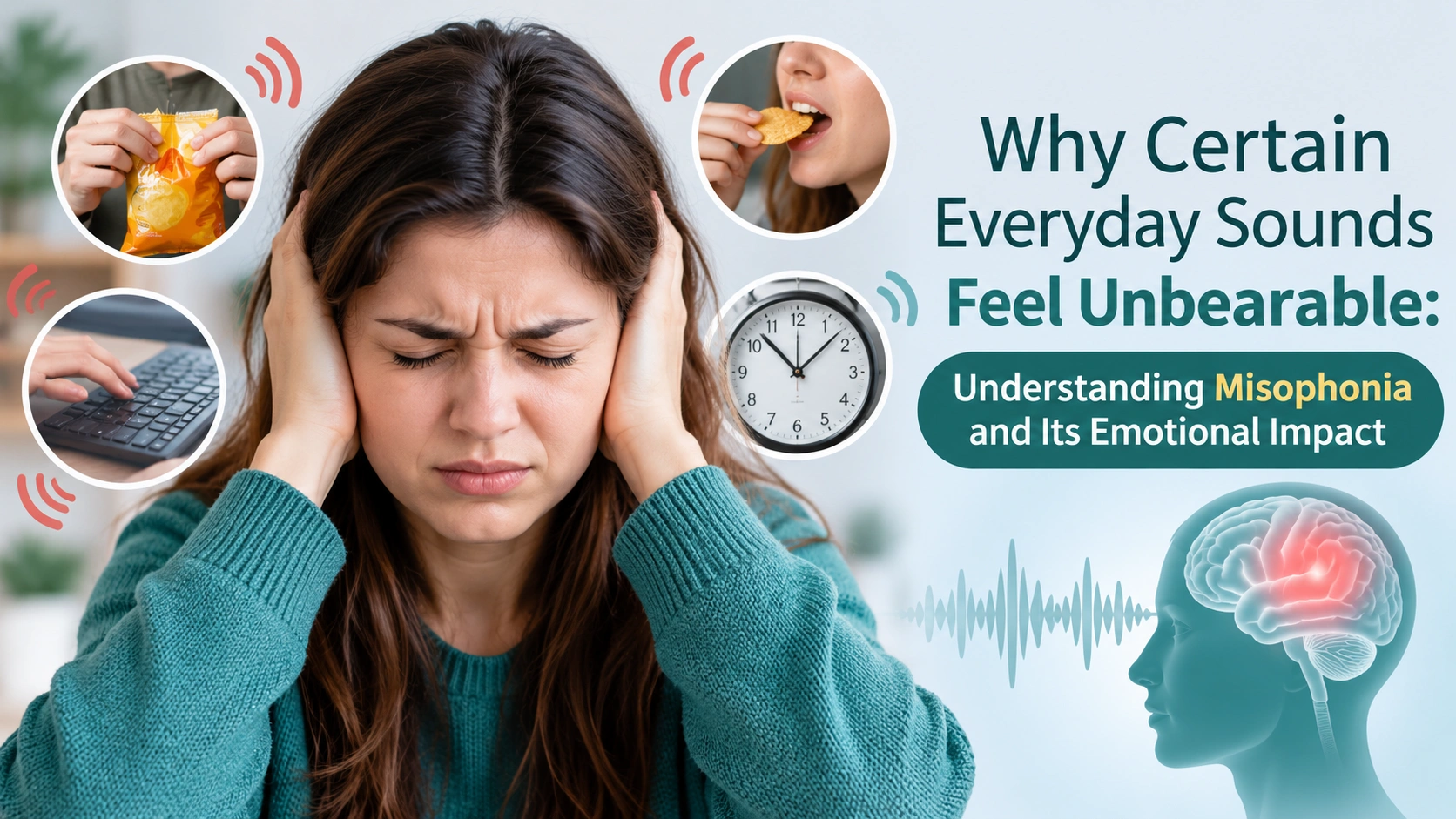
Have you ever experienced intense irritation when hearing someone chew, repeatedly tap a pen, or breathe loudly? While these sounds may seem ordinary to most people, they can trigger unusually strong emotional reactions in others. This experience may be associated with misophonia, a condition in which specific everyday sounds produce intense emotional and physical responses.
The connection between misophonia and mental health is important because sound-triggered reactions can influence concentration, social interactions, personal relationships, and everyday activities. Understanding why certain noises cause such discomfort can help individuals recognize their experiences and identify when professional guidance may be appropriate.
What Is Misophonia?
Misophonia is a condition characterized by strong emotional or physical reactions to particular sounds. It is sometimes described as selective sound sensitivity because individuals typically react to specific noises rather than experiencing discomfort from every sound around them.
For example, someone may comfortably listen to music, conversations, or traffic but experience significant distress when hearing another person chew food. The same sound may not bother someone else at all.
Unlike ordinary irritation, these reactions can feel immediate and difficult to control. Depending on the individual, they may involve anger, disgust, frustration, or an overwhelming desire to move away from the sound.
Misophonia is increasingly recognized as a distinct sound-tolerance difficulty, although its classification and underlying mechanisms are still being studied. Individuals experiencing these reactions may benefit from professional psychiatric evaluation and mental health services to explore related emotional or behavioral concerns.
Why Do Certain Everyday Sounds Trigger Such Strong Reactions?
One unusual aspect of misophonia is that its triggers do not necessarily need to be loud. A quiet chewing sound or repetitive clicking noise may cause more discomfort than a much louder environmental sound.
Researchers suggest that differences in auditory processing and emotional regulation may contribute to these reactions. In people with misophonia, particular sounds may receive an unusually strong emotional response, making them difficult to ignore.
Several processes may be involved:
-
Auditory processing: The brain identifies and interprets incoming sounds, including their patterns and characteristics.
-
Emotional associations: Certain sounds may become strongly associated with unpleasant emotional experiences.
-
Attention and awareness: A triggering noise may become the primary focus of attention, making it difficult to concentrate on other activities.
-
Individual sensitivity: People differ in how they perceive and respond to specific auditory experiences.
These processes may help explain why a repetitive tapping noise can become increasingly distracting even when the individual understands that it is harmless.
However, researchers have not identified one definitive cause of misophonia. Its development and underlying neurological processes remain areas of ongoing investigation.
Common Misophonia Triggers
Misophonia triggers vary considerably between individuals. A noise that causes an intense reaction in one person may be completely unnoticeable to someone else.
Some commonly reported triggers include:
1. Eating and Chewing Sounds
Eating-related noises are frequently reported by people experiencing misophonia. These may include:
-
Chewing with an open mouth.
-
Lip smacking.
-
Crunching food.
-
Slurping drinks or soup.
-
Repeated swallowing.
These sounds can make shared meals particularly uncomfortable, especially when they occur repeatedly or in quiet surroundings.
2. Repetitive Tapping and Clicking
Certain repetitive noises may become difficult to tolerate because of their consistent patterns.
Examples include clicking a pen, tapping fingers against a desk, typing on a keyboard, and repeatedly shaking a leg.
The predictability and repetition of these sounds may make them especially noticeable to someone with misophonia.
3. Breathing and Throat Sounds
Some individuals experience discomfort in response to particular bodily noises, such as:
-
Heavy breathing.
-
Repeated sniffing.
-
Throat clearing.
-
Coughing.
-
Snoring.
These triggers can be particularly difficult to avoid because they frequently occur during ordinary conversations and shared activities.
4. Environmental and Household Sounds
Misophonia is not limited to sounds produced by people. Other reported triggers may include clock ticking, dripping water, paper rustling, animal noises, and repetitive electronic sounds.
The important distinction is that the reaction is associated with particular sound characteristics or patterns rather than simply the overall volume of the environment.
Misophonia Symptoms in Adults: Recognizing the Signs
Misophonia symptoms in adults can involve emotional, physical, and behavioral changes. Their intensity and frequency differ between individuals, and not everyone experiences the same combination.
Emotional Symptoms
Emotional reactions may develop immediately after exposure to a triggering sound. These can include:
-
Sudden anger or irritation.
-
Feelings of disgust.
-
Frustration that seems difficult to explain.
-
An overwhelming urge to stop the noise.
-
Feeling emotionally uncomfortable or overwhelmed.
Some individuals recognize that their reactions may appear stronger than the situation requires. However, understanding this difference does not necessarily make the response easier to control.
Physical Symptoms
Sound triggers may also produce noticeable bodily responses, including:
-
Increased heart rate.
-
Muscle tension.
-
Sweating.
-
Chest tightness.
-
Restlessness.
These physical reactions can occur automatically, even when the individual understands that the sound does not represent an actual threat.
Behavioral Symptoms
Behavioral responses may involve immediate actions intended to reduce exposure to uncomfortable sounds.
For example, an individual might cover their ears, change seats, use headphones, or leave a particular environment when a trigger occurs.
Recognizing these patterns can help individuals understand how misophonia affects their responses to everyday situations.
Misophonia vs. Ordinary Annoyance and General Noise Sensitivity
Not everyone who dislikes chewing, loud breathing, or repetitive tapping experiences misophonia. Ordinary annoyance involves temporary irritation, while general noise sensitivity affects tolerance to a wider range of sounds. Misophonia, however, causes unusually strong emotional reactions to specific sounds, even when they are quiet.
Another condition is hyperacusis, which involves reduced tolerance to sounds because of their loudness or intensity. Misophonia is more closely related to specific sound patterns.
For example, someone with general noise sensitivity may struggle with a noisy restaurant, while someone with misophonia may react strongly to a single person chewing.
Understanding these differences can help identify the appropriate type of assessment and support.
How Misophonia Can Affect Daily Life and Relationships
The impact of misophonia can extend beyond the immediate discomfort caused by a triggering noise. Repeated sound-related reactions may influence personal decisions, social participation, and relationships.
Challenges During Social Activities
Shared meals, family gatherings, meetings, and group activities can become difficult when particular sounds are present.
Individuals may find it challenging to remain engaged in conversations or enjoy social occasions when they are distracted by specific noises.
Difficulties at Work or School
Sound-related discomfort may interfere with concentration in classrooms, offices, and other shared environments.
For example, repeated keyboard sounds, pen clicking, or background noises may make it harder to focus on reading, studying, or completing work-related responsibilities.
Strain on Personal Relationships
Misophonia can sometimes create misunderstandings between family members, friends, and partners.
A person producing a triggering sound may not understand why it causes such a strong reaction. They may interpret the response as criticism or unnecessary frustration.
Over time, these misunderstandings can contribute to disagreements, embarrassment, and difficulties maintaining comfortable interactions.
Reduced Social Participation
Some individuals gradually limit their participation in environments where they expect to encounter triggering sounds.
This may affect their willingness to attend restaurants, travel with others, or participate in group activities. Such restrictions can reduce opportunities for social connection and affect overall quality of life.
Understanding Misophonia and Its Connection to Mental Health
The relationship between misophonia and mental health deserves attention because repeated sound-triggered reactions can influence emotional well-being.
People experiencing misophonia may feel embarrassed about their responses or worry that others will misunderstand their reactions. Some may also experience frustration because they cannot easily explain why particular noises cause such intense discomfort.
Research has identified associations between misophonia and certain mental health or neurodevelopmental conditions, including:
-
Anxiety disorders: Some individuals experience anxiety alongside their sound-related difficulties.
-
Obsessive-compulsive disorder (OCD): Research has explored possible associations between misophonia and obsessive-compulsive symptoms.
-
Attention-deficit/hyperactivity disorder (ADHD): Some studies have reported an overlap between misophonia and attention-related difficulties.
However, these associations do not mean that everyone with misophonia has another mental health or neurodevelopmental condition.
Misophonia should not automatically be classified as an anxiety disorder. Its central characteristic is the intense response to particular sounds, rather than persistent worry or fear.
For additional information, the American Psychiatric Association's overview of misophonia discusses common triggers, emotional reactions, and the condition's impact on everyday functioning.
Recognizing these distinctions helps individuals understand their experiences without assuming that every sound-related difficulty has the same explanation.
When Should Someone Seek Professional Support?
Occasional irritation from everyday sounds is common. However, professional guidance may be worth considering when sound-related reactions repeatedly interfere with important areas of life.
Consider speaking with a qualified healthcare professional if:
-
Particular sounds regularly cause overwhelming emotional reactions.
-
Sound sensitivity interferes with work, education, or personal responsibilities.
-
You experience persistent difficulties during social activities.
-
Your reactions are affecting important relationships.
-
You are unsure whether your symptoms are related to misophonia or another sound-tolerance difficulty.
An appropriate assessment can help clarify the nature of the symptoms, how frequently they occur, and whether they are associated with other concerns.
Depending on the individual's experiences, a healthcare professional may also recommend an audiology assessment to explore possible hearing-related or sound-tolerance difficulties.
How Professional Mental Health Support Can Help
There is currently no single universally established treatment for misophonia. Research is ongoing, and appropriate support depends on the individual's symptoms, circumstances, and any co-occurring conditions.
Depending on the assessment, professional support may involve several approaches:
-
Identifying individual triggers: Understanding which sound patterns produce the strongest reactions and whether certain environments make them more difficult to tolerate.
-
Psychological support: Exploring emotional responses and developing practical ways to manage challenging situations.
-
Addressing related conditions: Evaluating and supporting additional mental health concerns when they are present.
-
Environmental adjustments: Considering reasonable changes, such as quieter workspaces, suitable seating arrangements, or appropriate hearing protection.
At Cordial Psychiatry, individuals can explore professional psychiatric evaluations and mental health services to better understand emotional and behavioral concerns. Support may help identify whether additional mental health difficulties are contributing to an individual's experiences and determine appropriate next steps.
The aim is to understand each person's circumstances rather than assume that every form of sound sensitivity has the same cause.
Frequently Asked Questions About Misophonia
1. What is the main cause of misophonia?
The exact cause is not fully understood. Researchers believe that differences in auditory processing and emotional responses may contribute. Individual experiences and other factors may also play a role.
2. Can misophonia develop in adulthood?
Yes. Although symptoms are often reported during childhood or adolescence, individuals may recognize significant difficulties during adulthood. More research is needed to understand how the condition develops over time.
3. Why does chewing bother people with misophonia?
Chewing is a commonly reported trigger because its repetitive sound pattern may produce an unusually strong emotional response. The reaction is not necessarily related to how loud the chewing is.
4. Is misophonia a form of anxiety?
No. Misophonia is not simply an anxiety disorder. Although some individuals experience anxiety alongside their sound-triggered reactions, the defining feature is an intense response to particular sounds.
5. Can misophonia affect relationships?
Yes. Strong reactions to everyday noises can create misunderstandings between family members, partners, and friends. They may also make shared activities more difficult and affect social interactions.
6. Is there a cure for misophonia?
There is currently no universally established cure. However, professional assessment and appropriate support may help individuals understand their triggers, address related concerns, and reduce the impact on everyday life.
7. When should I consult a mental health professional about sound sensitivity?
Consider seeking professional guidance when reactions to particular sounds regularly cause emotional distress, interfere with relationships, or make everyday activities difficult. A qualified professional can help explore your symptoms and discuss appropriate next steps.
Final Thoughts
Misophonia is more than simply disliking certain noises. For people who experience it, ordinary sounds such as chewing, tapping, or breathing can produce intense emotional and physical reactions.
Understanding the differences between misophonia, ordinary annoyance, and general noise sensitivity is an important part of recognizing the condition. Greater awareness can also help individuals communicate their experiences and understand how sound-related difficulties affect their everyday lives.
With appropriate professional guidance, individuals can explore the nature of their symptoms, identify any related concerns, and consider suitable ways to reduce the impact of misophonia on their relationships, routines, and emotional well-being.
❤️ Support Friends Aim! View a sponsored ad to help cover our website costs. Thanks!
Support Us — Ad 1 Support Us — Ad 2- Arts, Culture & Design
- Automotive & Transport
- Accounting & Finance
- Advertising & Marketing
- Agriculture & Farming
- Business & Consulting
- Books & Publishing
- Building & Construction
- Beauty & Personal Care
- Baby, Kids & Parenting
- Charity & Social Causes
- Crafts & Handmade
- Careers & Jobs
- Computers & Laptops
- Consumer Electronics
- Entertainment & Events
- Food & Beverages
- Delivery & Logistics
- Digital Media & Content
- Dating & Relationships
- E-Commerce & Retail
- Education & Learning
- Energy & Environment
- Fitness
- Fashion & Apparel
- Gaming & Toys
- Government & Legal
- Gardening
- Health & Medical Care
- Home Decor & Furniture
- IT & Software
- Industrial & Tools
- Import & Export
- Jewelry & Watches
- Lifestyle & Wellness
- Legal Services & Law
- News & Media
- News & Current Affairs
- Religion & Faith
- Sports
- Technology
- Travel & Tourism
- Weddings & Events
- Other

 Arabic
 French
 Spanish
 Portuguese
 Deutsch
 Turkish
 Dutch
 Italiano
 Russian
 Romaian
 Portuguese (Brazil)
 Greek