


How to Choose the Right Material for Custom Booklet Boxes
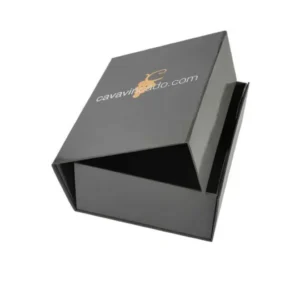
Custom booklet boxes have a book-like structure that can make them useful for cosmetics, gift sets, electronics, apparel, subscription products, and other retail items. Because the box opens similarly to a book, its material needs to support the cover, spine, closure, and internal product area without becoming unnecessarily bulky.
Choosing the right material depends on several factors, including product weight, box size, printing requirements, opening style, storage, and shipping conditions. A lightweight product may need a different board than a heavier retail item, while a premium gift set may require a rigid structure.
Start With the Product Weight
The weight of the product should be one of the first considerations when selecting booklet box material.
Lightweight products such as cosmetics, small accessories, stationery, and gift items may work well with folding paperboard. Heavier products may require thicker board or a rigid construction to maintain the shape of the package.
The larger the product and the greater its weight, the more attention should be given to the box's structural strength.
Consider Folding Paperboard
Folding paperboard is commonly used for lightweight retail packaging. It can be cut, scored, folded, and printed into a booklet-style structure.
This material can be suitable for:
- Small cosmetics
- Stationery
- Lightweight accessories
- Small gift products
- Promotional items
- Retail samples
One advantage is that the finished boxes can often be supplied flat, making them easier to store before use.
Explore Rigid Board for Premium Products
Rigid board provides a thicker and more substantial structure than standard folding paperboard. It may be considered for premium products where the box itself needs a more solid feel.
Rigid booklet boxes can work well for:
- Jewelry
- Watches
- Premium cosmetics
- Luxury gift sets
- Electronics
- High-value accessories
The additional material can increase the overall packaging cost and storage requirements, so it should be selected based on the product and intended presentation.
Think About Corrugated Materials for Shipping
If a booklet-style package needs additional resistance during transportation, corrugated material may be considered for certain applications.
Corrugated board consists of layers that provide a different structural profile from standard paperboard. It can be useful when the packaged product is heavier or when the box needs to handle more demanding shipping conditions.
However, the final structure should still maintain the booklet-style opening and closing mechanism.
Consider Kraft Board
Kraft-based materials can provide a natural appearance and are often considered for brands that prefer a simple paper-focused aesthetic.
Kraft booklet boxes can be used for products such as handmade goods, stationery, candles, small food-related products, and natural personal-care items.
The printing appearance may differ from coated white board because the natural surface can affect how colors appear. This should be reviewed before final production.
Choose White Paperboard for Detailed Printing
White paperboard can provide a clean background for logos, product photography, illustrations, and detailed graphics.
It may be suitable when the exterior design depends heavily on accurate colors or fine printed details.
If a brand uses specific colors across multiple packaging formats, a printed physical sample can help confirm how those colors appear on the selected board.
Consider Coated and Uncoated Surfaces
The surface treatment can influence both the appearance and handling of a booklet box.
Coated board generally provides a smoother printing surface, while uncoated materials can create a more natural paper texture.
The right option depends on whether the packaging requires detailed graphics, a tactile surface, handwriting space, or a particular visual style.
Match the Material to the Closure
Booklet boxes can use different closure systems, including magnets, tabs, ribbons, or locking flaps.
The material needs to provide enough strength around the closure area. Repeated opening and closing can place stress on the cover and spine.
For a magnetic closure, the box construction must also accommodate the magnets without causing the cover to become distorted.
Consider the Box Spine
The spine is a defining part of a booklet box. It needs to bend or open smoothly while maintaining its connection between the front cover and base.
If the board is too thick or the scoring is not properly designed, the box may become difficult to open.
Material thickness and scoring should therefore be evaluated together rather than choosing board thickness alone.
Think About Interior Inserts
The material selection should account for the internal insert as well as the outer box.
A booklet box containing several products may use paperboard dividers, molded inserts, foam, or other internal structures. These components can affect the available space inside the box.
The outer material should be strong enough to support the complete packaged weight.
Consider Moisture and Product Conditions
Some products may be exposed to moisture, oils, creams, or other substances. The packaging material should be selected according to the environment in which the box will be stored and used.
For products that may create moisture inside the package, suitable coatings or internal barriers may need to be considered.
The box should not be treated as a substitute for appropriate primary product containers or seals.
Choose Material Based on Shipping Needs
A booklet box intended for retail shelves may have different material requirements from one that will be shipped directly to customers.
For e-commerce products, consider the complete packaging system. The booklet box may be placed inside a protective shipping carton, or it may serve as part of the shipping package itself.
Testing the assembled package can help determine whether the selected material is sufficient for the intended handling conditions.
Balance Material Thickness With Storage
Thicker materials can provide greater structural support, but they may also increase the size and weight of the finished packaging.
For businesses ordering packaging in large quantities, this can affect storage space and transportation costs.
The goal should be to select enough material for the product and packaging structure without adding unnecessary thickness.
Consider Sustainability
Material selection can also be influenced by recycling and waste considerations. Paperboard, kraft board, and corrugated materials are commonly considered for paper-based packaging applications.
However, the complete package should be evaluated rather than focusing only on the outer board. Laminations, coatings, magnets, plastic windows, and mixed-material inserts can affect how the finished package is handled after use.
Test Different Materials Before Production
When two or more materials appear suitable, physical samples can help determine which one works better.
Test each option for:
- Product fit
- Box rigidity
- Spine movement
- Closure performance
- Printing quality
- Surface appearance
- Insert compatibility
- Shipping performance
A sample can reveal differences that are difficult to judge from material specifications alone.
Final Thoughts
Choosing the right material for custom booklet boxes depends on the product, box structure, weight, opening mechanism, printing requirements, and distribution method. Folding paperboard may suit lightweight retail products, while rigid board can provide a more substantial structure for premium items. Kraft, coated paperboard, and corrugated materials offer other options depending on the intended application.
The most practical choice is not necessarily the thickest or most expensive material. It is the material that provides the required structure, supports the product, works with the booklet-style construction, and fits the packaging's storage and shipping requirements.

 English
 Arabic
 French
 Spanish
 Portuguese
 Deutsch
 Turkish
 Dutch
Dutch
 Italiano
 Romaian
 Portuguese (Brazil)
 Greek
Greek