


 About
 Terms
 Privacy
Islamic History and Culture: A Journey Through Knowledge and Heritage
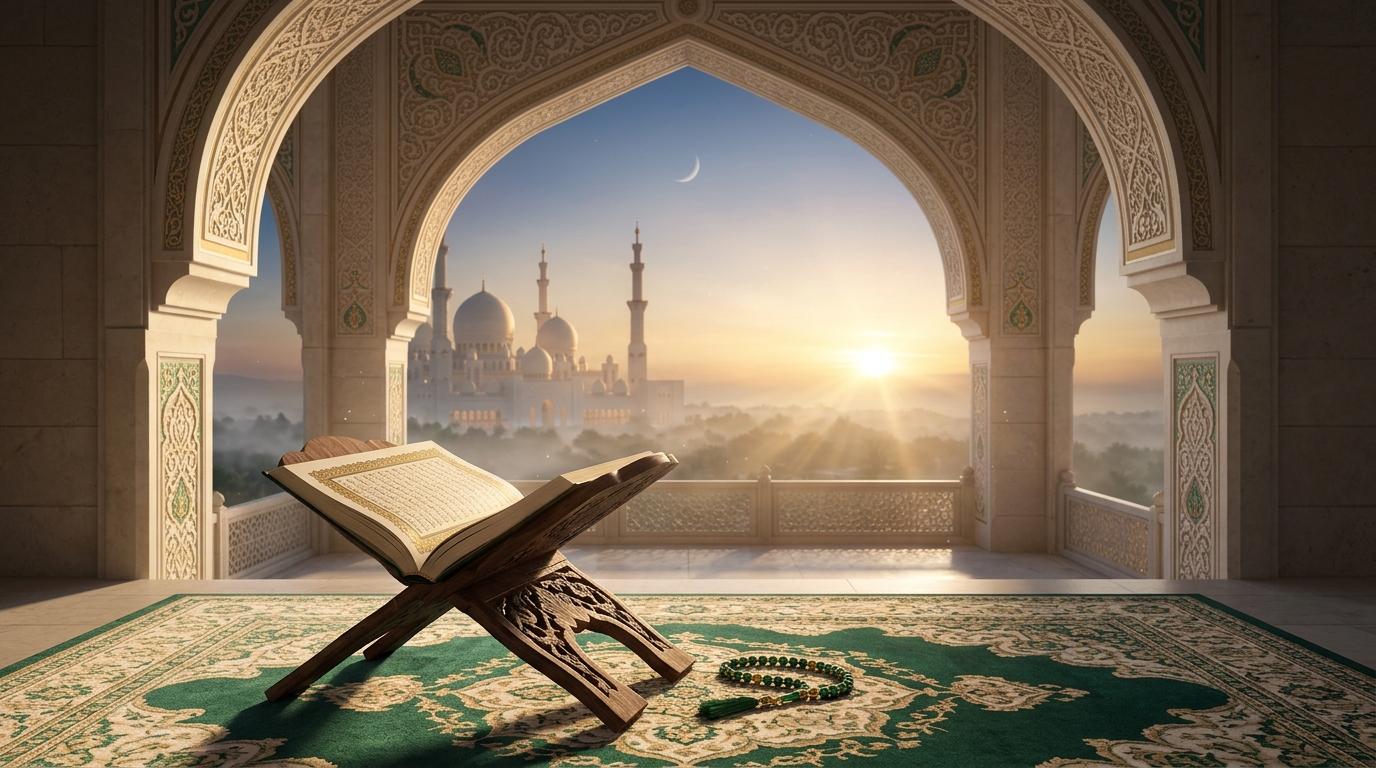
History helps people understand how beliefs, ideas, communities, and civilizations develop over time. Islamic history includes the life of Prophet Muhammad (peace be upon him), the early Muslim community, the growth of learning, and the development of diverse cultures. Readers looking for a meaningful Islam Article can explore this history to understand how Islamic faith influenced education, architecture, literature, trade, and social life across different regions. Although Muslim communities have never been culturally identical, they share important religious foundations that connect them through belief and worship.
The Beginning of Islam in Arabia
Islam began in the Arabian Peninsula in the seventh century. Prophet Muhammad (peace be upon him) was born in Makkah, a city that was an important centre of trade and religious activity.
According to Islamic belief, the first revelation came to him through the Angel Jibreel when he was in the Cave of Hira. These revelations continued over a period of approximately twenty-three years and were later preserved in the Quran.
The Prophet began calling people towards the worship of one God and encouraged honesty, charity, justice, and care for vulnerable members of society.
His message challenged several social practices of the time. Early Muslims faced opposition, and some experienced hardship because of their beliefs.
The Migration to Madinah
The migration from Makkah to Madinah, known as the Hijrah, was a major event in Islamic history. Prophet Muhammad (peace be upon him) and his followers migrated after facing serious opposition.
In Madinah, the Muslim community developed a more organized social and religious life. The Prophet established relationships between different groups and helped create arrangements for community responsibilities.
The Hijrah is especially significant because the Islamic calendar uses it as its starting point. The event also represents perseverance, faith, and the importance of building a supportive community.
Building a Community
Life in Madinah involved worship, education, social agreements, and the organization of community affairs.
The mosque became an important place for prayer and gathering. It also served as a centre for learning, consultation, and community interaction.
The early Muslim community included people from different backgrounds. Its development contributed to the spread of Islam beyond its original setting.
The Spread of Islam Across Different Regions
After the lifetime of Prophet Muhammad (peace be upon him), Islam spread to many parts of the world through different historical processes.
Muslim communities developed across the Middle East, North Africa, Central Asia, South Asia, and other regions. Trade, scholarship, migration, political developments, and interactions between communities all played roles in this expansion.
The spread of Islam did not create one uniform culture. Instead, Muslims in different regions developed traditions influenced by local languages, customs, architecture, clothing, food, and artistic practices.
An informative Islam Article about history should recognize this diversity. Islamic religious principles connect Muslim communities, but cultural expressions vary considerably from one place to another.
The Growth of Islamic Learning
Education and scholarship became important parts of many Muslim societies. Scholars studied religious subjects alongside mathematics, medicine, astronomy, geography, philosophy, literature, and other fields.
Libraries, schools, study circles, and educational institutions supported the development and preservation of knowledge.
Religious Scholarship
Islamic scholars developed disciplines to study the Quran, Hadith, Islamic law, Arabic language, and theology.
These fields helped preserve religious texts, explain their meanings, and address questions faced by Muslim communities.
The development of Islamic jurisprudence involved scholarly methods and different schools of thought. These traditions contributed to discussions about worship, family matters, business, and social responsibilities.
Mathematics and Astronomy
Muslim scholars contributed to mathematical and astronomical studies. Their work included the development and transmission of mathematical methods, the study of algebra, astronomical observations, and the preparation of astronomical tables.
These fields had practical applications in navigation, calendars, measurement, and scientific study.
Medicine and Healthcare
Medical scholarship developed in several historical Muslim societies. Physicians wrote medical texts, studied earlier traditions, and contributed to the organization of healthcare.
Hospitals in some major cities provided treatment and became centres for medical practice and learning.
These historical developments formed part of a wider exchange of knowledge between different civilizations.
Important Centres of Islamic Civilization
Several cities became well-known centres of learning, trade, culture, and religious life.
Baghdad
Baghdad became an important intellectual and political centre during the Abbasid period. Scholars, translators, physicians, mathematicians, and writers contributed to its cultural development.
The city became associated with major scholarly activities, including the translation and study of works from different intellectual traditions.
Cordoba
Cordoba, in Muslim-ruled parts of the Iberian Peninsula, became known for architecture, education, libraries, and urban development.
Its history reflects the interaction of Muslim, Christian, and Jewish communities in different periods, although relationships between these groups varied over time.
Cairo
Cairo developed into an important centre of Islamic learning and architecture. Al-Azhar became a major institution for religious education and scholarship.
The city's mosques, historic buildings, and educational traditions remain significant parts of its heritage.
Samarkand
Samarkand was an important city along historical trade routes in Central Asia. It became associated with scholarship, architecture, craftsmanship, and cultural exchange.
Its historical monuments demonstrate the artistic and architectural achievements of several Muslim dynasties.
Islamic Architecture and Artistic Heritage
Islamic architecture is one of the most recognizable expressions of Muslim cultural history. Mosques, educational institutions, gardens, palaces, and public buildings developed distinctive architectural features in different regions.
Common elements include domes, arches, courtyards, geometric patterns, calligraphy, and decorative tilework. However, not every Islamic building contains all these features.
Mosque Design
Mosques are places of worship where Muslims gather for daily prayers, Friday prayers, and religious activities.
Many mosques include a prayer hall, a mihrab indicating the direction of prayer, and a minaret. Their designs vary according to regional traditions, available materials, climate, and historical periods.
Geometric Patterns and Calligraphy
Geometric designs are widely used in Islamic art and architecture. Repeated shapes and carefully arranged patterns create detailed decorative surfaces.
Arabic calligraphy is another important artistic tradition. Quranic verses and other religious expressions have been written in different calligraphic styles.
These forms of art reflect the relationship between language, mathematics, craftsmanship, and religious culture.
Gardens and Public Spaces
Gardens have appeared in several historical Muslim architectural traditions. They may include water channels, shaded walkways, trees, and carefully arranged plants.
Their designs often reflect regional environmental conditions and artistic preferences.
Islamic Culture Across the World
Muslim communities live in many countries and speak hundreds of languages. Their everyday customs reflect local history as well as shared religious practices.
For example, food traditions in South Asia differ from those in North Africa, the Middle East, Southeast Asia, and other regions. Clothing, wedding celebrations, music traditions, and forms of hospitality also vary.
Ramadan and Eid are widely observed, but local customs surrounding these occasions can differ.
Understanding this diversity helps avoid the assumption that one country's traditions represent all Muslims.
Ramadan and Eid in Muslim Communities
Ramadan is the ninth month of the Islamic lunar calendar. Muslims who are able and meet the relevant conditions fast from dawn until sunset.
The month is associated with prayer, Quran recitation, charity, reflection, and self-discipline.
Families and communities often gather for iftar, the meal at sunset that ends the daily fast. Many Muslims also attend additional night prayers during Ramadan.
Eid al-Fitr marks the end of Ramadan. It is commonly celebrated through prayer, family visits, charitable giving, and shared meals.
Eid al-Adha is connected with the Hajj pilgrimage and the tradition of Prophet Ibrahim (peace be upon him). It is observed through prayer, sacrifice by those who meet the requirements, and sharing with others.
These occasions bring religious meaning and community participation together.
The Role of Trade and Cultural Exchange
Trade connected Muslim communities with many regions across Africa, Asia, and Europe. Merchants transported goods, shared knowledge, and developed relationships with people from different cultures.
Trade routes also contributed to the exchange of languages, artistic techniques, scientific ideas, and religious knowledge.
In some regions, Muslim merchants and travelling scholars played roles in introducing Islamic teachings. The spread of Islam through trade and personal interaction was a gradual process that differed from one location to another.
These historical connections demonstrate that cultural exchange was an important part of the development of Muslim societies.
Islamic Heritage in the Modern World
Islamic heritage continues to influence education, architecture, literature, public life, and cultural identity.
Historic mosques and monuments attract visitors and researchers interested in religious and architectural history. Museums and libraries preserve manuscripts, artwork, and objects connected with Muslim civilizations.
Modern educational institutions also study the contributions of earlier Muslim scholars. Their work forms part of a broader history of international intellectual exchange.
At the same time, Muslim communities continue to respond to modern questions involving technology, education, family life, finance, and social responsibilities.
A balanced understanding of Islamic heritage should recognize both historical achievements and the complex realities of different periods. History includes progress, disagreement, political conflict, and cultural exchange. Studying it carefully provides a more complete picture than relying only on simplified accounts.
How to Study Islamic History Responsibly
Readers can develop a stronger understanding of Islamic history by using reliable books, academic publications, historical records, and educational resources.
It is useful to distinguish between religious beliefs, historical events, scholarly interpretations, and later cultural traditions.
Some events are described differently by different historians. When accounts disagree, readers should examine the evidence and understand the context rather than accepting every claim without question.
Studying timelines, important personalities, major cities, and historical periods can also make complex information easier to follow.
Conclusion
Islamic history is a broad record of faith, learning, architecture, trade, cultural development, and community life. It began with the message of Prophet Muhammad (peace be upon him) and developed across many regions, where Muslim communities created diverse traditions while sharing central religious beliefs. From the scholarly activities of Baghdad to the architecture of Cordoba and the educational heritage of Cairo, Islamic civilization has contributed to many areas of human history. A valuable Islam Article should present this heritage with accuracy, recognize cultural diversity, and encourage readers to study historical events through reliable sources and balanced perspectives.
Frequently Asked Questions
When did Islam begin?
Islam began in the seventh century in the Arabian Peninsula, with the first revelations received by Prophet Muhammad (peace be upon him).
What was the Hijrah?
The Hijrah was the migration of Prophet Muhammad (peace be upon him) and his followers from Makkah to Madinah. It is the starting point of the Islamic calendar.
Which cities were important centres of Islamic learning?
Baghdad, Cordoba, Cairo, and Samarkand were among the important historical centres associated with scholarship, culture, and architecture.
What are common features of Islamic architecture?
Common features include domes, arches, courtyards, geometric patterns, calligraphy, and minarets, although architectural styles differ across regions.
Are all Muslim cultures the same?
No. Muslim communities share important religious foundations, but their languages, food, clothing, celebrations, and local customs vary around the world.
What is the importance of Ramadan?
Ramadan is a month of fasting, worship, Quran recitation, reflection, generosity, and spiritual discipline for Muslims.
How can readers study Islamic history?
Readers can use reliable historical books, academic publications, preserved records, and educational resources while paying attention to historical context and different scholarly interpretations.
❤️ Support Friends Aim! View a sponsored ad to help cover our website costs. Thanks!
Support Us — Ad 1 Support Us — Ad 2- Arts, Culture & Design
- Automotive & Transport
- Accounting & Finance
- Advertising & Marketing
- Agriculture & Farming
- Business & Consulting
- Books & Publishing
- Building & Construction
- Beauty & Personal Care
- Baby, Kids & Parenting
- Charity & Social Causes
- Crafts & Handmade
- Careers & Jobs
- Computers & Laptops
- Consumer Electronics
- Entertainment & Events
- Food & Beverages
- Delivery & Logistics
- Digital Media & Content
- Dating & Relationships
- E-Commerce & Retail
- Education & Learning
- Energy & Environment
- Fitness
- Fashion & Apparel
- Gaming & Toys
- Government & Legal
- Gardening
- Health & Medical Care
- Home Decor & Furniture
- IT & Software
- Industrial & Tools
- Import & Export
- Jewelry & Watches
- Lifestyle & Wellness
- Legal Services & Law
- News & Media
- News & Current Affairs
- Religion & Faith
- Sports
- Technology
- Travel & Tourism
- Weddings & Events
- Other

 Arabic
 French
 Spanish
 Portuguese
 Deutsch
 Turkish
 Dutch
 Italiano
 Russian
 Romaian
 Portuguese (Brazil)
 Greek