


 About
 Terms
 Privacy
Choosing an RFID Tag Reader for Different Fisheries Research Environments
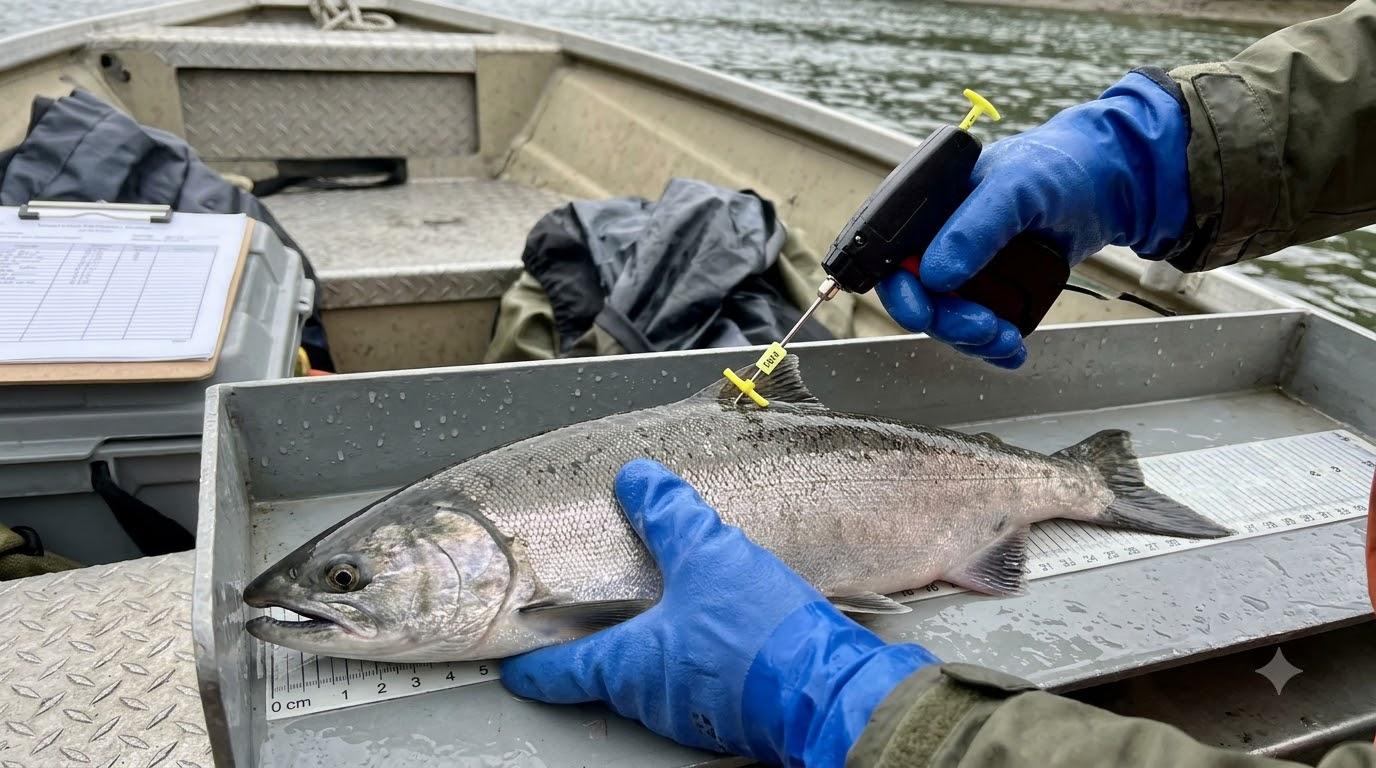
A fisheries research team working in a laboratory may have very different equipment requirements from a team collecting data beside a river or at a hatchery. One project may prioritise easy connection to a computer, while another needs a portable device that stores identification codes during fieldwork.
That is why selecting an RFID tag reader for different fisheries research environments requires more than comparing product names. Researchers should understand where the reader will be used, which tags it must detect and how the identification data will be recorded.
A reader that suits one research setting may not be the most practical option for another. This guide explains how to match reader features to common working environments and create a more suitable equipment selection process.
1. Begin With the Environment in Which the Reader Will Be Used
Before comparing devices, identify the main working environment.
Most fisheries identification projects involve one or more of these settings:
-
Laboratories
-
Hatcheries
-
Rivers, lakes and outdoor sampling locations
-
Aquaculture facilities
-
Research vessels or mobile sampling stations
-
Multiple locations using a shared research protocol
Each environment creates different practical requirements.
A laboratory may have stable power access and nearby computers. A remote survey location may require a portable reader with internal memory. A hatchery may process a large number of fish and benefit from a streamlined connection between identification and measurement equipment.
The project should identify its main use case and any secondary environments before choosing a model.
2. Select a Reader for Laboratory Work
Laboratory environments often provide more controlled conditions than outdoor sampling. Researchers may have access to computers, standardised workstations and established data-management procedures.
Important considerations include:
Computer connectivity: Check whether the reader supports the connection method required by the laboratory's existing equipment.
Tag compatibility: Confirm that the reader detects the exact tag formats used in the research.
Repeatability: A consistent reading procedure helps different researchers follow the same method.
Data transfer: Confirm that codes can be transferred into the laboratory's record system without introducing avoidable manual steps.
Documentation: Keep the relevant manual, configuration details and equipment records accessible to staff.
A laboratory may not need every portable feature available in a handheld reader. However, portability can still be valuable if equipment is moved between rooms or sampling stations.
3. Choose Equipment for Hatchery Operations
Hatcheries may involve repeated measurements and identification activities across many fish. The research workflow may include recording tag codes, length, weight, species and other study-specific information.
In this setting, the reader should be considered alongside the measurement and data-recording equipment.
Ask:
-
Can the reader connect to the devices used by the hatchery?
-
Will identification codes be recorded digitally?
-
Does the workflow need to connect codes with measurements?
-
Can the team process the expected number of fish efficiently?
-
How will records be checked and exported?
A connected workflow can reduce the need to copy information manually between devices, but only when the reader, software and other equipment are compatible.
Voda IQ's VodaTrak software information describes integration with compatible readers and the Veloce Measuring Board, allowing tag detections and length measurements to be associated with individual records. The specific equipment combination should be confirmed before implementation.
4. Prioritise Portability for Field Research
Outdoor research can involve transport between sampling locations, changing weather conditions and limited access to charging or computer equipment.
A portable reader may be useful when researchers need to identify fish away from a permanent workstation.
Consider:
-
Physical size and weight
-
Battery and charging arrangements
-
Internal memory
-
Display readability
-
Carrying case
-
Environmental protection
-
Ease of operation while wearing field equipment
-
Data-transfer options after sampling
A reader with internal memory may help when immediate connection to a computer is not practical. However, researchers should understand how many codes it can store and how the information will be transferred later.
Field suitability should be tested under the conditions expected during the actual study.
5. Assess Requirements for Aquaculture and Monitoring Facilities
Aquaculture and monitoring facilities may combine repeated identification with operational record keeping.
The project may need to connect identification codes with information such as:
-
Fish group or cohort
-
Sampling or handling date
-
Growth measurements
-
Facility or tank location
-
Research treatment or observation
-
Relevant environmental information
The reader should fit the data process used by the facility. A device that can detect a tag but cannot transfer the code into the intended record system may create additional manual work.
Where several people operate the equipment, training and consistent procedures are especially important.
6. Check Tag Technology Before Selecting a Model
Reader features are useful only when they support the project's tags.
Check the exact technology and identification formats required. Product specifications may refer to FDXA, FDXB, HDX or other supported formats. These terms should be compared with the specifications of the tags being used.
Do not select a reader based only on the word "universal". Confirm the supported formats and any limitations with the manufacturer or supplier.
Voda IQ lists different handheld readers with different combinations of supported tag formats. Its product information describes the R8BT as supporting FDXB, FDXA, HDX and EM4102, while the EnterpriseXR+ listing describes FDXA, FDXB and temperature-sensing tag support. Check the latest manuals for the exact model being considered.
7. Compare Memory, Connectivity and Data Handling
Three features deserve particular attention when selecting an RFID reader.
Internal memory
Memory can be useful when researchers collect codes without transferring them immediately. Estimate the number of readings expected between data transfers and choose a capacity that suits the workflow.
Connectivity
USB may be appropriate for a computer-based process, while Bluetooth can support wireless connection to compatible mobile devices. Confirm operating-system and software requirements before relying on either connection.
Data management
The project should establish how tag codes move from the reader into the research dataset. If researchers need to connect codes with biological measurements, the software and reader should support that workflow.
A complete system should make it clear where information is stored, how it is backed up and how it can be exported for analysis.
8. Use This Environment-Based Comparison
|
Research environment |
Features to prioritise |
Important question |
|
Laboratory |
Computer connectivity, compatibility, repeatable operation |
How will readings enter the laboratory database? |
|
Hatchery |
Fast workflow, measurement integration, staff consistency |
Can tag codes be connected to fish measurements? |
|
Remote field survey |
Portability, battery, memory, protection |
Can researchers collect and retain codes without immediate computer access? |
|
Aquaculture facility |
Data integration, consistent records, ease of operation |
Can identification records connect with facility information? |
|
Multi-site programme |
Standardisation, compatible equipment, export process |
Can every location follow the same identification and data procedure? |
A project may use more than one environment. In that case, select equipment that meets the essential requirements across all intended settings, or establish a documented equipment configuration for each location.
9. Evaluate the Complete Equipment System
A reader should not be evaluated in isolation. The full identification system may include:
-
PIT tags
-
Readers
-
Applicators and needles
-
Mobile devices or computers
-
Measurement equipment
-
Data-management software
-
Charging and connection accessories
-
Backup equipment
If one component is incompatible with another, the research team may face delays or manual workarounds.
Prepare a simple equipment map before purchasing. List each device, its role, the required connection and the information it should produce.
This helps the project identify compatibility gaps early.
10. Test Before Making the Final Selection
A demonstration or product specification is useful, but it does not replace testing the intended setup.
A practical evaluation should include:
-
Confirming the exact tag formats.
-
Testing a known compatible tag.
-
Checking the reader's basic operation.
-
Connecting the reader to the intended computer or mobile device.
-
Confirming that codes transfer correctly.
-
Testing the process in the intended environment.
-
Reviewing the results with the staff who will use the device.
The test should focus on the actual tasks the reader must perform. A project does not need to evaluate every feature if some functions are irrelevant to its research.
Common Mistakes When Selecting an RFID Reader
Choosing a model before checking tag formats: Compatibility should be established first.
Ignoring the working environment: A laboratory-focused choice may not suit remote fieldwork.
Overlooking data transfer: The reader must fit the complete research-record process.
Buying more memory than necessary: Capacity should reflect the actual collection workflow.
Assuming Bluetooth guarantees compatibility: The reader, device and application must all work together.
Failing to train operators: Equipment performance can be affected by inconsistent procedures.
Illustrative Case Study: One Research Programme, Two Working Environments
This is a hypothetical example, not a report of an actual Voda IQ customer project.
A research organisation conducts fish identification in both a hatchery and outdoor survey locations. Initially, it considers purchasing the same basic equipment for every activity.
During planning, the team recognises that the hatchery has access to tablets and measurement equipment, while field researchers sometimes work without an immediate connection to a computer.
The organisation prepares separate workflow requirements. It evaluates data integration for hatchery work and portability, memory and battery arrangements for field surveys. It then tests the selected equipment combinations before adopting them.
The result is a clearer equipment plan that accounts for both environments while maintaining a consistent approach to identification records.
Frequently Asked Questions
1. What is the best RFID reader for fisheries research?
The best model depends on the tag technology, research environment, data volume, connectivity requirements and software workflow. There is no single reader that is automatically suitable for every project.
2. Should laboratory and field researchers use the same reader?
They can, provided the reader meets the requirements of both environments. Some projects may benefit from different configurations or models for laboratory and field activities.
3. Is internal memory important in a fish RFID reader?
It can be valuable when researchers need to collect tag codes away from a computer or mobile device. The required capacity depends on the number of readings collected between data transfers.
4. Can an RFID reader connect to fisheries software?
Some readers can connect to compatible applications or data-management systems. Confirm the exact reader, device and software combination before purchasing.
5. What does multi-format compatibility mean?
It means a reader supports more than one identification technology or tag format. The exact supported formats must be checked in the manufacturer's documentation.
6. How should a research team test a new reader?
Test it with compatible tags, check its basic operation, connect it to the intended device and confirm that identification codes enter the correct research records.
Conclusion
The right reader depends on where and how researchers work. Laboratory teams may prioritise computer connectivity and repeatable records, while field teams may need portability, memory and suitable environmental protection. Hatcheries and aquaculture facilities may place greater emphasis on connecting identification with measurements and operational data.
A careful selection process starts with tag compatibility, defines the working environment and tests the complete equipment system before purchase. By matching features to real research tasks, teams can avoid unnecessary costs and improve the consistency of their identification workflow.
An appropriate RFID tag reader should support the full process from detection to data management. Explore Voda IQ's RFID readers and PIT identification products to review available models and compare their documented specifications with your research requirements.
❤️ Support Friends Aim! View a sponsored ad to help cover our website costs. Thanks!
Support Us — Ad 1 Support Us — Ad 2- Arts, Culture & Design
- Automotive & Transport
- Accounting & Finance
- Advertising & Marketing
- Agriculture & Farming
- Business & Consulting
- Books & Publishing
- Building & Construction
- Beauty & Personal Care
- Baby, Kids & Parenting
- Charity & Social Causes
- Crafts & Handmade
- Careers & Jobs
- Computers & Laptops
- Consumer Electronics
- Entertainment & Events
- Food & Beverages
- Delivery & Logistics
- Digital Media & Content
- Dating & Relationships
- E-Commerce & Retail
- Education & Learning
- Energy & Environment
- Fitness
- Fashion & Apparel
- Gaming & Toys
- Government & Legal
- Gardening
- Health & Medical Care
- Home Decor & Furniture
- IT & Software
- Industrial & Tools
- Import & Export
- Jewelry & Watches
- Lifestyle & Wellness
- Legal Services & Law
- News & Media
- News & Current Affairs
- Religion & Faith
- Sports
- Technology
- Travel & Tourism
- Weddings & Events
- Other

 Arabic
 French
 Spanish
 Portuguese
 Deutsch
 Turkish
 Dutch
 Italiano
 Russian
 Romaian
 Portuguese (Brazil)
 Greek