


❤️ Support Friends Aim! View a sponsored ad to help cover our website costs. Thanks!
Support Us — Ad 1 Support Us — Ad 2Cowhide vs Buffalo Leather Vest: Which Should You Buy?
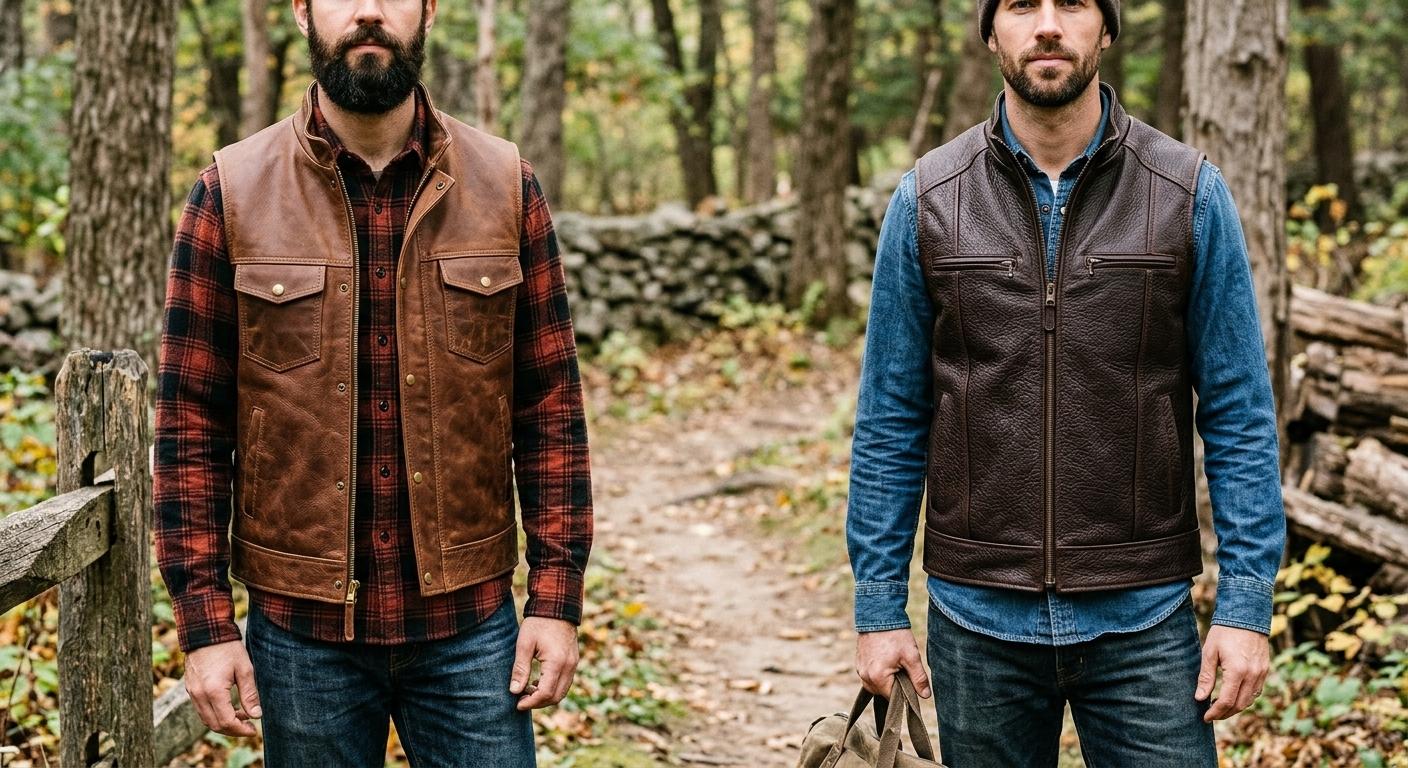
When shopping for genuine leather motorcycle vests for men, buyers frequently weigh cowhide against buffalo leather. Both materials are long-standing staples on the road, yet riders often wonder which provides better comfort, appearance, and longevity. The best choice ultimately depends on the overall garment construction, fit, and personal style, rather than just the animal source listed on the tag.
Cowhide vs. Buffalo: Key Differences
Cowhide and buffalo leather come from different bovine animals, resulting in noticeable differences in natural grain texture. Cowhide is widely used across motorcycle apparel, workwear, and boots for its familiar, uniform appearance. Buffalo leather is known for deeper, more pronounced pebbled patterns and natural surface creasing. However, tanning methods, hide thickness, and surface finishes heavily influence both materials. The animal species determines the hide's base character, but not the overall quality of the finished vest.
How Does Cowhide Feel and Look?
Cowhide provides a clean, classic motorcycle look that ranges from smooth to moderately textured. Depending on the processing grade, cowhide can be finished with a polished sheen, matte black, or distressed brown.
-
Full-grain cowhide: Retains the natural surface markings and ages with a distinctive patina over years of use.
-
Top-grain cowhide: Lightly buffed for a more uniform appearance and consistent color across all panels.
-
Corrected-grain cowhide: Finished with artificial grain embossing to create a smooth, blemish-free surface.
How Does Buffalo Leather Feel and Look?
Buffalo leather is celebrated for its bold, rugged visual identity. It typically displays a pronounced, pebbled grain with deeper natural creases and tonal variation.
-
Pebbled texture: Highlights natural hide characteristics, giving the vest an organic, vintage aesthetic.
-
Distressed styling: Accentuates natural wear patterns and hides minor surface scratches effectively.
-
Supple finishes: Factory milling can make buffalo leather soft and pliable without flattening its deep grain.
Cowhide vs. Buffalo Weight
Many riders assume buffalo leather is automatically heavier, but total vest weight depends on actual hide thickness, garment lining, and metal hardware. A thick cowhide vest will feel significantly heavier than a lightweight buffalo vest.
-
Leather thickness: Measured in millimeters or ounces, hide thickness dictates structural weight more than species.
-
Hardware and lining: Heavy brass zippers, concealed-carry pockets, and insulated linings add substantial overall heft.
Flexibility and Break-In Time
Break-in time is determined by tanning methods and hide thickness rather than animal species alone. Firm, heavy leathers require several weeks of riding to soften and mold to your torso, whereas factory-milled hides feel supple immediately.
-
Chrome-tanned hides: Generally softer and quicker to break in right out of the box.
-
Vegetable-tanned hides: Stiffer initially, developing deep creases and personalized shaping over extended wear.
Cowhide vs. Buffalo Durability
Both cowhide and buffalo leather offer excellent tensile strength and tear resistance when properly tanned. While marketing often labels buffalo as indestructible, real-world garment durability relies on the complete assembly.
-
Seam construction: High-tensile bonded nylon thread and reinforced stitching prevent blowout under stress.
-
Hardware quality: Heavy-duty metal zippers and firmly seated snaps outlast weak fasteners.
Even the strongest hide will fail quickly if assembled with cheap thread or weak panel seams.
Which Leather Is More Comfortable for Riding?
Riding comfort depends on how well the vest balances wind deflection, flexibility, and heat retention. Because vests leave the arms free, airflow is generally good, but thick torso leather can trap heat in warm weather.
-
Armhole clearance: Generous armholes prevent binding over hoodies or protective riding shirts.
-
Breathable linings: Mesh or lightweight poly linings improve warm-weather ventilation compared to heavy quilted interiors.
Patches and Back Panel Suitability
Both cowhide and buffalo leather accept sewing and embroidery cleanly. The deciding factor for club colors or event patches is panel geometry rather than leather type.
-
Single-panel back: Provides a seamless, flat canvas for large center patches and rockers.
-
Multi-panel back: Features seams that can complicate patch placement and needle penetration.
Choosing Leather Motorcycle Vests for Men
When sizing leather motorcycle vests for men, check measurements across the chest, stomach, shoulders, and torso length while sitting in your riding stance.
-
Layering room: Account for flannels, hoodies, or armored shirts worn underneath.
-
Side adjustment: Side laces or snap tabs allow fine-tuning over varying layer thicknesses.
Ensure the vest does not push upward into your throat when reaching forward for the handlebars.
Choosing a Women's Leather Motorcycle Vest
Selecting a premium women's leather motorcycle vest requires evaluating tailored proportions that accommodate curves without bunching up during rides.
-
Hourglass tailoring: Look for shaped bust, waist, and hip panels designed specifically for women's ergonomics.
-
Torso length: Shorter cuts prevent the bottom hem from riding up against the motorcycle fuel tank.
Pattern geometry matters far more for comfort than choosing between cowhide or buffalo.
Maintenance: Cowhide vs. Buffalo
Maintenance needs are dictated by surface finish rather than hide species. Both cowhide and buffalo require regular care to prevent drying and cracking.
-
Routine cleaning: Wipe away road grime and bugs using a damp microfiber cloth.
-
Conditioning: Apply a dedicated leather balm every six months to restore natural moisture.
-
Moisture care: Allow soaked leather to dry naturally at room temperature away from direct heat.
Neither leather is completely waterproof without specialized treatments.
Leather and Riding Protection
Neither species automatically provides superior crash protection. Abrasion resistance depends on leather thickness, hide quality, and structural seam integrity.
-
Garment certification: Check for EN 17092 ratings (Class A, AA, or AAA) if slide performance is a primary concern.
-
Torso coverage: Vests lack sleeve protection, making proper construction and abrasion-resistant materials vital for core defense.
Cowhide vs. Buffalo Value
Price is driven by hide grade, tanning quality, panel cuts, and hardware rather than species alone.
-
Material value: High-grade full-grain leather costs more to source and process.
-
Garment value: Premium stitching, smooth zippers, and functional pockets deliver long-term usability.
Look for overall build quality rather than assuming one hide name represents better value.
Which Leather Should You Choose?
Choose cowhide if you prefer a classic, smooth motorcycle look with diverse finish options. Choose buffalo leather if you want a rugged, highly textured aesthetic with pronounced grain. Both hides perform exceptionally well when crafted with proper thickness and reinforced seams.
Final Thoughts
Selecting the right vest comes down to personal aesthetics, ergonomic fit, and build construction. Whether you’re considering leather motorcycle vests for men or a tailored women’s leather motorcycle vest, focus on hide thickness, seam strength, and riding comfort. A well-constructed vest from Best Leather NY will deliver years of dependable road performance, whatever your style.
❤️ Support Friends Aim! View a sponsored ad to help cover our website costs. Thanks!
Support Us — Ad 1 Support Us — Ad 2❤️ Support Friends Aim! View a sponsored ad to help cover our website costs. Thanks!
Support Us — Ad 1 Support Us — Ad 2
 English
 Arabic
 French
 Spanish
 Portuguese
 Deutsch
 Turkish
 Italiano
 Russian
 Romaian
 Portuguese (Brazil)
 Greek