


Residential Solar Panel Installation: Building a More Sustainable Future for UK Homes
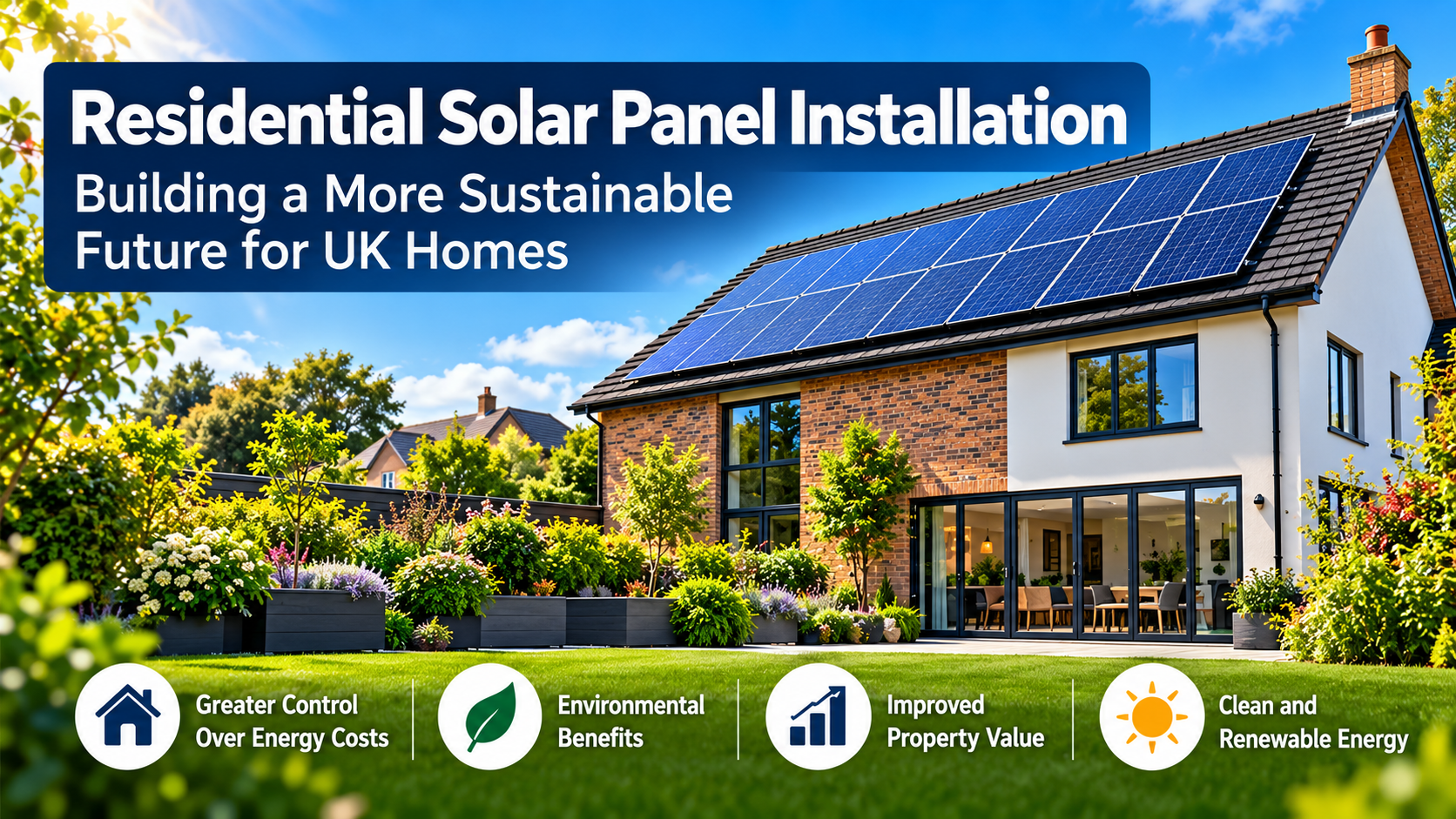
As homeowners look for ways to manage electricity costs and reduce their environmental impact, residential solar energy is gaining attention throughout the UK.
Generating renewable electricity at home offers several advantages, from reducing dependence on electricity suppliers to supporting long-term energy efficiency.
With appropriate planning and professional installation, solar panels can provide a dependable source of electricity for many years.
What Is Residential Solar Energy?
Residential solar systems use photovoltaic panels to convert daylight into electrical energy.
These panels are typically installed on rooftops, although alternative mounting arrangements may be possible where space and conditions allow.
The electricity generated passes through an inverter before being supplied to the home's electrical system.
Households can use this electricity immediately, store some of it in a battery, or export surplus energy to the grid.
Professional residential solar panel installation helps ensure the system is appropriately designed for the property's electricity requirements and physical characteristics.
Why Homeowners Are Investing in Solar Technology
Greater Control Over Energy Expenses
Generating electricity at home can reduce the amount purchased from traditional energy suppliers.
Although solar panels do not eliminate every electricity expense, they can provide meaningful savings over time.
The actual benefits depend on household energy usage, system performance, and electricity tariffs.
Improved Property Energy Performance
Solar panels can contribute towards a broader home energy efficiency strategy.
When combined with efficient appliances, appropriate insulation, and suitable energy management practices, they can help households manage electricity consumption more effectively.
Environmental Advantages
Solar electricity generation produces no direct greenhouse gas emissions during operation.
Replacing a portion of grid electricity with renewable solar power can reduce a household's environmental impact.
Preparing Your Home for Solar Installation
Before installing solar panels, homeowners should review the condition and suitability of their property.
Roof orientation and available space influence system capacity and potential electricity generation.
Structural condition is equally important because solar panels must be securely supported.
Shading from trees, neighbouring buildings, and roof features can also affect performance.
A professional survey helps identify potential challenges and suitable solutions.
Understanding the Installation Process
Residential solar installation normally begins with a property assessment and discussion of household electricity requirements.
An installer then develops a system design, estimates electricity generation, and provides a quotation.
Once the proposal is agreed, mounting equipment, solar panels, and electrical components are installed.
After installation, the system is tested and commissioned to confirm safe operation.
Homeowners should receive information about monitoring electricity generation and identifying potential maintenance issues.
Should You Consider Solar Battery Storage?
Battery storage allows households to retain some surplus electricity generated during daylight hours.
This stored energy can be used later, potentially reducing electricity purchases during the evening.
However, battery storage adds to the upfront investment.
The decision should be based on electricity consumption patterns, battery capacity, tariff arrangements, and estimated long-term savings.
Long-Term Value of Residential Solar Panels
Solar panels are designed to remain operational for decades.
Over their working lives, they can continue generating renewable electricity and reducing grid consumption.
Homeowners should consider equipment warranties, monitoring capabilities, and maintenance requirements when evaluating long-term value.
Selecting appropriate equipment and experienced installation professionals can help support reliable system performance.
Conclusion
Residential solar energy offers UK homeowners a practical opportunity to improve electricity efficiency and support sustainable living.
By generating renewable electricity at home, households can reduce dependence on traditional suppliers while potentially lowering long-term energy expenses.
A carefully planned installation, supported by suitable equipment and professional expertise, can provide lasting benefits for homeowners looking to create a more energy-efficient property.

 English
 Arabic
 French
 Spanish
 Portuguese
 Deutsch
 Turkish
 Dutch
 Russian
 Romaian
 Portuguese (Brazil)
 Greek