


How Tight Should a Leather Motorcycle Jacket Fit?
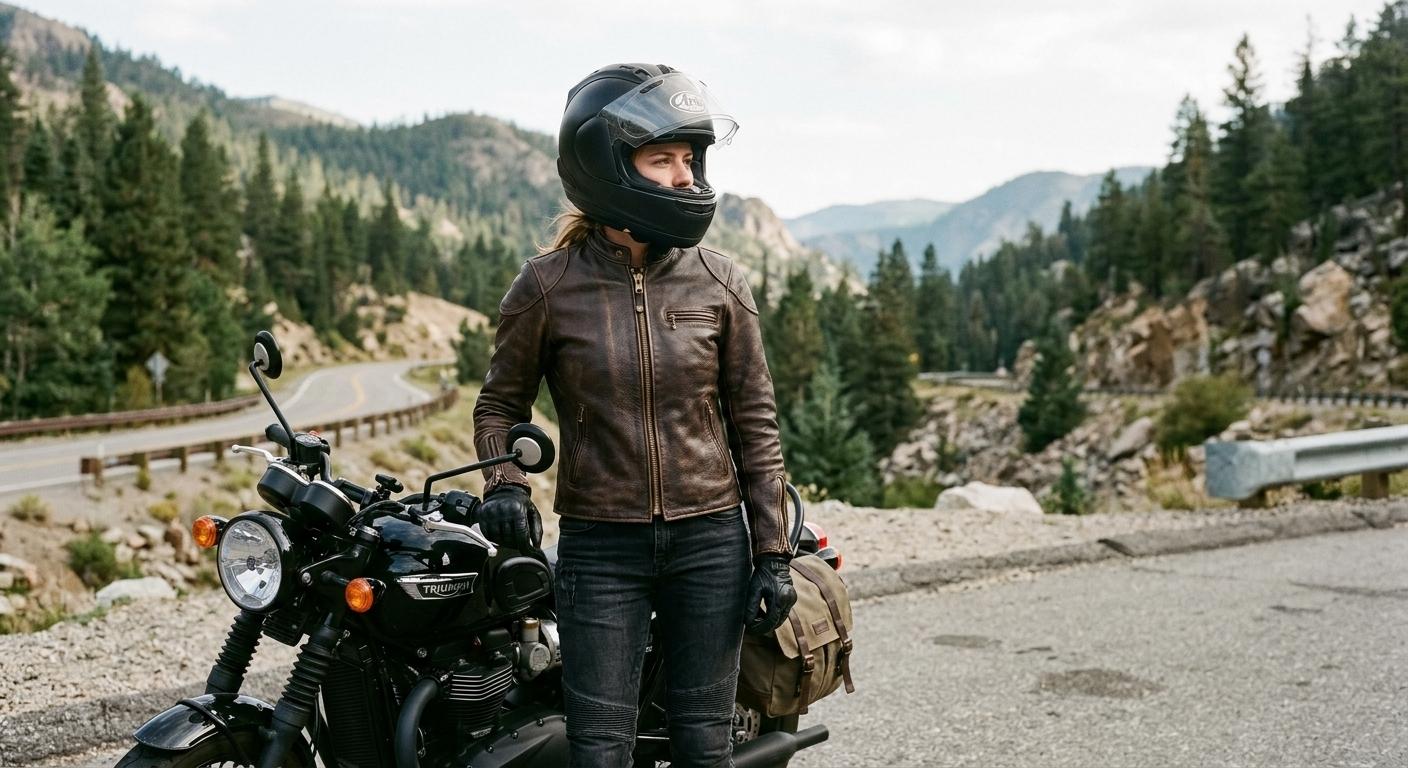
A new motorcycle jacket often feels surprisingly snug when you first zip it up. Riders frequently wonder whether that close feel is normal for protective gear or if they bought the wrong size altogether. When shopping for premium men's biker leather jackets or browsing collections of women's leather biker jackets, the goal is finding a secure fit that stays in place at highway speeds without restricting your movement.
The right fit balances comfort, safety, and mobility. A motorcycle jacket should hold internal armor securely against your body without cutting off circulation, choking your neck, or pulling uncomfortably when you reach for the handlebars.
How to Tell the Difference Between Snug and Too Tight
A motorcycle jacket must fit closer to the body than a casual leather jacket to prevent excess fabric from flapping in the wind and to keep impact armor from shifting out of place during a slide. However, snugness should never cross into painful compression.
-
Useful snugness: The jacket sits close to your torso, moves with you naturally, and allows full, deep breathing without straining the zipper.
-
Excessive tightness: The leather pinches your armpits, pulls severely across the chest, causes tingling or numbness in your hands, or prevents you from raising your arms.
How Should the Chest and Shoulders Fit?
The chest and shoulders are the two most critical areas to evaluate when trying on a jacket. The front zipper should pull up smoothly without extreme force, and the leather should lay flat across your torso without pulling tight horizontal stress lines.
-
Chest fit: You should be able to expand your chest and breathe comfortably without the jacket digging into your ribs.
-
Shoulder reach: The shoulder seams must align with your natural shoulders and allow your arms to reach forward without pinching your upper back.
How to Check Sleeve Length and Armor Placement
Motorcycle jacket sleeves are intentionally designed to look and feel slightly long when you stand with your arms at your sides. Once you bend your elbows and reach forward to grip the handlebars, the sleeves naturally pull upward toward your forearms.
-
Wrist coverage: Cuffs should cover your wrists completely in a riding position and integrate cleanly with your riding gloves.
-
Elbow armor: Protectors must remain centered directly over your elbow joints when your arms are bent.
-
Shoulder cups: Internal armor must cup the shoulder joint without shifting backward or digging painfully into your collarbone.
How to Test Fit in Your Riding Position
Standing upright in front of a mirror does not tell you how a jacket will perform on the road. You must evaluate the fit while sitting down and mimicking your motorcycle's specific handlebar reach.
-
Cruiser posture: Requires an upright cut with relaxed chest room and comfortable forward arm extension.
-
Touring posture: Needs all-day seated comfort with enough torso clearance so the lower hem does not bunch up on your lap.
-
Sport posture: Requires an aggressive forward lean where pre-curved sleeves and shoulder stretch panels keep the back from pulling tight.
What to Expect from Leather Break-In
Thick cowhide and rugged buffalo leather naturally feel stiff and restrictive right out of the box. Over time, heat, sweat, and movement will soften the hide and mold it to the contours of your body.
However, break-in has strict limits and cannot fix a jacket that is fundamentally the wrong size. Leather will relax slightly in high-flex areas, but it will never stretch enough to solve shoulders that are too narrow, sleeves that are too short, or a chest zipper that barely closes.
How to Account for Layering and Weather
Your riding climate dictates how much extra room you need inside the jacket. A summer riding jacket worn over a single T-shirt can fit much closer to the body than a four-season jacket built for cold-weather rides.
Always try on the jacket with the actual layers you plan to wear, such as a thermal base layer, flannel, or heated vest. Avoid sizing up automatically; simply confirm that your everyday riding layers do not create uncomfortable tension across your chest, shoulders, or arms.
Signs Your Leather Motorcycle Jacket Is Too Tight
If your jacket creates any of the following problems, it is too small rather than simply waiting to be broken in:
-
Restricted breathing: Inability to take a full, deep breath when the main zipper is fully closed.
-
Hardware strain: Heavy pulling, distortion, or visible gaping along the main zipper teeth.
-
Circulation issues: Numbness, tingling, or severe pinching under the armpits and bicep seams.
-
Limited reach: Inability to reach the handlebars or turn your head freely without the collar choking your throat.
Signs Your Leather Motorcycle Jacket Is Too Loose
An oversized jacket creates serious comfort and safety drawbacks at highway speeds. Excess volume allows cold wind to rush inside and destabilizes protective armor.
-
Wind buffeting: Excess leather bunches, ripples, or flaps violently against your body at speed.
-
Drooping seams: Shoulder seams hang several inches past the edge of your natural shoulder line.
-
Shifting armor: Elbow and shoulder protectors rotate freely around your limbs instead of staying locked in place.
-
Torso bunching: The entire jacket rides up toward your helmet when you sit down on the bike.
How Men's Biker Leather Jackets Should Fit
A classic men's biker leather jacket build requires balancing chest room, shoulder width, stomach clearance, and sleeve length. Men often face proportion challenges, such as finding a jacket that fits broad shoulders but is far too loose around the waist, or one that fits the chest but binds across the stomach.
Always match your largest body measurement first when choosing a size. Look for jackets equipped with adjustable waist tabs, side laces, or underarm gussets to fine-tune the fit without sacrificing shoulder mobility.
How Women's Leather Biker Jackets Should Fit
Properly sizing slim fit women's leather biker jackets requires close attention to bust accommodation, waist taper, and hip clearance. A well-tailored cut should fit snugly through the torso without crushing the bust or catching awkwardly on the hips when seated in a riding posture.
Many women's leather biker jackets incorporate zippered hip gussets, stretch panels, or side laces. These features allow the jacket to contour to individual body curves while keeping impact armor properly aligned over the shoulders and elbows.
How to Measure Accurately for Online Sizing
Sizing varies significantly across manufacturers, meaning a size Large from one brand may fit like a Medium from another. When shopping online, always rely on accurate body measurements rather than generic clothing tags.
-
Measure key areas: Use a flexible tape to record your chest/bust, waist, sleeve length, and torso height accurately.
-
Check chart types: Confirm whether the size chart shows body measurements or finished garment dimensions.
-
Review exchange terms: Check the return and exchange policy before ordering so you can swap sizes if the riding fit feels off.
A Step-by-Step Fit Checklist for Riders
Before removing the tags from a new jacket, run through this practical riding test at home:
-
Fasten completely: Zip the main closure fully and fasten all collar and cuff snaps.
-
Adopt riding posture: Sit in a chair, lean forward, and mimic holding your motorcycle's handlebars.
-
Verify coverage: Ensure your wrists remain covered and elbow armor stays centered over the joint.
-
Check breathing: Confirm you can breathe fully without feeling tight compression across your chest or throat.
Final Thoughts
Finding the right fit for men's biker leather jackets or women's leather biker jackets comes down to balance rather than extremes. Your jacket should fit securely enough to keep protective armor stable and prevent wind flap, yet roomy enough to allow complete freedom of movement.
Never settle for painful compression in hopes that the leather will stretch out dramatically. When your jacket fits your body and riding posture correctly from day one, it will keep you comfortable, confident, and protected on every ride.

 English
 Arabic
 French
 Spanish
 Portuguese
 Turkish
 Dutch
Dutch
 Italiano
 Russian
 Romaian
 Portuguese (Brazil)
 Greek
Greek