


GCC HVACR Industry Advances with Construction, Tourism, and Energy Efficiency
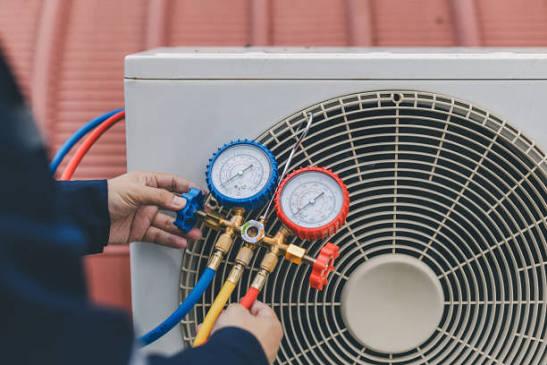
The Gulf Cooperation Council (GCC) is witnessing continued development across residential, commercial, hospitality, industrial, and infrastructure projects, creating sustained requirements for heating, ventilation, air conditioning, and refrigeration systems. The region’s extremely hot climate makes reliable cooling essential, while economic diversification is generating new demand from hotels, shopping centers, airports, healthcare facilities, manufacturing units, and logistics infrastructure. At the same time, rising attention toward energy consumption is encouraging users to replace conventional equipment with more efficient and digitally connected solutions.
A comprehensive assessment by Markntel Advisor reveals that the GCC HVACR industry was valued at USD 6.79 billion in 2024 and is projected to reach USD 8.93 billion by 2030, registering a CAGR of 4.67% during 2025–2030. The GCC HVACR industry report highlights construction activity, tourism development, food-processing expansion, logistics infrastructure, energy-efficiency initiatives, and technological advancements as important factors influencing industry demand.
Residential Construction Sustains Equipment Demand
Residential applications remain a major source of HVAC demand throughout the GCC. Population growth, urbanization, new housing developments, and replacement requirements are supporting installations of split air conditioners, packaged systems, VRF solutions, and other cooling technologies.
Saudi Arabia is particularly important because of its large residential construction pipeline and ambitious urban-development programs. The UAE also generates significant demand through high-density residential communities, luxury developments, and expatriate housing.
Replacement activity is becoming increasingly relevant as households and property owners seek to replace older, less-efficient systems with inverter-based and smart air-conditioning equipment. This transition creates opportunities for manufacturers offering improved energy performance alongside reliable cooling under extreme outdoor temperatures.
Tourism and Hospitality Strengthen Commercial HVACR
The GCC’s expanding tourism ecosystem is generating substantial requirements for commercial HVACR equipment. Hotels, resorts, restaurants, shopping centers, entertainment venues, and airports depend on continuous climate control to maintain indoor comfort.
Saudi Arabia’s tourism ambitions are particularly significant, with major hospitality and entertainment developments forming part of the Kingdom’s economic diversification strategy. The UAE, meanwhile, continues to benefit from its established international tourism industry.
Large hospitality facilities often require centralized cooling, ventilation, air-handling systems, chillers, and refrigeration equipment. Consequently, tourism investment can stimulate demand across multiple HVACR categories rather than only room air-conditioning products.
Energy Efficiency Becomes a Strategic Priority
Cooling represents a significant energy requirement in the GCC because of the region’s high temperatures and prolonged cooling seasons. This is encouraging building owners and facility managers to evaluate equipment based on lifecycle efficiency rather than initial purchase price alone.
Energy-efficient compressors, variable-speed drives, improved heat exchangers, high-efficiency chillers, and intelligent controls can help reduce electricity consumption. The growing adoption of these technologies is also being reinforced by national energy-efficiency programs.
Saudi Arabia, for example, has expanded its nationwide Estbdal initiative to encourage replacement of older window air conditioners with more energy-efficient units. The program provides consumers with financial incentives while supporting the adoption of newer cooling technologies. (Saudi Energy Efficiency Center)
VRF Systems Gain Attention
Variable Refrigerant Flow (VRF) systems are becoming increasingly relevant for commercial buildings because they provide flexible temperature control across multiple zones. Hotels, offices, retail properties, and mixed-use developments can benefit from the ability to control different areas according to occupancy and cooling requirements.
VRF technology can also support energy management by adjusting refrigerant flow according to actual demand. This makes it attractive for buildings seeking greater operational efficiency without compromising indoor comfort.
As GCC construction increasingly incorporates smart-building concepts, VRF systems can also be integrated with building-management platforms, enabling centralized monitoring and automated control.
Smart HVACR Technologies Transform Operations
Digitalization is reshaping HVACR management across commercial and industrial facilities. Connected sensors can monitor temperature, pressure, humidity, energy consumption, and equipment performance, while cloud-based platforms allow operators to monitor systems remotely.
Artificial intelligence and predictive analytics can help identify abnormal operating patterns and potential equipment failures before they result in major breakdowns. Predictive maintenance can reduce downtime while extending equipment operating life.
Smart controls are especially relevant for large buildings where cooling demand changes throughout the day. Automated systems can adjust equipment operation based on occupancy, outdoor conditions, and real-time demand.
Food Processing and Cold Chain Create Refrigeration Opportunities
The GCC’s food-security initiatives are creating additional demand for industrial refrigeration. Food-processing facilities, cold-storage warehouses, supermarkets, restaurants, and logistics operators require dependable temperature-controlled infrastructure.
Saudi Arabia’s efforts to expand domestic food production and processing are particularly important. New processing facilities require refrigeration throughout manufacturing, storage, and distribution, creating opportunities for compressors, condensing units, industrial refrigeration systems, and cold-room equipment.
Growing pharmaceutical and healthcare logistics can further increase demand for temperature-controlled storage and transportation.
Industrial Projects Support Specialized Systems
Oil and gas, petrochemicals, manufacturing, and other industrial activities remain important end users of HVACR systems. Industrial facilities require equipment capable of operating reliably under high ambient temperatures, dust, and demanding operating conditions.
Process cooling, ventilation, worker-comfort systems, and specialized refrigeration can all contribute to industrial HVACR demand. As GCC economies diversify into manufacturing, logistics, and advanced industries, these applications can become increasingly important.
Refrigerant Regulations Influence Product Development
Environmental considerations are also changing HVACR technology. International efforts to phase down high-global-warming-potential refrigerants are encouraging manufacturers to explore lower-impact alternatives and redesign equipment.
The UN Environment Programme’s Kigali Amendment information explains how the global agreement seeks to reduce hydrofluorocarbon consumption, encouraging the development and adoption of climate-friendly cooling technologies.
For GCC manufacturers and distributors, refrigerant transition creates opportunities for equipment using lower-GWP refrigerants, provided these systems can deliver reliable performance under extreme climatic conditions.
Supply Chain and Skilled Labor Challenges
The industry still faces challenges related to component availability, logistics costs, installation capacity, and skilled technical labor. Modern HVACR systems require expertise spanning mechanical engineering, electrical systems, controls, refrigeration, and digital technologies.
The increasing sophistication of connected equipment makes technician training particularly important. Manufacturers and service providers that invest in technical education, remote diagnostics, spare-parts availability, and after-sales support can improve customer retention and system reliability.
Saudi Arabia Leads Regional Development
Saudi Arabia represents the leading country-level opportunity within the GCC because of its population size, extensive construction pipeline, tourism investments, industrial development, and Vision 2030 initiatives. Large-scale projects in Riyadh and other cities are generating requirements for advanced cooling and ventilation infrastructure.
The UAE also remains an important market due to its mature hospitality industry, commercial real estate, logistics infrastructure, and established building-services ecosystem. Qatar, Kuwait, Oman, and Bahrain contribute additional demand through residential, commercial, industrial, and infrastructure development.
Outlook for the GCC HVACR Industry
The GCC HVACR industry is positioned for steady expansion as construction, tourism, food processing, logistics, and industrial diversification continue to generate cooling and refrigeration requirements. Residential applications will remain important, while commercial and hospitality projects increasingly prioritize energy efficiency, intelligent controls, and reliable high-capacity systems.
Over the coming years, VRF systems, smart HVAC controls, energy-efficient chillers, advanced refrigeration, predictive maintenance, and lower-GWP refrigerants are expected to gain greater importance. Manufacturers that combine high thermal performance with energy efficiency, digital connectivity, climate resilience, and strong after-sales networks can capitalize on the GCC’s continuing transition toward smarter and more sustainable cooling infrastructure.

 Arabic
 French
 Spanish
 Portuguese
 Deutsch
 Turkish
 Dutch
Dutch
 Italiano
 Russian
 Romaian
 Portuguese (Brazil)
 Greek
Greek