


A Practical Guide to Selecting Motorcycle Chains for Different Riding Conditions
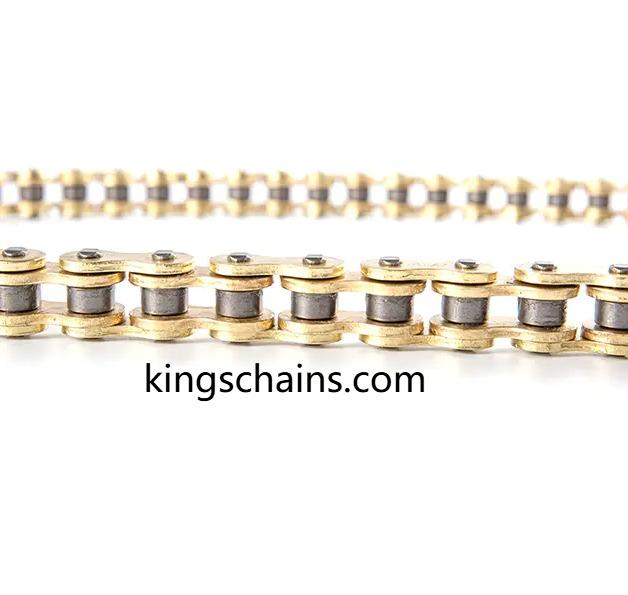
A motorcycle transmission chain contains a series of interconnected components that must move together smoothly as power passes from the engine to the rear wheel. When buyers examine a Solid Bush Motorcycle Chain, the internal relationship between the bushings, pins, rollers, and plates deserves particular attention because these parts influence articulation, contact, and wear. Understanding the construction helps motorcycle parts distributors, repair workshops, and brand owners evaluate whether a chain suits the intended riding environment and maintenance routine.
Metal selection establishes the foundation for dependable chain construction. The plates, pins, bushings, and rollers perform different mechanical roles, so each component requires material properties suited to its function. Steel selection needs to consider strength, wear behavior, and the response of the material to manufacturing and heat treatment. Surface condition also matters because roughness, defects, or inconsistent finishing can influence contact between moving parts. Buyers should therefore look beyond the chain's visible color or polished appearance and ask how material quality is controlled throughout production. Consistent raw material selection supports more predictable processing and helps manufacturers maintain uniformity across finished products.
The solid bush design is distinguished by its seamless bushing structure. Compared with a bushing formed with a longitudinal seam, a seamless component provides a continuous contact surface around the pin. This construction can support more consistent geometry and help manage friction at the internal contact points when combined with suitable processing and lubrication. However, the design alone does not determine the chain's overall performance. Pin quality, component alignment, heat treatment, assembly accuracy, and lubrication all contribute to how the finished chain behaves. Buyers should consider the complete engineering system instead of judging quality by a single feature.
Choosing an appropriate chain begins with the motorcycle's original drive system and the manufacturer's compatibility requirements. Chain dimensions, sprocket configuration, connecting-link type, and the intended riding conditions all need to match the application. A chain intended for ordinary road use may face different demands from one used for frequent off-road riding, where dust, mud, moisture, and changing loads can affect maintenance needs. Buyers should also consider whether they need a replacement product for a specific motorcycle or a product range for distribution. Confirming compatibility with a knowledgeable supplier helps avoid installation problems and unnecessary returns.
Manufacturing processes have a direct influence on the accuracy of individual chain components. Forming, machining, heat treatment, and assembly must work together to produce parts that fit and articulate correctly. Cold extrusion can be used to form seamless bushings, while controlled processing helps establish the desired shape and surface condition. Assembly quality is equally important: inconsistent alignment or poor component fit may affect movement as the chain passes around the sprockets. Inspection methods such as dimensional checks, hardness assessment, and fatigue testing can help manufacturers evaluate different aspects of product consistency. These procedures provide useful evidence when buyers compare suppliers and discuss quality expectations.
The riding experience is influenced by the way the chain moves, responds to load, and maintains its relationship with the sprockets. A properly matched and maintained chain can contribute to smooth power transmission and reduce unnecessary noise caused by poor adjustment or worn components. Lubrication helps protect contact surfaces, while correct tension allows the chain to articulate without excessive tightness or slack. Riders should follow the motorcycle manufacturer's maintenance guidance and inspect the drive system for stiff links, unusual wear, corrosion, or damaged components. Cleaning methods should suit the chain's construction, and maintenance should never be performed while the drivetrain is moving.
Appearance also has a practical role in the motorcycle parts market. A clean metallic finish can communicate careful manufacturing, while colored surface treatments may appeal to riders who customize the appearance of their motorcycles. These visual choices should not replace attention to component quality or compatibility. Buyers evaluating decorative finishes can ask how the treatment interacts with corrosion protection, lubrication, and normal handling. For distributors and private-label businesses, consistent presentation across packaging, product labeling, and chain finishes can help create a recognizable product range. Clear identification also makes it easier for workshops to distinguish products during inventory management and installation.
Jiangshan Wangpai Chain Industry Co., Ltd. manufactures motorcycle chains and industrial chains, with production and inspection processes supporting its range of chain products. When discussing solid bush chain sourcing, buyers can clarify the intended motorcycle application, compatibility requirements, maintenance expectations, packaging preferences, and quality documentation needed for their market. Reviewing product details and confirming application suitability with the manufacturer can help purchasing teams make more informed decisions. Further information about Wangpai Chain's products and manufacturing capabilities is available at https://www.kingschains.com/.

 English
 Arabic
 Spanish
 Portuguese
 Deutsch
 Turkish
 Dutch
Dutch
 Italiano
 Russian
 Romaian
 Portuguese (Brazil)
 Greek
Greek