


No-Code AI Platforms Expand Intelligent Automation Across Modern Workplaces
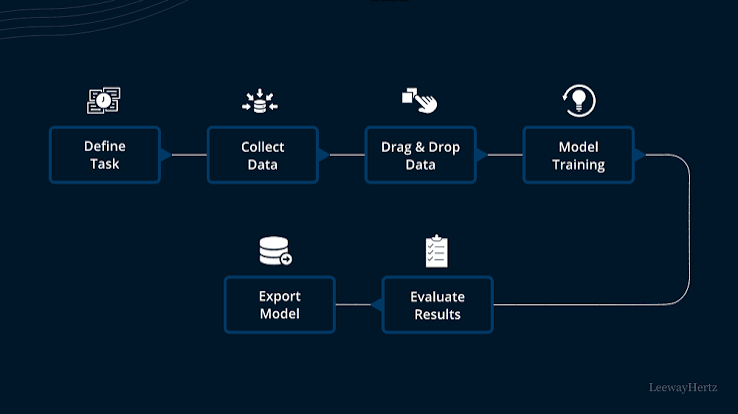
No-code artificial intelligence platforms allow organisations to build AI-enabled applications and automate business processes through visual interfaces, prebuilt models, templates, and drag-and-drop tools. Instead of requiring extensive programming knowledge, these platforms enable business teams to create solutions for document processing, customer support, forecasting, image recognition, workflow automation, and data analysis. Their accessibility is helping more departments participate directly in enterprise AI adoption.
A recent study by Markntel Advisor highlights that the global no-code AI platforms sector was valued at USD 4.92 billion in 2025. It is projected to grow from USD 5.41 billion in 2026 to USD 26.36 billion by 2032, registering a CAGR of 30.2% during 2026–2032. Expansion reflects workforce automation, generative AI integration, cloud adoption, and demand for faster application development.
Visual Tools Lower Technical Entry Barriers
Traditional AI development often requires programming, data science expertise, infrastructure management, and specialised model-training capabilities. No-code platforms simplify parts of this process by providing guided interfaces in which users select data sources, define goals, configure workflows, and evaluate outputs.
Microsoft describes AI Builder as a capability that allows organisations to use AI without requiring coding or data science skills. Such tools can help employees create prototypes and automate routine tasks while reducing dependence on dedicated development teams.
Workflow Automation Creates Immediate Applications
Many organisations begin with repetitive processes involving forms, emails, spreadsheets, documents, or approval requests. No-code AI platforms can classify information, extract data, route requests, generate summaries, and trigger actions within connected business systems.
An accounts team may extract invoice details automatically, while a customer-service department may classify incoming enquiries according to urgency. Human review remains important when information is incomplete, sensitive, or likely to influence financial, legal, or employment decisions.
Generative AI Expands Platform Capabilities
Generative AI allows users to create text, summaries, images, code suggestions, and conversational responses through natural-language instructions. When combined with no-code platforms, it enables employees to build chatbots, knowledge assistants, content workflows, and internal support tools without developing every component manually.
Natural-language interfaces can also translate business instructions into workflow steps. However, generated outputs may contain errors, unsupported claims, or unsuitable content. Organisations must therefore establish validation processes before using these outputs in customer communication or important operational decisions.
Data Quality Determines Model Reliability
No-code interfaces may simplify development, but they do not eliminate the importance of reliable data. Incomplete, outdated, duplicated, or biased datasets can produce inaccurate predictions and inconsistent automation.
Teams must understand where data originates, whether its use is authorised, and how frequently it should be updated. Testing should include different scenarios and user groups rather than relying only on average performance. Clear documentation is also necessary so that employees understand what a model can and cannot reliably do.
Business Teams Gain Greater Development Control
No-code platforms allow subject-matter experts to participate more directly in solution design. Employees who understand a workflow can create prototypes and adjust processes without translating every requirement through a separate technical team.
This approach can shorten development cycles and improve alignment with operational needs. Technical specialists still remain important for architecture, security, integration, complex data preparation, and large-scale deployment. No-code development works most effectively when business and technology teams collaborate rather than operate independently.
Governance Must Develop Alongside Accessibility
Making AI easier to build can also increase the number of unapproved applications, duplicated workflows, and poorly controlled data connections. Organisations need clear policies covering access, testing, ownership, documentation, monitoring, and retirement of unused applications.
The NIST AI Risk Management Framework provides voluntary guidance for organisations designing, deploying, or using AI systems. It encourages governance, risk mapping, performance measurement, and ongoing risk management throughout the AI lifecycle.
Security and Privacy Remain Core Requirements
No-code applications may connect with customer information, employee records, financial data, cloud storage, and external AI services. Weak permissions or unnecessary data sharing can expose sensitive information.
Role-based access, encryption, authentication, activity logs, data minimisation, and vendor assessment should therefore be included from the beginning. Organisations must also understand how external providers store prompts, process uploaded information, and use customer data.
Responsible Adoption Will Shape Long-Term Value
No-code AI platforms are expanding access to automation and intelligent application development. Their long-term value will depend on whether organisations combine ease of use with reliable data, human oversight, cybersecurity, and structured governance.
When deployed responsibly, these platforms can help employees improve workflows, test ideas, and create useful AI solutions more quickly. They should be treated as governed enterprise tools rather than unrestricted substitutes for technical expertise and accountable decision-making.

 English
 Arabic
 French
 Portuguese
 Deutsch
 Turkish
 Dutch
Dutch
 Italiano
 Russian
 Romaian
 Portuguese (Brazil)
 Greek
Greek