


How Asset Tokenization Could Change the Way Businesses Monetize Future Revenue
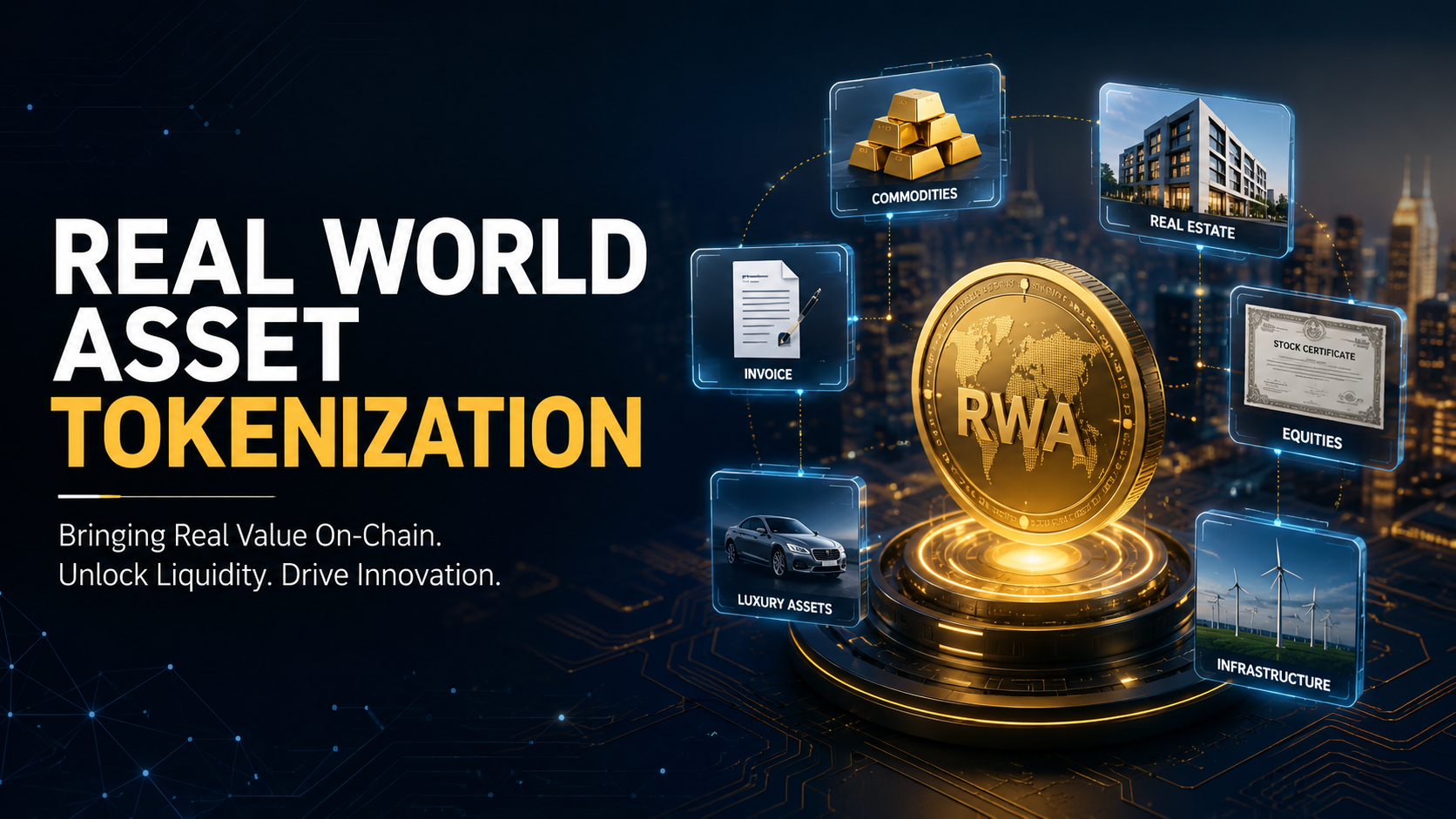
Businesses constantly look for ways to generate capital, expand operations, and unlock value from existing assets. Traditionally, companies have relied on bank loans, equity financing, venture capital, and other funding methods to support their growth. However, these approaches may involve lengthy approval processes, ownership dilution, strict eligibility requirements, or complex financial arrangements. Asset tokenization is emerging as an alternative approach that could reshape how businesses access capital by converting ownership interests or defined financial rights into digital tokens on a blockchain.
Rather than focusing only on physical assets such as real estate, machinery, or commodities, asset tokenization can also explore the financial value associated with future revenue streams. Depending on the legal structure, businesses may be able to tokenize eligible receivables, contractual payment rights, subscription income, licensing revenue, or other predictable cash flows. This creates opportunities to structure financing around future earnings instead of relying exclusively on conventional borrowing or selling company equity.
Although tokenization does not eliminate financial risk or guarantee funding, it introduces new possibilities for connecting businesses with investors, managing financial rights, and improving the transparency of revenue-based financing.
What Is Asset Tokenization?
Asset tokenization is the process of representing ownership interests, financial claims, or other legally defined rights as digital tokens recorded on a blockchain. These tokens can represent different types of assets, including real estate interests, commodities, private credit, trade receivables, and certain contractual revenue rights.
Each token's purpose depends on the underlying legal agreement. For example, a token might represent a fractional ownership interest in an eligible asset, a claim on specified payments, or an entitlement to a portion of revenue under a financing agreement.
Blockchain infrastructure can support the issuance, transfer, and tracking of these digital representations. Smart contracts may also automate selected processes, such as distributing eligible payments, enforcing transfer restrictions, or recording changes in token balances.
For businesses, the potential advantage extends beyond digitizing existing assets. Asset Tokenization may help create new financing structures around assets or financial rights that are difficult to manage through traditional systems.
Understanding Future Revenue as a Financial Asset
Future revenue refers to income a business expects to receive from its operations, contracts, customers, or commercial activities. This income may come from recurring subscriptions, outstanding invoices, licensing agreements, equipment leases, product distribution contracts, or other sources.
However, expected revenue is not automatically an asset that can be tokenized. A business must identify a legally transferable ownership interest, receivable, contractual payment right, or other enforceable financial claim. The structure must also account for applicable securities laws, contractual restrictions, and investor protections.
Several revenue categories could support tokenization-based financing when the underlying rights are sufficiently defined.
1. Subscription Revenue
Software-as-a-Service (SaaS) companies and digital service providers often receive recurring payments from customers. Where contractual arrangements and applicable laws permit, a company could structure financing around a defined portion of eligible subscription receivables.
Investors might receive payments according to an agreed schedule or revenue-sharing formula. The business could obtain capital to improve its platform, expand its customer base, or develop additional products.
2. Trade Receivables
Businesses frequently deliver products or services before receiving payment. These outstanding invoices can create working-capital challenges, especially when customers operate on extended payment terms.
Eligible receivables may be financed through tokenized structures that represent defined claims on invoice payments. This could help businesses access working capital without waiting for every customer invoice to reach maturity.
3. Licensing and Royalty Income
Companies that own intellectual property, software licenses, patents, or other commercially valuable rights may receive royalties under licensing agreements.
Where permitted, a business could structure a financing arrangement around specified royalty payments. Investors would receive the contractual economic rights defined by the agreement, while the business could use the funding to support product development, marketing, or expansion.
4. Equipment Leasing Revenue
Companies that lease industrial equipment, commercial machinery, vehicles, or specialized infrastructure may generate recurring contractual income. Eligible lease receivables or interests in the underlying financing arrangement could potentially be represented through digital tokens.
This approach could connect revenue-generating equipment portfolios with investors interested in defined cash-flow opportunities.
5. Infrastructure and Energy Revenue
Infrastructure operators and energy businesses may generate income through long-term service agreements, power purchase agreements, usage fees, or other contractual arrangements.
Certain payment rights may support structured financing, provided the relevant contracts, regulatory requirements, and project obligations permit it. Tokenization could offer another way to represent and administer these financial interests.
How Asset Tokenization Could Monetize Future Revenue
Tokenization can create a framework for turning eligible financial rights into digitally represented investment opportunities. The process typically involves several stages.
Step 1: Identify Eligible Revenue Streams
The business begins by examining its contracts, receivables, payment history, and projected cash flows. It identifies which revenue-related rights may be legally transferred, pledged, assigned, or used to support financing.
Historical performance, customer concentration, payment delays, contract duration, and revenue volatility all matter when evaluating whether a revenue stream is suitable.
Step 2: Establish the Legal Structure
Before issuing tokens, the business must define exactly what investors are receiving. This may involve an assignment of receivables, a secured financing arrangement, a revenue-sharing agreement, or an interest issued through a legally structured entity.
The documentation should explain investor rights, payment priorities, default procedures, fees, risk allocation, and any limitations on transfers. Token ownership alone does not automatically establish an enforceable claim against a company or its customers.
Step 3: Determine the Financing Terms
The business establishes how much capital it intends to raise, what portion of eligible cash flows will support repayment, and how long the arrangement will last.
For example, a company may agree to allocate a defined percentage of collections from a specific group of invoices toward repayment. The precise terms depend on the transaction structure, expected cash flows, and applicable law.
Step 4: Issue Digital Tokens
After the legal and financial framework is established, a tokenization platform can be used to issue digital tokens representing the defined rights.
Smart contracts may help record token balances, enforce approved transfer conditions, and automate certain administrative functions. Investor verification, transaction monitoring, and restrictions on eligible participants may also be integrated where required.
Step 5: Connect Investors With the Opportunity
Eligible investors can participate according to the offering's terms and applicable regulatory requirements. Depending on the structure, the transaction may be offered privately or through an authorized distribution arrangement.
Tokenization may broaden access to a financing opportunity, but it does not guarantee investor demand or eliminate restrictions on who can participate.
Step 6: Manage and Distribute Cash Flows
When the underlying revenue is collected, payments are allocated according to the contractual waterfall. Smart contracts may automate parts of the distribution process, while financial institutions, servicers, or administrators may still handle collections, reconciliations, and compliance.
This structure can help create a clearer record of how revenue is collected and distributed.
Key Benefits of Tokenizing Future Revenue
Improved Access to Business Financing
Tokenized revenue structures may give businesses another route to raise capital beyond traditional loans and equity issuance. Companies with strong contractual receivables or recurring income may be able to build financing opportunities around these financial rights.
This can be particularly relevant for growing businesses that need working capital but want to explore alternatives to conventional funding.
Reduced Dependence on Equity Dilution
Some revenue-based financing arrangements allow a business to raise capital without issuing ordinary shares or transferring voting control. Tokenization can provide the digital infrastructure for representing such arrangements.
However, avoiding equity dilution does not mean the funding is inexpensive. Businesses must evaluate repayment obligations, revenue-sharing costs, collateral requirements, and the potential impact on future cash flow.
Greater Transparency
Blockchain records can provide a shared view of token issuance, transfers, and certain transaction events. When connected to reliable financial reporting systems, this infrastructure may improve visibility into how a financing arrangement operates.
Nevertheless, blockchain records cannot independently verify whether a company has reported revenue accurately. Reliable data sources, audits, and independent oversight remain important.
More Flexible Investment Structures
Tokenization can support the representation of different financial rights, payment schedules, and investor entitlements. Depending on the legal structure, businesses may be able to create financing arrangements tailored to particular revenue streams or project requirements.
This flexibility can make it easier to design specialized funding models, although each structure requires careful legal and financial assessment.
Potential for Broader Investor Participation
Digital issuance and administration may reduce certain operational barriers involved in distributing investment opportunities. A tokenized offering could potentially reach a wider pool of eligible investors through suitable platforms and regulated intermediaries.
Actual participation depends on jurisdiction, investor eligibility, offering restrictions, minimum investment requirements, and the availability of a functioning distribution channel.
Industries That Could Benefit From Revenue-Based Tokenization
Asset tokenization may be relevant across industries where businesses generate identifiable financial claims or contractual payment streams.
Technology and SaaS: Software businesses could explore financing around eligible subscription receivables or contracted service payments.
Manufacturing: Manufacturers may use eligible trade receivables to support working-capital arrangements while managing the timing gap between delivery and payment.
Entertainment and Media: Companies with licensing agreements, distribution contracts, or royalty streams could explore financing based on defined contractual rights.
Logistics and Transportation: Freight operators, fleet managers, and logistics providers may examine receivables arising from transportation contracts and commercial service agreements.
Energy and Infrastructure: Project operators may investigate financing structures tied to eligible contractual payments, service fees, or other defined project-related revenue rights.
Commercial Real Estate: Property owners and operators may explore tokenized interests in eligible rental receivables or contractual income rights. These arrangements differ from tokenizing ownership of the property itself.
Across all these sectors, suitability depends on the quality of the underlying contracts, the reliability of collections, the legal transferability of rights, and the ability to manage investor obligations.
Asset Tokenization vs. Traditional Revenue Financing
Traditional revenue financing and tokenized revenue financing can pursue similar economic goals, but they may differ in their technological infrastructure and administration.
Traditional arrangements often rely on banks, financing companies, legal agreements, custodians, and established payment systems. Tokenized structures may incorporate blockchain-based records, programmable transfer restrictions, and smart-contract automation.
The key distinction is not necessarily the source of capital or the type of financial claim. It is how the claim is represented, managed, and transferred.
Tokenization may improve certain administrative processes, but it does not automatically provide cheaper funding, faster approval, greater liquidity, or stronger investor protection. Those outcomes depend on the transaction design and the broader financial ecosystem.
Risks and Challenges Businesses Must Consider
Despite its potential, asset tokenization introduces several challenges that businesses must address before using future revenue to support financing.
Regulatory and Legal Compliance
Tokens representing securities, debt, receivables, or investment contracts may be subject to financial regulations. Businesses must determine which rules apply to the offering, transfer of rights, investor eligibility, disclosures, and ongoing reporting in each relevant jurisdiction.
Revenue Uncertainty
Projected revenue may decline because of customer cancellations, delayed payments, market changes, operational issues, or contract disputes. If collections fall below expectations, a business may struggle to meet its payment obligations.
Smart Contract and Cybersecurity Risks
Errors in smart contracts, compromised administrative keys, and cybersecurity incidents can disrupt token transfers or payment processes. Technical audits, access controls, incident-response plans, and ongoing monitoring can help reduce these risks.
Limited Secondary-Market Liquidity
Creating tokens does not guarantee that investors will be able to sell them. A functioning secondary market requires eligible buyers, compliant trading arrangements, suitable market infrastructure, and sufficient demand.
Operational and Data Challenges
Businesses need reliable systems to reconcile invoices, verify collections, track obligations, and distribute payments. Poor data quality or weak integration between financial systems and blockchain infrastructure can undermine the intended transparency.
Financing Costs and Cash-Flow Pressure
A business must compare the total cost of a tokenized financing arrangement with alternatives such as bank credit, factoring, or conventional revenue-based financing. Allocating future collections to investors may also limit the company's flexibility to meet payroll, purchase inventory, or fund growth.
The Role of Asset Tokenization Platforms
Asset tokenization platforms provide the technical infrastructure used to create, issue, and administer digital representations of assets and financial rights. Depending on the platform, functionality may include token issuance, smart contract deployment, identity verification, investor onboarding, wallet integration, transaction monitoring, and reporting.
For future-revenue financing, the platform must support the specific legal and operational requirements of the transaction. It may also need integrations with accounting systems, payment processors, receivables-management tools, and compliance providers.
Businesses evaluating asset tokenization development should focus on security, auditability, permission controls, scalability, integration capabilities, and support for relevant regulatory requirements. The technology should serve the financing structure rather than determine the legal rights being offered.
Companies exploring this area may also review the broader tokenization ecosystem, including providers such as INORU, while independently assessing the technical architecture and compliance requirements appropriate to their projects.
What Could the Future of Revenue Tokenization Look Like?
The development of blockchain-based financial infrastructure could encourage businesses to examine revenue streams as potential sources of structured financing rather than viewing them only as future operating income.
As the ecosystem matures, tokenization may become more closely connected with receivables management, private credit, automated payment systems, digital identity, and regulated investment platforms. These connections could support more standardized processes for documenting financial rights and administering contractual payments.
Another potential development is the creation of more specialized financing arrangements. Instead of relying on a single funding model for an entire business, companies might explore separate structures for eligible invoices, subscription receivables, licensing income, or project-specific payment rights.
However, adoption will depend on more than blockchain technology. Clear legal frameworks, investor confidence, dependable financial reporting, suitable market infrastructure, and commercially attractive financing terms will remain essential.
The most practical opportunities may emerge where businesses already have documented payment rights, predictable collection processes, and a clear need for working capital.
Conclusion
Asset tokenization could change how businesses monetize future revenue by providing a digital framework for representing eligible receivables, contractual payment rights, and other defined financial interests. Instead of relying exclusively on conventional loans or equity issuance, companies may be able to explore financing arrangements linked to specific sources of future cash flow.
Potential benefits include more flexible financing structures, improved transaction visibility, and streamlined administration. At the same time, revenue uncertainty, regulatory obligations, cybersecurity risks, and limited market liquidity remain important considerations.
Ultimately, successful revenue tokenization will depend on the strength of the underlying financial rights, the quality of the legal structure, and the reliability of the technology used to administer the arrangement. When these elements are aligned, tokenization may become a useful additional option in the evolving landscape of business financing.
Frequently Asked Questions
1. What is asset tokenization in business financing?
Asset tokenization represents ownership interests or defined financial rights as digital tokens on a blockchain. In business financing, it may support arrangements involving eligible receivables, contractual payment rights, and other financial claims.
2. Can businesses tokenize future revenue?
Businesses may be able to tokenize eligible financial rights associated with future revenue, provided the rights can be legally structured and transferred. Expected income alone does not automatically qualify as a tokenizable asset.
3. How can revenue tokenization help businesses raise capital?
It can provide an alternative framework for connecting defined cash flows or receivables with investors. Depending on the structure, a business may obtain funding without issuing ordinary equity, although repayment and revenue-sharing obligations can still apply.
4. Which revenue streams can potentially be tokenized?
Potential examples include trade receivables, subscription receivables, licensing royalties, equipment lease payments, and certain infrastructure-related contractual payments. Eligibility depends on legal rights, contract terms, and regulatory requirements.
5. Does asset tokenization guarantee liquidity?
No. Tokenization creates a digital representation of a financial right, but it does not guarantee a buyer or an active secondary market. Liquidity depends on demand, investor eligibility, transfer restrictions, and market infrastructure.
6. What risks are associated with tokenizing future revenue?
Key risks include revenue shortfalls, legal uncertainty, regulatory noncompliance, smart contract vulnerabilities, cybersecurity incidents, data-quality issues, and limited secondary-market liquidity.
7. How is revenue tokenization different from traditional financing?
The underlying financing arrangement may be similar, but tokenization uses blockchain infrastructure to represent and administer certain financial rights. Its practical advantages depend on the legal structure, technology, and operating model.

 English
 Arabic
 French
 Spanish
 Portuguese
 Deutsch
 Turkish
 Dutch
Dutch
 Italiano
 Romaian
 Portuguese (Brazil)
 Greek
Greek