


A Practical Guide to Selecting Motors for Industrial Applications
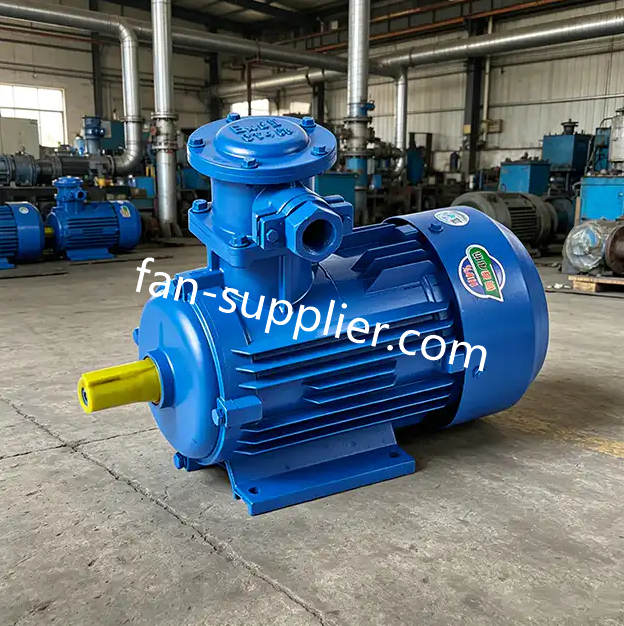
Electric motors support a wide range of industrial processes, from ventilation and water movement to machinery operation and material handling. When evaluating an Asynchronous Motor, buyers should consider how its internal materials, electromagnetic operation, mechanical construction, and installation requirements align with the equipment it needs to drive. Zhejiang Shenli Explosion proof Electromechanical Co., Ltd. offers industrial motor products alongside ventilation equipment, providing options for applications where motors and driven machinery need to work together.
Material selection influences the motor's structure and operating characteristics. Copper is commonly used in windings because of its electrical conductivity, while electrical steel is used in the magnetic core to support the formation of a magnetic field. Insulation materials separate conductive components and help protect the winding system. The housing, shaft, bearings, and cooling components also contribute to the complete assembly. Each material must suit its role, the surrounding environment, and the expected maintenance conditions.
The housing material affects how the motor integrates into the equipment around it. Cast iron is often used where a rigid and durable structure is needed, while aluminum may be considered when reducing equipment weight is important. The shaft and bearing arrangement must support rotation and mechanical loads, while suitable sealing and surface protection can help address dust, moisture, and other environmental factors. Buyers should evaluate these elements together rather than choosing a motor based on one material alone.
Selecting a motor begins with understanding the driven equipment. A ventilation fan has different operating characteristics from a water pump, conveyor, or machine tool. Buyers should consider the type of load, starting conditions, operating pattern, installation space, and relationship between the motor and the connected machinery. This information helps determine whether a standard industrial motor or a specialized design is more appropriate.
The operating environment is another important consideration. Motors installed in clean indoor facilities may face different challenges from those used in dusty workshops, outdoor equipment, or industrial processing areas. Where potentially explosive gases or combustible dust may be present, buyers must identify the applicable hazardous-area requirements before selecting equipment. A flameproof motor should be chosen according to its certified protection scope and the conditions of the intended installation, not simply because its product description mentions explosion protection.
The operating principle explains why motor construction matters. In an induction motor, electrical current in the stator creates a rotating magnetic field. This field induces current in the rotor, producing the interaction that generates torque and drives the connected load. Because the rotor does not normally rotate at exactly the same speed as the magnetic field, this motor category is commonly described as asynchronous. Its practical value comes from the coordinated operation of electromagnetic and mechanical components.
Motor performance also depends on how these components are manufactured and assembled. Winding placement, core construction, rotor balance, bearing alignment, and cooling arrangements all contribute to the behavior of the finished unit. Poor alignment or inadequate heat management can affect operation, while careful assembly and suitable testing help manufacturers assess mechanical stability and electrical condition. These production considerations are relevant to buyers who need motors to integrate consistently into equipment assemblies.
Energy use should be considered as part of the purchasing process. The motor's efficiency, load profile, control method, and operating schedule influence how effectively electrical energy is converted into useful mechanical work. A motor that suits the actual load can help avoid unnecessary energy consumption associated with inappropriate selection. Buyers can also discuss whether variable-speed control is suitable for their application, particularly when the driven equipment does not need to operate continuously at the same working level.
User experience often depends on details that are less visible than the motor housing. Accessible terminals, clear mounting arrangements, convenient lifting points, and practical maintenance access can make installation and servicing easier. The motor should also fit the surrounding equipment without obstructing airflow, inspection routes, or nearby components. Considering these factors before purchase can help reduce avoidable difficulties during commissioning and later maintenance.
Noise, vibration, and heat are important aspects of daily operation. Their levels are influenced by motor design, mechanical balance, bearing condition, mounting quality, cooling, and the driven load. Correct alignment and secure installation can help limit unwanted vibration, while keeping cooling passages clear supports heat dissipation. Maintenance personnel should be able to inspect relevant areas and recognize changes that may indicate a developing problem.
Maintenance planning should reflect the motor's working environment. Dust can accumulate around cooling surfaces, while moisture and contaminants may affect electrical insulation or metal components. Routine inspection, appropriate cleaning, bearing care, and attention to electrical connections can help maintain the motor's condition. Buyers should also consider how easily the unit can be removed or replaced if servicing becomes necessary, especially when the motor is installed inside a larger machine.
Design and appearance contribute to integration as well. A well-organized housing, protected electrical connections, accessible fasteners, and a suitable mounting configuration can make the motor easier to incorporate into industrial equipment. For OEM projects, the external form may need to align with the surrounding enclosure, ventilation path, or machinery layout. Appearance alone does not determine suitability, but thoughtful construction can support both practical installation and a coherent equipment design.
Zhejiang Shenli Explosion proof Electromechanical Co., Ltd. supplies industrial motors, including high-efficiency and flameproof motor categories, for applications such as ventilation and other industrial drive systems. Buyers can discuss the driven equipment, environmental conditions, protection requirements, installation preferences, and maintenance arrangements when evaluating a suitable motor. More information about the company's motor products and related equipment is available at https://www.fan-supplier.com.

 English
 Arabic
 French
 Spanish
 Portuguese
 Deutsch
 Turkish
 Dutch
Dutch
 Italiano
 Russian
 Romaian
 Portuguese (Brazil)