


How French Distributors Can Build a Multi-Category Surgical Portfolio Without Creating Procurement Problems
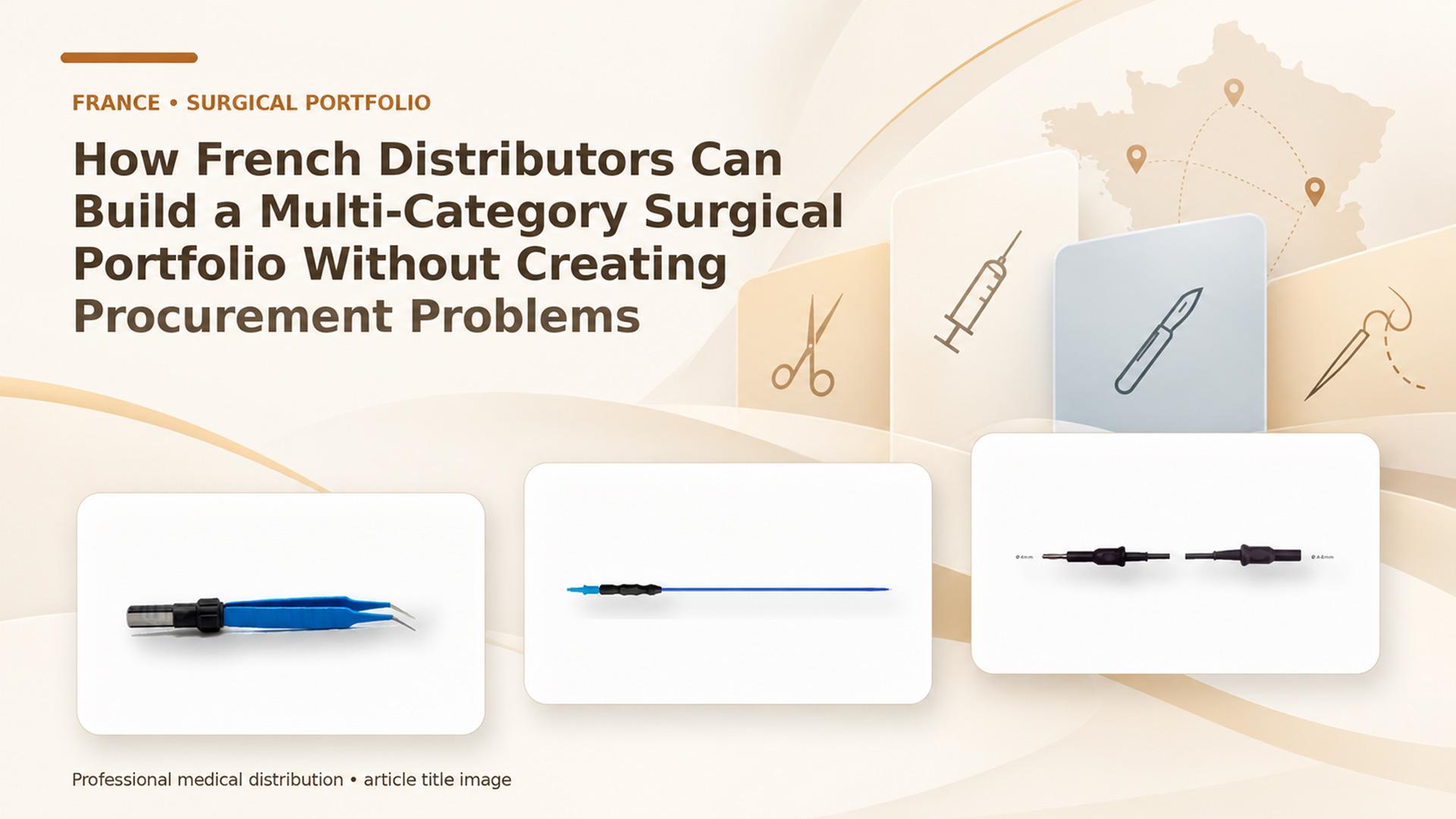
A Bigger Product Catalogue Looks Impressive—Until Your Team Can No Longer Manage It Properly
Expanding a surgical product portfolio can help distributors serve more hospital requirements and develop existing customer accounts. But adding products too quickly can also create reference confusion, stock pressure, supplier complexity, and sales-team frustration.
For distributors serving France, sustainable portfolio growth comes from adding relevant categories in a logical order rather than collecting products simply to make the catalogue appear larger.
How should a surgical distributor expand its product portfolio? Start with clearly defined products that have real customer demand, confirm that repeat ordering works reliably, and then add related categories that make sense for the same buyers. Product references, supplier communication, quotation structure, and stock planning should remain easy to manage as the range grows.
A Large Catalogue Is Not Automatically a Strong Catalogue
Product count is easy to measure, which is why it can become an attractive target.
But hospital buyers usually care more about whether the distributor can provide the products they need clearly and reliably.
A catalogue with fewer but well-organized categories may be more commercially useful than a large range filled with disconnected references.
Every category should have a clear reason for being there.
Start With a Product Category You Can Manage Well
Before expanding, distributors should prove that the first category works in real purchasing conditions.
That means checking whether:
-
references remain clear;
-
quotations are easy to prepare;
-
product information is available when required;
-
repeat orders remain consistent;
-
supplier communication stays responsive;
-
customers understand the product range.
This gives the distributor a practical foundation for expansion.
Commercial insight: A useful first product category does two jobs: it generates business and shows whether the supplier relationship is strong enough to support future growth.
Add Products That Fit Existing Customer Conversations
The next category should not feel random.
It should connect with customers the distributor already serves.
For example, a distributor supplying bipolar forceps may naturally receive enquiries for:
-
single-use forceps;
-
active electrodes;
-
laparoscopic electrosurgical instruments;
-
electrosurgical accessories;
-
cables and connectors;
-
other related surgical instruments.
These categories can strengthen the same hospital purchasing conversation instead of forcing the sales team to build a completely new market from the beginning.
Product Naming Must Stay Clear as the Range Expands
A small catalogue can survive inconsistent naming because experienced staff often remember what each product means.
A larger catalogue cannot rely on memory.
Distributors should maintain clear:
-
product names;
-
reference numbers;
-
category descriptions;
-
quotation terminology;
-
internal product records.
The objective is simple: sales, purchasing, inventory, and customer-service teams should all be talking about the same product in the same way.
Do Not Add Stock Simply Because You Added a Product
Catalogue expansion and inventory expansion do not have to happen at the same speed.
A distributor can introduce a relevant product to the range before committing to significant stock.
This allows the company to measure:
-
customer interest;
-
quotation frequency;
-
expected order quantities;
-
repeat-order potential;
-
which versions or references buyers prefer.
Once demand becomes clearer, stock decisions can be based on evidence rather than enthusiasm.
Use Customer Demand to Decide What Comes Next
Sales teams can provide some of the best portfolio intelligence.
If hospital customers repeatedly ask for an item the distributor does not currently supply, that is useful information.
Instead of selecting future categories only from supplier catalogues, distributors can track unanswered customer requests and identify patterns.
This makes product expansion more closely connected with actual demand.
Information gain: One of the safest ways to expand a surgical portfolio is to let repeated customer questions reveal where the next category should come from.
Supplier Capability Needs to Expand With the Catalogue
A wider product programme places more pressure on the supplier relationship.
Before adding several categories, distributors should check whether the manufacturer can still provide:
-
clear quotations;
-
organized product references;
-
realistic supply planning;
-
consistent product information;
-
support across repeat orders.
A supplier that becomes difficult to work with once the catalogue grows can turn portfolio expansion into an operational problem.
A Practical Expansion Sequence
Step 1: Establish the Core Range
Start with products that have clear demand and manageable purchasing requirements.
Step 2: Confirm Repeat-Order Stability
Make sure the second and third orders are as manageable as the first.
Step 3: Add Closely Related Categories
Expand into products existing customers are already likely to request.
Step 4: Measure Customer Response
Track quotations, enquiries, and repeat demand before increasing inventory.
Step 5: Expand Into More Specialized Categories
Add more complex or specialized products once the broader product programme is operating smoothly.
Key Takeaways
-
Portfolio quality matters more than product count.
-
Expansion should follow proven customer demand.
-
Related products are usually easier to introduce than disconnected categories.
-
Reference clarity becomes more important as catalogue size increases.
-
Adding a product does not automatically mean stocking large quantities.
-
Supplier performance should remain stable as the portfolio becomes broader.
Final Thoughts
A strong surgical distribution portfolio grows with purpose.
Each new category should solve a real customer need, fit naturally beside existing products, and remain easy for the distributor's team to quote, order, and support.
For French distributors, controlled portfolio expansion can create more commercial opportunity without creating unnecessary procurement pressure behind the scenes.
Frequently Asked Questions
How many products should a medical distributor offer?
There is no ideal number. The range should be large enough to meet relevant customer demand while remaining clear and manageable for sales, purchasing, and inventory teams.
Which products should be added first?
Products that customers already request and that connect naturally with the distributor's existing categories are usually the most practical place to start.
Should every new product be held in stock?
No. Distributors can initially assess demand before deciding how much local inventory is commercially sensible.
Why is reference consistency important during portfolio growth?
Clear references help prevent confusion across quotations, purchase orders, inventory records, and repeat customer enquiries.

 English
 Arabic
 French
 Spanish
 Portuguese
 Turkish
 Dutch
Dutch
 Italiano
 Russian
 Romaian
 Portuguese (Brazil)
 Greek
Greek