


How Can a Hidden Camera Detector Help You Protect Your Privacy?
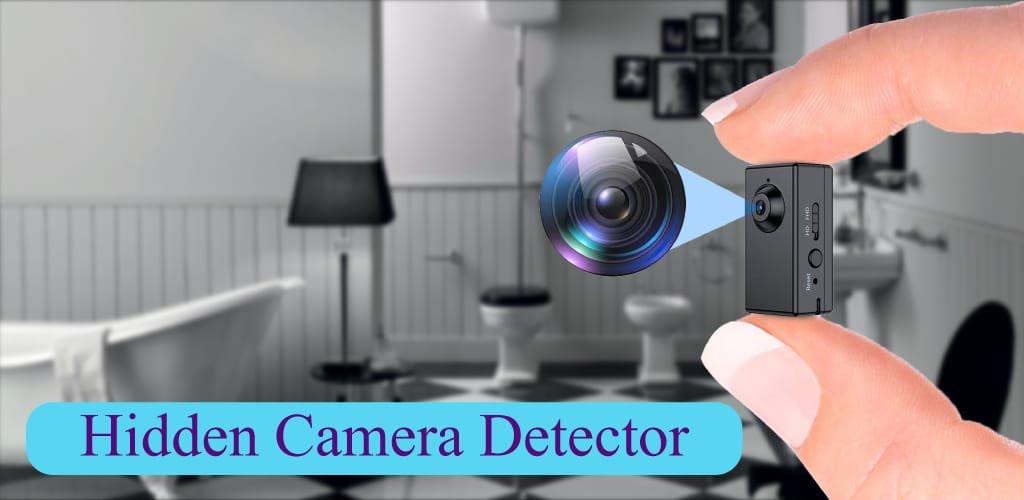
Privacy has become increasingly important in hotels, rental properties, offices, changing rooms, and other private spaces. Small surveillance devices can sometimes be difficult to notice because they may be placed inside everyday objects or positioned in areas where they are not immediately visible. A hidden camera detector can be used as one practical tool to help identify suspicious camera activity and give people greater awareness of their surroundings.
A hidden camera may be designed to blend into its environment, making a basic visual inspection less effective. Cameras can potentially be concealed inside smoke detectors, clocks, chargers, light fixtures, decorative items, and other objects. For this reason, a combination of physical inspection and appropriate detection equipment can provide a more systematic approach to privacy protection.
Why Are Hidden Cameras Difficult to Detect?
Modern surveillance cameras can be surprisingly compact. Some devices are designed to occupy very little space, while others can be integrated into ordinary household or office objects.
A camera does not necessarily need to be large or obvious to capture useful footage. Its lens may be positioned through a tiny opening, while the rest of the device remains concealed.
Several factors can make hidden cameras difficult to identify:
- Compact camera components can fit into small spaces.
- Devices may be disguised as everyday objects.
- Camera lenses can be extremely small.
- Wireless cameras may not require visible cables.
- Some devices can operate with minimal visible indicators.
- A camera may be positioned in a location that receives little attention.
Because of these challenges, privacy inspections should not depend solely on looking for a conventional camera.
What Is a Hidden Camera Detector?
A hidden camera detector is a device designed to help identify potential surveillance equipment that may not be immediately visible during a normal inspection.
Depending on the technology used, detection equipment may identify characteristics associated with cameras or other electronic devices. Some detectors are designed to identify reflected light from camera lenses, while other equipment can assist with identifying wireless signals or electronic activity.
Different detection methods have different strengths and limitations. Therefore, the type of detector used should be matched with the environment and the type of surveillance equipment that may be present.
It should also be understood that no single consumer device can guarantee that every hidden camera will be discovered. Environmental conditions, device design, camera configuration, and detection technology can all affect the results.
How Does a Hidden Camera Detector Work?
The exact operating method depends on the type of equipment being used.
Lens Detection
Some detection devices use light to help identify reflective camera lenses. When the detector is directed toward a suspicious area, a camera lens may produce a noticeable reflection.
This method can be useful because the lens itself has optical characteristics that differ from many surrounding surfaces.
However, reflective objects can sometimes produce similar results. For this reason, a suspected reflection should be examined carefully rather than automatically treated as proof of a hidden camera.
Wireless Signal Detection
Some hidden cameras transmit video or other information wirelessly. Detection equipment may be designed to identify certain radio-frequency activity associated with wireless devices.
This approach can be helpful when a camera is actively transmitting information.
However, not every hidden camera transmits continuously. Some devices may store recordings locally, meaning a wireless signal may not be present during an inspection.
Infrared Detection
Certain cameras use infrared illumination, particularly in low-light or nighttime conditions. Specialized detection methods may help identify infrared activity that cannot be easily noticed with the naked eye.
This can provide another layer of inspection when suspicious devices are being investigated.
Where Can Hidden Cameras Potentially Be Concealed?
A privacy inspection should focus on areas where a camera could realistically obtain a useful view.
Common locations that may deserve additional attention include:
- Smoke detectors
- Wall clocks
- Alarm clocks
- USB chargers
- Power adapters
- Light fixtures
- Air vents
- Decorative objects
- Shelving
- Electronics
- Ceiling fixtures
- Mirrors
- Furniture
- Electrical outlets
The presence of one of these objects does not mean that it contains a camera. The purpose of an inspection is to identify unusual modifications, unexplained openings, unfamiliar electronics, or other signs that may warrant further investigation.
Why Visual Inspection Still Matters
Technology can assist with privacy inspections, but physical observation remains important.
Before using detection equipment, the surrounding area should be examined carefully. Look for objects that seem out of place, recently installed items, unusual wiring, unexplained holes, or devices that appear inconsistent with the environment.
A useful inspection can involve several steps:
- Survey the room before touching anything.
- Identify unfamiliar or suspicious objects.
- Examine potential camera locations.
- Check for unusual openings or lens-like surfaces.
- Use appropriate detection equipment.
- Investigate unusual readings carefully.
- Document suspicious findings when appropriate.
By combining these methods, false alarms can potentially be reduced and suspicious equipment can be investigated more systematically.
What Should You Look for During a Privacy Inspection?
When checking a room, attention should be given to both physical and electronic indicators.
Unusual Objects
An item that does not appear to serve an obvious purpose may deserve additional attention. For example, an unfamiliar charger, clock, or electronic accessory could be examined more closely.
Unexplained Openings
Small holes in objects or fixtures may sometimes be used to provide a camera lens with a viewing angle. Not every opening is suspicious, so its purpose should be considered in context.
Unexpected Wiring
Unusual cables or power connections may warrant investigation, particularly when they lead to an unfamiliar device.
Suspicious Reflections
A small, concentrated reflection from a particular point may deserve closer examination when lens-detection techniques are being used.
Electronic Activity
Wireless or electronic activity that cannot be explained by known devices may require additional investigation.
Can a Hidden Camera Detector Find Every Camera?
No detection method should be treated as completely foolproof.
The effectiveness of a hidden camera detector can depend on several factors, including the detector's technology, the camera's design, whether the device is powered, whether it is transmitting information, and the surrounding environment.
For example, a wireless detector may not identify a camera that is recording information locally. Similarly, a lens-detection method may be affected by reflective surfaces within the room.
This is why professional privacy inspections often involve multiple detection techniques instead of relying on one signal or measurement.
When Should You Consider a Professional Inspection?
For situations involving serious privacy concerns, professional assistance may be appropriate.
Technical surveillance countermeasures, commonly referred to as TSCM, can involve specialized equipment and systematic inspection procedures. These services may be used in environments where privacy and confidentiality are particularly important.
Professional inspections may be considered for:
- Corporate offices
- Executive meeting rooms
- Sensitive business facilities
- Hotels and accommodation properties
- Legal offices
- Private residences
- High-profile environments
- Locations involved in confidential discussions
During a professional inspection, multiple sources of potential surveillance can be evaluated rather than focusing exclusively on cameras.
Hidden Camera Detection Requires More Than One Method
One of the most important considerations is that surveillance technology can take many forms.
A privacy inspection may need to consider:
- Visible cameras
- Concealed cameras
- Wireless transmitters
- Audio surveillance devices
- Unusual electronic equipment
- Suspicious network-connected devices
- Potentially modified fixtures
A hidden camera detector can therefore be viewed as one component of a broader privacy inspection rather than a complete solution by itself.
When multiple detection techniques are combined, a more thorough assessment can be performed.
Common Mistakes During Hidden Camera Searches
People can sometimes make privacy inspections less effective by relying on assumptions.
Relying Only on a Smartphone
Smartphones can be useful for basic visual inspection, but they should not automatically be considered equivalent to specialized detection equipment.
Assuming Every Reflection Is a Camera
Glass, polished metal, screws, and other surfaces can create reflections. A reflection should be investigated rather than immediately identified as surveillance equipment.
Checking Only Obvious Locations
A camera may be concealed somewhere other than a conventional location. The entire room should be considered during a systematic inspection.
Ignoring Networked Devices
Modern environments can contain many connected devices. An unfamiliar smart device should be identified and understood rather than automatically ignored.
Assuming a Detector Provides Absolute Protection
Detection equipment has limitations. A negative result should not necessarily be interpreted as proof that no surveillance equipment exists.
How Can You Improve Your Privacy Protection?
Detection is only one part of protecting private spaces. Good privacy practices should also be maintained on an ongoing basis.
Consider these measures:
- Know which devices are installed in your environment.
- Keep track of unfamiliar electronics.
- Review smart devices regularly.
- Limit access to sensitive areas.
- Use appropriate security controls for connected devices.
- Investigate unexplained equipment.
- Conduct privacy inspections when circumstances justify them.
- Seek professional assistance when the situation requires specialized expertise.
Awareness can make it easier to recognize unusual equipment before it becomes a larger privacy concern.
Choosing the Right Detection Approach
The appropriate detection method depends on what you are trying to identify.
For example, a basic visual inspection may be suitable for checking a hotel room for obviously unusual objects. More complex environments may require specialized equipment capable of identifying different types of electronic activity.
Before relying on any detector, consider:
- What type of surveillance device could be present?
- Is the suspected device wired or wireless?
- Could it be recording locally?
- Does the environment contain many electronic devices?
- Is professional inspection required?
- Does the equipment provide multiple detection methods?
Understanding these factors can help ensure that the inspection method is appropriate for the environment.
Privacy Should Be Treated as an Ongoing Responsibility
Privacy concerns do not always begin with a visible camera. They can also involve unfamiliar electronics, unauthorized devices, unsecured networks, or improperly managed access.
Regular awareness of the equipment present in a private or sensitive environment can make unexpected changes easier to identify.
Where appropriate, a hidden camera detector can provide an additional layer of awareness during a privacy inspection. However, the most reliable approach generally involves careful observation, appropriate technology, and professional expertise when necessary.
Final Thought
Protecting personal and professional privacy requires more than simply looking around a room for an obvious camera. Modern surveillance devices can be small, discreet, and integrated into ordinary objects, which is why a structured inspection can be valuable. A hidden camera detector can support that process by helping identify potential optical or electronic indicators, but its limitations should also be understood. For sensitive environments where privacy is especially important, multiple detection methods and professional TSCM expertise can be considered to create a more comprehensive approach to surveillance detection.

 English
 Arabic
 French
 Spanish
 Portuguese
 Deutsch
 Turkish
 Dutch
Dutch
 Russian
 Romaian
 Portuguese (Brazil)
 Greek
Greek