


EHS Management Software for Real Time Safety Insights
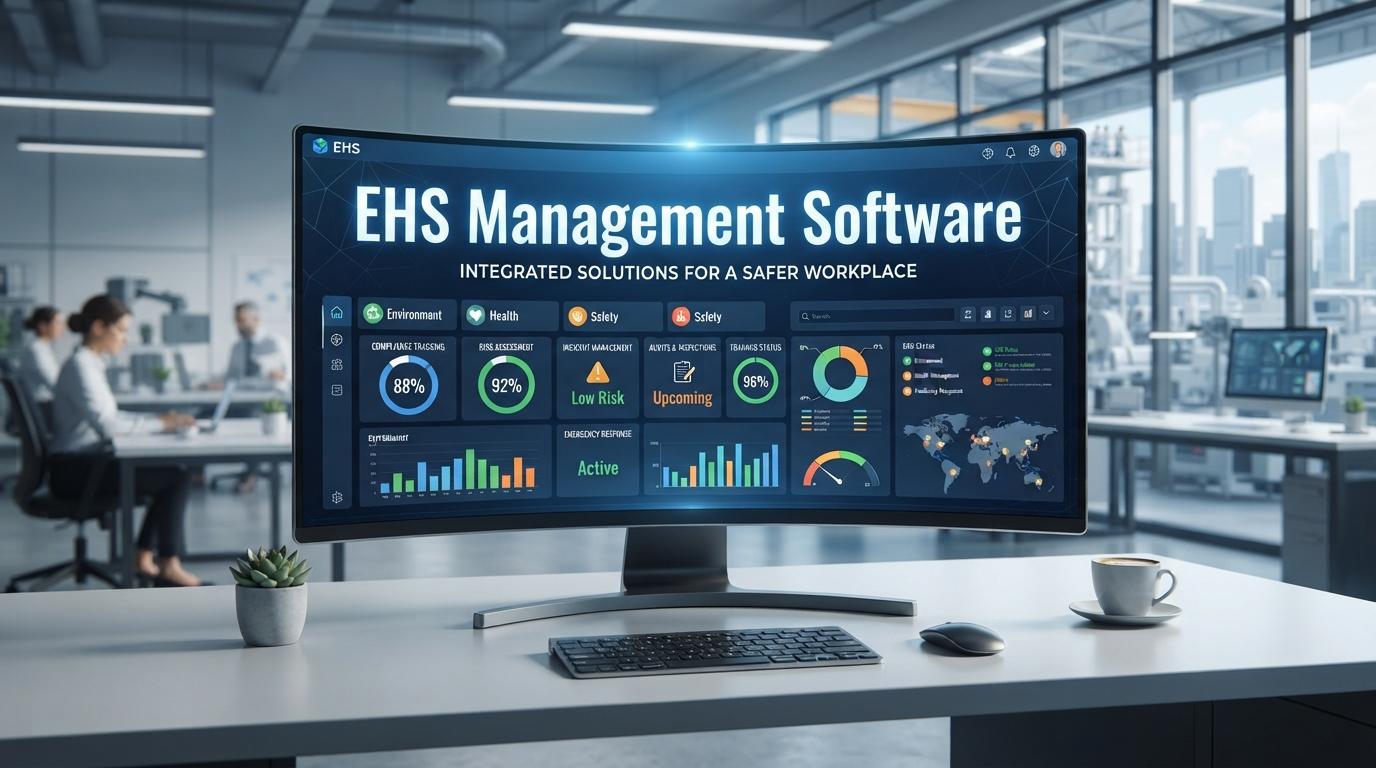
Safety teams need accurate information to respond to workplace risks effectively. If incident reports, inspection findings, hazard records, and corrective actions are stored in different places, it can take time to understand what is happening across an organisation. EHS Management Software can bring these activities into one digital system and provide access to updated safety information as employees and managers record new events. With better visibility, we can identify developing problems, monitor safety activities, and make decisions based on current information instead of relying only on old reports.
What Are Real Time Safety Insights
Real time safety insights refer to safety information that is available as events and activities are recorded rather than waiting for information to be collected manually at the end of a reporting period.
For example, an employee may report a hazard during a shift. A supervisor may complete a workplace inspection later that day, while another team records a near miss at a different location.
When these records are managed through a connected EHS system, authorised users can access updated information without waiting for separate spreadsheets or emails.
This does not mean every safety system provides information instantly in every situation. The actual timing depends on the software, internet connection, mobile access, reporting process, and how quickly employees enter information.
The main idea is to reduce the delay between a safety event and the availability of useful information.
What Is EHS Management Software
EHS Management Software is a digital platform designed to help organisations manage environmental, health, and safety activities.
Instead of using separate tools for incidents, inspections, risk assessments, and corrective actions, an organisation can use one system to connect these processes.
Common functions may include
- Hazard reporting
- Incident reporting
- Near miss reporting
- Risk assessments
- Safety inspections
- Corrective action management
- Safety observations
- Compliance tracking
- Environmental records
- Safety reports
- Dashboards and analytics
The features available depend on the provider and the organisation's requirements.
A small business may only need basic incident and inspection management, while a large organisation with multiple sites may require more advanced reporting, integrations, permissions, and analytics.
Why Real Time Safety Information Matters
Safety information loses some of its value when managers receive it long after an event has occurred.
Suppose several employees report the same hazard during a week. If those reports remain in separate files, management may not recognise the pattern until someone manually reviews them.
A connected EHS software system can make it easier to identify these reports and review them together.
This can help safety teams ask useful questions.
Is the same hazard appearing repeatedly?
Is one location reporting more incidents than another?
Are corrective actions being completed on time?
Are certain types of near misses increasing?
The answers can help managers decide where additional attention may be needed.
EHS Software for Centralised Safety Data
A centralised system is one of the foundations of useful safety insights.
Without digital EHS software, organisations may store safety information across spreadsheets, emails, paper documents, shared folders, and different applications.
This makes reporting difficult because someone may need to collect information from several sources before creating a complete safety report.
EHS Management Software can bring relevant records into one environment.
An authorised manager may be able to review incidents, inspections, hazards, risk assessments, and corrective actions without asking different departments to provide separate files.
This can reduce administrative work and make safety information easier to review.
Safety Management Software for Faster Reporting
Safety management software can simplify how employees submit information.
For example, an employee who notices an unsafe condition can report it through a digital form. Depending on the system, they may be able to include the location, description, photographs, and other details.
The report can then be reviewed by the appropriate safety professional.
This creates a faster connection between the person who notices the problem and the person responsible for addressing it.
The quality of the information still matters. A poorly completed report will not become useful simply because it is digital.
For this reason, organisations should keep reporting forms simple and provide employees with suitable training.
Workplace Safety Software and Mobile Access
Many employees do not spend their working day sitting at a desk.
Workers in construction, manufacturing, logistics, facilities, warehouses, and other environments may move between different areas or work sites.
Workplace safety software with mobile access can make it easier for these employees to report hazards and complete inspections where the work actually takes place.
For example, a supervisor can complete an inspection using a mobile device and record findings while walking through the site.
If the system supports it, photographs and notes can be attached to the record.
This can reduce the need to write everything down first and enter it into a computer later.
EHS Risk Management and Current Information
Risk management depends on having reliable information about workplace conditions.
An organisation may have a risk assessment that was accurate when it was created, but workplace conditions can change.
New equipment may be introduced. Processes may change. Employees may begin performing different tasks.
EHS risk management can therefore benefit from information collected through inspections, observations, incident reports, and hazard reports.
When safety teams review these records together, they may identify areas where an existing risk assessment needs to be reviewed.
This makes risk management more connected to actual workplace activity.
Incident Management Software
Incident management software provides a structured way to record and investigate safety events.
When an incident is reported, authorised users can document the relevant details and begin an investigation.
The information may include
- Date and time
- Location
- People involved
- Description of the event
- Immediate actions
- Investigation findings
- Contributing factors
- Corrective actions
- Supporting evidence
As new information is added, managers can review the status of the investigation.
Incident data can also contribute to broader safety reporting. If similar incidents occur repeatedly, management may want to investigate whether a common hazard or process weakness exists.
Safety Analytics Software
Safety analytics software can turn collected safety data into reports and visual information that managers can use for review.
Depending on the platform, organisations may be able to analyse
- Incident frequency
- Near miss reports
- Hazard categories
- Inspection findings
- Corrective action status
- Risk levels
- Safety observations
- Compliance activities
The purpose of analytics should not be to create complicated charts simply because the software can produce them.
The information should help answer practical questions.
For example, a safety manager may want to know which locations have the highest number of unresolved corrective actions or which hazard categories appear most frequently.
Clear analytics can help direct attention toward areas that need review.
Tracking Corrective Actions
Real time safety insights are not very useful if identified problems remain unresolved.
Corrective action tracking connects safety information with responsibility.
When a hazard or inspection finding is recorded, the system can assign an action to a responsible person or department.
The action may include a due date, priority, description, and completion evidence.
Managers can then review open and overdue actions.
For example, if a safety inspection identifies a damaged emergency exit sign, the responsible maintenance team can receive the corrective action and update the status once the problem is fixed.
This creates a clear record from the original finding to the final action.
Safety Compliance Software
Compliance is another area where updated information can be useful.
Safety compliance software can help organisations track inspections, audits, training records, documentation, corrective actions, and other compliance related activities.
Different industries and locations have different legal and regulatory requirements, so organisations still need to understand which requirements apply to their operations.
Software does not automatically make a company compliant.
Instead, it provides a structured way to manage the activities and records that form part of an organisation's compliance process.
EHS Compliance Software and Management Visibility
EHS compliance software can also help management see whether required activities are being completed.
For example, if a particular inspection needs to be performed regularly, the system can record the inspection and its findings.
If an action is created from that inspection, the action can remain visible until it is completed.
This gives managers more than a completed inspection record. They can also see whether identified issues were addressed.
That distinction is important because completing a checklist does not necessarily mean that every problem found during the inspection has been resolved.
Benefits of Real Time Safety Insights
When EHS Management Software is configured properly, organisations may gain several practical benefits.
Faster Access to Safety Information
Managers can review newly recorded safety events without waiting for manual reporting cycles.
Better Visibility Across Locations
Organisations with multiple sites can review information through a central platform.
Faster Response to Reported Hazards
Safety teams can receive information sooner and determine what action may be required.
Better Corrective Action Monitoring
Managers can identify actions that remain open or overdue.
More Useful Safety Analysis
Historical and current information can be reviewed together to identify patterns.
Reduced Administrative Work
Digital workflows can reduce the need to collect information manually from different departments.
How to Get Better Results From EHS Software
Simply purchasing EHS software does not guarantee useful safety insights.
The system needs to be implemented around the way employees actually work.
First, keep reporting processes simple. Employees should understand what needs to be reported and how to submit it.
Second, define clear responsibilities. If nobody is responsible for reviewing a hazard report, the information may sit in the system without action.
Third, maintain consistent data. If different teams use completely different categories for similar incidents, reporting becomes harder to analyse.
Finally, review the information regularly.
A dashboard is useful only when someone looks at the information and uses it to make decisions.
Choosing the Right EHS Management Software
Before selecting a system, you should consider the size of your organisation, number of locations, workplace risks, existing processes, and reporting requirements.
Useful features may include
- Mobile reporting
- Risk assessments
- Incident management
- Safety inspections
- Corrective action tracking
- Safety analytics
- Compliance management
- Document management
- Custom reports
- Dashboards
- User permissions
- System integrations
Ease of use should also be part of the decision.
If employees find reporting difficult, the organisation may receive less safety information. A simple system that people actually use can be more useful than a complicated platform with features that employees rarely access.
Final Thoughts
EHS Management Software can help organisations turn workplace safety information into more accessible and useful insights. By connecting hazard reports, inspections, incidents, risk assessments, corrective actions, and compliance activities, safety teams can reduce information gaps and respond to issues more efficiently.
Real time safety insights are not about collecting as much data as possible. They are about having the right information available when people need it.
We still need employees to report hazards accurately, supervisors to respond to findings, and managers to review safety performance regularly. When people and processes are supported by suitable EHS software, organisations can build a more connected approach to safety management and make better use of the information generated across their workplaces.

 English
 Arabic
 French
 Spanish
 Portuguese
 Deutsch
 Dutch
Dutch
 Italiano
 Russian
 Romaian
 Portuguese (Brazil)
 Greek
Greek