


 About
 Terms
 Privacy
Penile Implant Surgery in Pakistan
Erectile dysfunction (ED) is a common sexual health condition that affects millions of men worldwide. It occurs when a man has difficulty achieving or maintaining an erection firm enough for satisfactory sexual activity. Although erectile dysfunction can affect men at different stages of life, it becomes more common with age and may be associated with diabetes, heart disease, high blood pressure, nerve damage, hormonal changes, prostate surgery, and other medical conditions.
For many men, erectile dysfunction can be successfully managed with medications, lifestyle modifications, psychological counselling, or other non-surgical treatments. However, some men continue to experience erection problems despite trying different treatment options.
Penile implant surgery is an advanced treatment designed for men with persistent erectile dysfunction who do not achieve satisfactory results from conventional therapies. Also known as penile prosthesis surgery, this procedure involves placing a medical device inside the penis to provide the rigidity needed for sexual intercourse.
Modern penile implants are designed to offer dependable erectile function, improve sexual confidence, and help men regain an important aspect of their intimate lives.
In this comprehensive guide, we will explain penile implant surgery, its different types, how the procedure works, who may benefit from it, potential complications, recovery, expected results, and treatment costs.
What Is a Penile Implant?
A penile implant is a surgically placed medical device that helps men with erectile dysfunction achieve an erection suitable for sexual intercourse.
The device is inserted into two internal structures of the penis called the corpora cavernosa. These structures normally fill with blood during a natural erection. When the natural erectile mechanism does not function properly, an implant can provide the necessary mechanical support to make the penis firm.
A penile implant remains inside the body and is generally not visible externally. Depending on the selected device, a patient can either manually position the penis or activate an internal pump to create an erection.
Penile implants are generally recommended when other erectile dysfunction treatments have failed, are unsuitable, or have not provided satisfactory results.
It is important to understand that penile implants treat erection problems. They do not directly increase sexual desire, improve fertility, or treat every other form of sexual dysfunction.
Why Do Men Need Penile Implant Surgery?
Erectile dysfunction can develop for several reasons. In some men, the condition is temporary or responds well to medication. In others, damage to blood vessels, nerves, or erectile tissues makes conventional treatment less effective.
Common causes of erectile dysfunction include:
-
Diabetes: Long-term high blood glucose can damage nerves and blood vessels involved in erections.
-
Cardiovascular disease: Poor circulation can reduce blood flow to the penis.
-
High blood pressure: Vascular damage can interfere with normal erectile function.
-
Prostate surgery: Some men develop erectile dysfunction following prostate cancer treatment or other pelvic procedures.
-
Nerve damage: Neurological conditions and pelvic injuries can interfere with the signals needed for erections.
-
Peyronie's disease: Scar tissue can cause penile curvature and, in some cases, erectile dysfunction.
-
Hormonal disorders: Certain hormonal problems can contribute to sexual dysfunction.
-
Age-related changes: Erectile function may decline as men get older, although erectile dysfunction should not be considered an unavoidable part of ageing.
When these conditions cause severe erectile dysfunction that does not respond to other treatments, penile implant surgery may be considered.
Who Is a Suitable Candidate for Penile Implant Surgery?
Penile implant surgery is not the first treatment recommended for every man with erectile dysfunction. It is generally considered for individuals who have persistent erection problems and have not achieved satisfactory results with less invasive treatments.
A man may be considered a suitable candidate if he:
-
Has severe or persistent erectile dysfunction.
-
Has not responded adequately to oral ED medications.
-
Cannot tolerate conventional erectile dysfunction treatments.
-
Has diabetes-related erectile dysfunction.
-
Experiences erectile dysfunction following prostate surgery.
-
Has nerve damage affecting erectile function.
-
Has vascular problems that prevent sufficient penile rigidity.
-
Has Peyronie's disease combined with significant erectile dysfunction.
-
Prefers a long-term surgical treatment after understanding its benefits and limitations.
Before recommending surgery, a urologist evaluates the patient's medical history, physical condition, penile anatomy, previous treatments, and expectations.
Who May Need to Avoid or Delay Surgery?
Some medical conditions can increase surgical risks or interfere with recovery.
Penile implant surgery may need to be delayed or avoided in patients with:
-
Active urinary or genital infections.
-
Uncontrolled diabetes.
-
Certain serious cardiovascular conditions.
-
Bleeding disorders that cannot be safely managed.
-
Medical conditions that make anesthesia unsafe.
-
Unrealistic expectations about penile size or sexual performance.
A complete medical assessment helps determine whether surgery is appropriate.
Different Types of Penile Implants
There are two main categories of penile implants: inflatable penile implants and malleable penile implants.
Inflatable implants are further divided into two-piece and three-piece devices. Each type has its own design, benefits, and limitations.
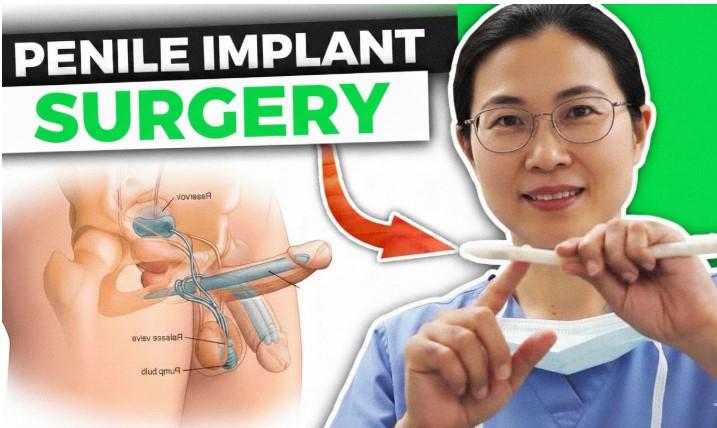
1. Three-Piece Inflatable Penile Implant
A three-piece inflatable penile implant is a commonly used option for men seeking a more natural transition between the erect and flaccid states.
It consists of three main components:
-
Two inflatable cylinders placed inside the penis.
-
A fluid reservoir positioned inside the lower abdomen or pelvis.
-
A small pump placed inside the scrotum.
These components are connected through small tubes.
When the patient wants an erection, he squeezes the pump located inside the scrotum. The pump transfers fluid from the reservoir into the cylinders, making the penis firm.
After sexual activity, the patient activates the deflation mechanism, allowing the fluid to return to the reservoir.
Advantages:
-
Provides controlled erections.
-
Allows the penis to become softer after use.
-
Generally offers a more natural flaccid appearance.
-
Provides flexibility in the timing of sexual activity.
-
Can offer satisfactory rigidity for intercourse.
Disadvantages:
-
Requires a more complex surgical procedure.
-
Contains multiple mechanical components.
-
Requires sufficient hand strength and dexterity.
-
Mechanical failure may eventually require additional surgery.
2. Two-Piece Inflatable Penile Implant
A two-piece inflatable implant is another option for men who want an inflatable device without a separate abdominal reservoir.
It generally consists of two inflatable cylinders and a combined pump and fluid-storage component positioned inside the scrotum.
When the patient operates the pump, fluid moves into the cylinders and creates an erection. The device can subsequently be deflated using its release mechanism.
Advantages:
-
Does not require a separate abdominal reservoir.
-
Provides an inflatable erection.
-
May be suitable for selected patients with previous abdominal or pelvic surgery.
-
Offers an alternative to three-piece systems.
Disadvantages:
-
May provide different expansion and rigidity characteristics compared with three-piece systems.
-
Requires manual operation.
-
Has mechanical components that may eventually malfunction.
3. Malleable Penile Implant
A malleable penile implant, also called a semi-rigid penile implant, consists of two flexible rods placed inside the erectile chambers of the penis.
Unlike inflatable implants, it does not require a pump or fluid reservoir.
The penis remains relatively firm after surgery. The patient manually positions it upward for sexual activity and downward when not in use.
Advantages:
-
Simple mechanical design.
-
No pump or reservoir.
-
Easier operation for men with limited hand dexterity.
-
Fewer mechanical components.
-
May be suitable for selected patients who prefer a simpler device.
Disadvantages:
-
The penis remains relatively firm at all times.
-
Concealment under clothing may be more difficult.
-
May be less natural in appearance when not in use.
-
Continuous firmness can cause discomfort for some patients.
Comparison of Penile Implant Types
| Feature | Three-Piece Inflatable | Two-Piece Inflatable | Malleable |
|---|---|---|---|
| Components | Three | Two | Two rods |
| Pump | Yes | Yes | No |
| Inflatable erection | Yes | Yes | No |
| Deflation | Yes | Yes | Not applicable |
| Flaccid appearance | Generally more natural | Generally more natural | Remains firm |
| Manual operation | Required | Required | Manual positioning |
| Mechanical complexity | Higher | Moderate | Lower |
The best implant depends on the patient's anatomy, medical condition, personal preferences, and surgeon's experience.
How Does a Penile Implant Work?
A penile implant provides mechanical support to help the penis achieve sufficient rigidity for sexual intercourse.
The working mechanism depends on the selected implant.
In an inflatable implant, the patient activates a small pump located inside the scrotum. The pump transfers fluid into the cylinders placed inside the penis. As the cylinders fill, they expand and create firmness.
After sexual activity, the patient activates the deflation mechanism to return the fluid to the reservoir or storage component.
A malleable implant works differently. Its flexible internal rods maintain firmness, and the patient manually adjusts the position of the penis.
Because an implant mechanically provides rigidity, it does not depend on the normal blood-flow mechanism required for a natural erection.
Penile Implant Surgery: Step-by-Step Procedure
Penile implant surgery is performed by a qualified urologist or specialist experienced in penile prosthetic surgery.
The exact procedure depends on the device type, patient's anatomy, and surgical technique.
Step 1: Initial Consultation
The first stage involves a detailed consultation with the urologist.
The doctor discusses the patient's erectile dysfunction, medical history, previous treatments, sexual expectations, and general health.
Important questions may include:
-
How long has erectile dysfunction been present?
-
Have ED medications been effective?
-
Does the patient have diabetes or cardiovascular disease?
-
Has the patient undergone prostate or pelvic surgery?
-
What medications is the patient currently taking?
-
Does the patient have previous surgical complications?
-
What are the patient's expectations regarding the implant?
The doctor also explains the available devices and potential risks.
Step 2: Medical Examination and Testing
A physical examination is performed to assess penile anatomy and overall suitability for surgery.
Depending on the patient's health, investigations may include:
-
Blood glucose and HbA1c.
-
Complete blood count.
-
Kidney function tests.
-
Blood pressure assessment.
-
Urine testing.
-
Hormonal testing when indicated.
-
Cardiovascular assessment when necessary.
-
Anesthesia evaluation.
These investigations help identify conditions that could affect surgical safety and recovery.
Step 3: Anesthesia
Penile implant surgery is generally performed under general or regional anesthesia.
The anesthesia method depends on the patient's health, surgical requirements, and medical team's recommendations.
Step 4: Surgical Incision
The surgeon makes a carefully planned incision, commonly in the area between the penis and scrotum or in the lower abdominal region, depending on the selected approach.
This provides access to the internal erectile chambers.
Step 5: Preparation of the Erectile Chambers
The surgeon accesses the corpora cavernosa and prepares the spaces where the implant cylinders or rods will be placed.
Measurements are taken to select the appropriate implant dimensions.
Correct sizing is essential for comfort, positioning, and proper device function.
Step 6: Implant Placement
The implant components are carefully positioned inside the body.
For an inflatable device, the cylinders are inserted into the erectile chambers, while the pump and reservoir are positioned in their appropriate locations.
For a malleable implant, flexible rods are inserted into the erectile chambers.
Step 7: Implant Testing
If an inflatable implant is used, the surgeon tests the device to confirm that it inflates and deflates correctly.
The surgeon checks the position, function, and rigidity of the implant.
Step 8: Closing the Incision
After confirming correct placement, the surgeon closes the incision using appropriate surgical techniques.
A dressing may be applied to protect the surgical area.
Step 9: Postoperative Monitoring
Following surgery, the patient is monitored during the initial recovery period.
Depending on the surgical approach and individual circumstances, discharge may occur on the same day or after a short hospital stay.
The surgical team provides medication instructions, wound-care guidance, and follow-up arrangements.
Benefits of Penile Implant Surgery
Penile implant surgery can provide several benefits for men with severe erectile dysfunction.
1. Restored Ability to Achieve an Erection
The main benefit is the ability to achieve sufficient penile rigidity for penetrative sexual activity.
The implant provides mechanical support even when the natural erectile mechanism is no longer functioning effectively.
2. Better Control Over Sexual Activity
Men with inflatable implants can control when they want an erection and when they want the penis to return to a softer state.
This can provide greater flexibility and reduce uncertainty during intimate moments.
3. Long-Term Treatment Option
Unlike oral ED medications that need to be taken as prescribed, a penile implant is designed to provide long-term assistance.
However, the device may eventually require revision or replacement because of mechanical failure, infection, or other complications.
4. Improved Sexual Confidence
Persistent erectile dysfunction can affect confidence and relationships.
Restoring the ability to achieve an erection may help men feel more comfortable and confident during sexual activity.
5. Reduced Dependence on ED Medications
Many men no longer require oral erectile dysfunction medications to achieve penile rigidity after successful implant surgery.
The device provides mechanical firmness rather than relying on medication to stimulate the natural erectile response.
6. High Patient Satisfaction
Penile implant surgery generally has high satisfaction rates among appropriately selected patients.
Patient selection, realistic expectations, proper surgical technique, and postoperative support all contribute to successful outcomes.
7. Suitable for Different Causes of Erectile Dysfunction
Penile implants can help men with erectile dysfunction associated with diabetes, vascular disease, nerve damage, prostate cancer treatment, pelvic injuries, and certain cases of Peyronie's disease.
Does a Penile Implant Increase Penis Size?
One of the most common concerns among men considering penile implant surgery is whether the procedure increases penis length or thickness.
The primary purpose of a penile implant is to restore erectile rigidity, not enlarge the penis.
The implant is selected according to the patient's existing anatomy and the available space within the erectile chambers.
Some men may feel that their penis appears shorter after surgery. This can be related to previous tissue damage, prolonged erectile dysfunction, penile fibrosis, or changes following prostate surgery.
Patients should discuss realistic size expectations with their surgeon before undergoing the procedure.
Penile implant surgery should not be considered a penis enlargement treatment.
Does a Penile Implant Affect Sexual Sensation?
A penile implant is designed to restore mechanical rigidity rather than directly change penile sensation.
The nerves responsible for penile sensation are generally not intentionally removed during implant surgery.
Most appropriately selected patients can continue experiencing sexual sensation after the procedure.
However, individual experiences may vary, and temporary changes in sensation can occur during recovery.
The implant itself does not directly prevent orgasm or ejaculation. These functions may already be affected by diabetes, nerve damage, prostate surgery, medications, or other medical conditions.
It is also important to understand that an implant does not automatically restore sexual desire or correct every form of sexual dysfunction.
Risks and Possible Complications of Penile Implant Surgery
Although penile implant surgery is an established treatment for erectile dysfunction, it involves surgery and carries certain risks.
Patients should understand these potential complications before deciding to undergo the procedure.
1. Infection
Infection is one of the most important complications associated with penile implant surgery.
Symptoms may include:
-
Increasing pain.
-
Redness around the surgical area.
-
Swelling.
-
Fever.
-
Discharge from the incision.
-
Delayed wound healing.
An implant infection may require antibiotics and, in many cases, surgical removal or replacement of the device.
Modern infection-prevention measures, appropriate antibiotic protocols, and antibiotic-coated implants can help reduce infection risks.
2. Bleeding and Bruising
Some bruising and swelling are expected following surgery.
However, excessive bleeding or a collection of blood under the skin may require medical assessment.
3. Pain and Discomfort
Patients commonly experience some discomfort during the initial recovery period.
Pain generally improves gradually with time and appropriate medication.
Persistent or worsening pain should be evaluated by the treating surgeon.
4. Mechanical Failure
Inflatable penile implants contain mechanical components that may eventually wear out or malfunction.
Possible problems include pump malfunction, fluid leakage, cylinder damage, and tubing problems.
Mechanical failure may require revision surgery or replacement.
5. Implant Erosion
Implant erosion occurs when part of the device damages or passes through surrounding tissue.
Although uncommon, this complication requires medical attention.
6. Changes in Penile Appearance
Some patients may notice changes in penile length, shape, or appearance after surgery.
The glans, or head of the penis, does not become rigid through the implant itself, although it may become engorged to some extent with sexual stimulation.
These expected changes should be discussed before surgery.
7. Urinary Problems
Temporary difficulty urinating can occur after surgery.
Rarely, injury to the urethra or surrounding structures may develop.
8. Need for Additional Surgery
Penile implants are designed for long-term use, but they may eventually require revision or replacement.
The possibility of future surgery should be considered before choosing this treatment.
Recovery After Penile Implant Surgery
Recovery is an important part of achieving a successful surgical outcome.
The healing period varies depending on the implant type, surgical technique, general health, and individual recovery.
First 24–48 Hours
During the first couple of days, patients may experience:
-
Mild to moderate pain.
-
Swelling.
-
Bruising.
-
Scrotal discomfort.
-
Temporary difficulty moving comfortably.
The surgeon may recommend pain medication, wound care, and supportive underwear.
First Week
During the first week, swelling and discomfort generally begin to improve.
Patients should follow their surgeon's instructions, keep the surgical area clean, avoid strenuous activity, and take prescribed medications.
Heavy lifting and activities that place pressure on the surgical area should be avoided.
Second to Fourth Week
Many patients gradually return to routine daily activities during this period.
However, complete healing may take longer.
Heavy exercise, cycling, and strenuous movements should be avoided until the surgeon gives permission.
Fourth to Sixth Week
Many patients are assessed for implant activation and training during this period.
For inflatable implants, the surgeon demonstrates how to operate the pump and explains the inflation and deflation process.
Sexual activity should remain restricted until the surgical area has healed and the surgeon confirms that intercourse is safe.
Long-Term Recovery
After healing is complete, patients can gradually resume their normal sexual activities.
Regular follow-up appointments help monitor implant function and identify potential complications.
Postoperative Care Tips
Following postoperative instructions can help reduce complications and support proper healing.
Important recommendations include:
-
Follow medical instructions: Take prescribed medications and follow the surgeon's wound-care guidance.
-
Maintain hygiene: Keep the surgical area clean according to medical instructions.
-
Avoid premature sexual activity: Do not resume intercourse until the surgeon gives approval.
-
Avoid heavy lifting: Allow sufficient time for the surgical tissues to heal.
-
Attend follow-up appointments: Regular assessments help ensure proper implant positioning and function.
-
Control diabetes: Maintain appropriate blood glucose levels if you have diabetes.
-
Avoid smoking: Smoking can interfere with wound healing and increase surgical risks.
-
Learn device operation: Patients with inflatable implants should receive proper training before using the device independently.
-
Report unusual symptoms: Fever, increasing pain, redness, discharge, or difficulty urinating should be reported promptly.
How Long Does a Penile Implant Last?
The lifespan of a penile implant depends on several factors, including device design, manufacturer, surgical technique, patient health, and mechanical wear.
Modern penile implants are designed for long-term use, but no device is guaranteed to last forever.
Published European Association of Urology guideline data report the following estimated implant survival rates:
| Follow-up Period | Estimated Implant Survival |
|---|---|
| 1 year | 93.3% |
| 3 years | 91.0% |
| 5 years | 87.2% |
| 10 years | 76.8% |
| 15 years | 63.7% |
| 20 years | 52.9% |
These figures are pooled estimates and should not be interpreted as an exact prediction for every individual patient or implant model.
Regular follow-up and prompt assessment of mechanical problems can help maintain the device's function.
Penile Implant vs. Other Erectile Dysfunction Treatments
Several treatment options are available for men with erectile dysfunction.
The most appropriate approach depends on the underlying cause, severity of the condition, medical history, and personal preferences.
Penile Implant vs. ED Medications
Oral medications such as sildenafil and tadalafil help improve the natural erectile response by increasing blood flow to the penis.
A penile implant works differently by mechanically creating penile rigidity.
ED medications are less invasive, while implant surgery may be considered when medication does not provide satisfactory results.
Penile Implant vs. Penile Injections
Penile injections involve administering medication into erectile tissue to produce an erection.
They can be effective for men who do not respond to oral medications.
However, injections require repeated administration and may cause discomfort, bruising, or prolonged erections.
A penile implant offers an alternative for men who prefer a surgical solution or do not achieve satisfactory results with injections.
Penile Implant vs. Vacuum Erection Devices
A vacuum erection device uses a cylinder and suction mechanism to draw blood into the penis.
A constriction ring may then be used to help maintain the erection.
Unlike penile implants, vacuum devices do not require surgery.
However, some men find them inconvenient or uncomfortable.
Penile Implant vs. Shockwave Therapy
Low-intensity extracorporeal shockwave therapy is a non-invasive treatment that uses acoustic waves and is sometimes offered for erectile dysfunction.
Its potential benefits depend on the underlying cause and severity of ED.
It should not be considered equivalent to penile implant surgery, particularly for men with severe erectile dysfunction who have not responded to other treatments.
Cost of Penile Implant Surgery
The cost of penile implant surgery varies depending on the implant type, manufacturer, hospital facilities, surgeon's experience, and medical requirements.
There is no single price that applies to every patient.
Important factors affecting the total cost include:
-
Type of penile implant.
-
Manufacturer and device model.
-
Inflatable or malleable implant selection.
-
Surgeon and surgical team fees.
-
Hospital and operating theatre charges.
-
Anesthesia expenses.
-
Preoperative medical investigations.
-
Medications and postoperative care.
-
Length of hospital stay.
-
Management of possible complications.
Which Penile Implant Is More Expensive?
Inflatable penile implants are generally more expensive than malleable implants because they contain more complex mechanical components.
Three-piece inflatable devices may also have different costs compared with two-piece systems.
However, the cheapest option is not necessarily the most appropriate.
Patients should consider device quality, surgeon experience, hospital standards, postoperative support, and long-term maintenance when comparing treatment options.
Penile Implant Surgery Cost in Pakistan
Men considering penile implant surgery in Pakistan should obtain a personalized quotation from a qualified urologist or hospital.
The quotation should clearly explain whether it includes the implant, surgery, anesthesia, hospital stay, medications, and follow-up appointments.
Patients should also confirm the exact implant brand and model before making a financial decision.
Penile Implant Surgery in Pakistan
Penile implant surgery is an important treatment option for men in Pakistan who experience severe erectile dysfunction.
Many men delay seeking medical assistance because of embarrassment, social stigma, or concerns about discussing sexual health problems.
However, erectile dysfunction is a medical condition, and professional treatment can help improve sexual health and quality of life.
Men considering this procedure should consult an experienced urologist with specific training in penile prosthetic surgery.
A qualified specialist can assess the underlying cause of erectile dysfunction, explain the available treatments, and determine whether an implant is appropriate.
Before selecting a surgeon or hospital, patients should consider:
-
The surgeon's experience with penile implant procedures.
-
Availability of genuine medical devices.
-
Hospital infection-control standards.
-
Experience with inflatable and malleable implants.
-
Postoperative care and follow-up services.
-
Availability of revision surgery if complications occur.
Patients should feel comfortable discussing their medical history, concerns, expectations, and treatment preferences with their doctor.
Psychological and Relationship Benefits
Erectile dysfunction can affect more than physical sexual performance. It may also influence emotional well-being, confidence, and relationships.
Men experiencing persistent ED may develop anxiety about sexual activity, avoid intimacy, or feel frustrated because of their inability to achieve an erection.
A successful penile implant procedure may help address some of these challenges.
Potential psychological and relationship benefits include:
-
Improved confidence during sexual activity.
-
Reduced anxiety related to erection difficulties.
-
Greater control over sexual performance.
-
Improved intimacy between partners.
-
Increased satisfaction with sexual relationships.
-
Better overall quality of life.
Couples may also benefit from discussing expectations and concerns before surgery.
Psychological counselling or sex therapy can complement medical treatment when emotional or relationship difficulties are present.
Frequently Asked Questions About Penile Implants
1. Is penile implant surgery permanent?
Penile implant surgery is intended as a long-term treatment for erectile dysfunction. However, the device may eventually require replacement or revision because of mechanical failure, infection, or other complications.
2. Is penile implant surgery painful?
The procedure is performed under anesthesia, so patients do not experience surgical pain during the operation. Some discomfort, swelling, and bruising are common during recovery and generally improve with appropriate medication.
3. Can a man have normal sexual intercourse after penile implant surgery?
Yes. Once the surgical area has healed and the surgeon has approved sexual activity, most appropriately selected patients can use their implant for penetrative intercourse.
4. Does a penile implant affect ejaculation?
The implant itself does not normally prevent ejaculation. However, ejaculation may be affected by underlying medical conditions, previous prostate surgery, medications, or other health problems.
5. Does a penile implant affect orgasm?
Most men can continue experiencing orgasms after penile implant surgery. However, the procedure does not directly treat orgasmic disorders, and individual outcomes may vary.
6. Can a woman feel a penile implant during intercourse?
A properly fitted and functioning implant generally allows penetrative sexual activity. Partners may notice differences depending on the device type, penile anatomy, and individual circumstances.
7. Is a penile implant visible from outside the body?
No. The implant components are placed internally. However, a malleable implant may make the penis appear continuously firm, while an inflatable implant generally allows a softer appearance when deflated.
8. Can a penile implant break?
Yes. Although modern implants are designed for durability, mechanical components can wear out or malfunction over time. If the device stops working properly, a urologist should examine it.
9. Can men with diabetes undergo penile implant surgery?
Yes. Men with diabetes may be suitable candidates. However, good blood glucose control is important because diabetes can increase the risk of postoperative infection and wound-healing problems.
10. Can a penile implant treat Peyronie's disease?
A penile implant may be recommended for selected men who have Peyronie's disease combined with erectile dysfunction that does not respond to other treatments. Additional corrective procedures may sometimes be necessary to address significant penile curvature.
11. How soon can I resume sexual activity after surgery?
Many patients can resume sexual activity approximately four to six weeks after surgery. However, the exact timing depends on healing and the surgeon's assessment.
12. Can I choose between an inflatable and malleable implant?
Yes. The available options depend on your anatomy, medical condition, hand dexterity, lifestyle, and surgeon's recommendation.
13. Does a penile implant increase sexual desire?
No. A penile implant restores the mechanical ability to achieve penile rigidity. It does not directly increase testosterone, libido, or sexual desire.
14. Can I use ED medication after penile implant surgery?
Some patients may still use erectile dysfunction medications for specific medical reasons. However, the implant generally provides the rigidity needed for intercourse. Medication use should be discussed with the treating doctor.
15. What happens if a penile implant becomes infected?
An implant infection requires urgent medical assessment. Treatment may involve antibiotics and, in many cases, surgical removal or replacement of the device.
16. Is penile implant surgery safe?
Penile implant surgery is an established treatment with generally high satisfaction rates. However, like every surgical procedure, it carries risks, including infection, bleeding, pain, mechanical failure, and the possibility of additional surgery.
17. Can a penile implant be removed?
Yes. A penile implant can be surgically removed. However, removal may leave scar tissue and damage to the erectile chambers, and natural erectile function may not return. Patients should carefully consider this before surgery.
18. Is penile implant surgery suitable for younger men?
Age alone does not determine suitability. The decision depends on the severity and cause of erectile dysfunction, response to other treatments, general health, and patient expectations.
19. How long does penile implant surgery take?
The operating time varies according to implant type, surgical technique, and complexity. The surgeon can provide an estimated duration during the preoperative consultation.
20. Can a penile implant restore natural erections?
No. A penile implant provides mechanical rigidity rather than restoring the natural erectile mechanism. It is generally considered a definitive treatment for erectile dysfunction.
When Should You Consult a Urologist?
Men experiencing persistent erectile dysfunction should consider consulting a qualified urologist for an appropriate medical evaluation.
Early assessment can help identify potentially treatable underlying conditions, including diabetes, cardiovascular disease, hormonal problems, and medication-related erectile dysfunction.
Consider seeking professional advice if:
-
You regularly experience difficulty achieving an erection.
-
You cannot maintain an erection during sexual activity.
-
ED medications are not providing satisfactory results.
-
You experience erectile dysfunction following prostate surgery.
-
You have penile curvature alongside erection problems.
-
Erectile dysfunction is affecting your confidence or relationship.
-
You are considering a long-term treatment such as penile implant surgery.
Men should not attempt to purchase or use penile implants without proper medical consultation and surgical supervision.
Conclusion
Penile implant surgery is an established treatment option for men experiencing severe erectile dysfunction, particularly when medications, injections, vacuum devices, and other treatments have not provided satisfactory results.
With options such as three-piece inflatable, two-piece inflatable, and malleable implants, patients can select a treatment approach based on their medical needs, lifestyle, and personal preferences.
The procedure can restore the ability to achieve sufficient penile rigidity for sexual intercourse, improve confidence, and help men regain an important aspect of their intimate lives.
However, penile implant surgery is a significant and generally irreversible medical procedure. Patients should understand its potential complications, realistic expectations, recovery requirements, and possibility of future revision surgery before proceeding.
Consulting an experienced urologist is the most important step toward determining whether penile implant surgery is the right treatment.
Medical Disclaimer
This article is intended for educational and informational purposes only. It does not replace professional medical advice, diagnosis, or treatment. Penile implant surgery should only be considered after consultation with a qualified urologist who can assess individual medical needs and surgical suitability.
References and Further Reading
-
European Association of Urology – Guidelines on Sexual and Reproductive Health.
-
American Urological Association – Erectile Dysfunction Guideline.
-
International Consultation on Sexual Medicine – Penile Prosthesis Recommendations.
-
NCBI Bookshelf – Penile Prosthesis Implantation.
-
International Penile Prosthesis Implant Consensus Forum.
❤️ Support Friends Aim! View a sponsored ad to help cover our website costs. Thanks!
Support Us — Ad 1 Support Us — Ad 2- Arts, Culture & Design
- Automotive & Transport
- Accounting & Finance
- Advertising & Marketing
- Agriculture & Farming
- Business & Consulting
- Books & Publishing
- Building & Construction
- Beauty & Personal Care
- Baby, Kids & Parenting
- Charity & Social Causes
- Crafts & Handmade
- Careers & Jobs
- Computers & Laptops
- Consumer Electronics
- Entertainment & Events
- Food & Beverages
- Delivery & Logistics
- Digital Media & Content
- Dating & Relationships
- E-Commerce & Retail
- Education & Learning
- Energy & Environment
- Fitness
- Fashion & Apparel
- Gaming & Toys
- Government & Legal
- Gardening
- Health & Medical Care
- Home Decor & Furniture
- IT & Software
- Industrial & Tools
- Import & Export
- Jewelry & Watches
- Lifestyle & Wellness
- Legal Services & Law
- News & Media
- News & Current Affairs
- Religion & Faith
- Sports
- Technology
- Travel & Tourism
- Weddings & Events
- Other

 Arabic
 French
 Spanish
 Portuguese
 Deutsch
 Turkish
 Dutch
 Italiano
 Russian
 Romaian
 Portuguese (Brazil)
 Greek