


 About
 Terms
 Privacy
Does Dental Crown Treatment Help Prevent Tooth Damage?
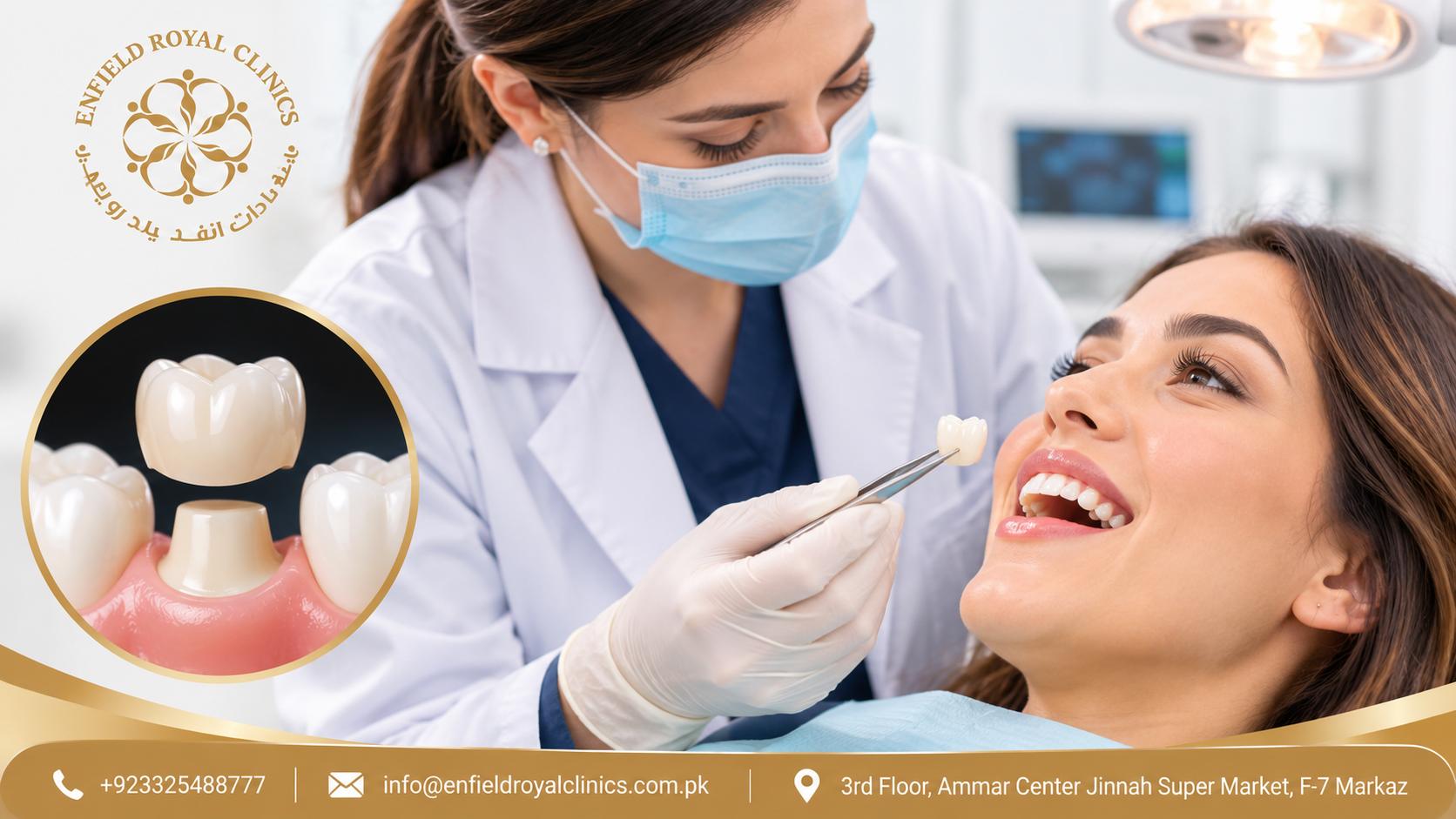
Healthy teeth are naturally strong, but they can become vulnerable because of tooth decay, cracks, injuries, large fillings, or excessive grinding. When a tooth loses a significant amount of its natural structure, it may become more likely to break or develop further problems. In such situations, dental crown treatment can provide an additional layer of protection and help preserve the remaining tooth.
Dental Crown Treatment in Islamabad is a restorative option for patients with weakened, cracked, or severely damaged teeth. A dental crown is a custom-made cap that covers the visible portion of a prepared tooth. It restores the tooth's shape and function while supporting its remaining structure. Although a crown can help reduce the risk of further damage in suitable cases, it cannot prevent every dental problem. Proper oral hygiene and regular dental examinations remain essential.
What Is Dental Crown Treatment and How Does It Protect Teeth?
Dental crown treatment involves placing a custom-designed covering over a damaged or weakened tooth. The crown surrounds the visible part of the tooth above the gumline and helps restore its natural shape, size, and function.
When a tooth has extensive decay, a large filling, or a crack, its remaining structure may struggle to withstand normal chewing pressure. A crown provides coverage and support, helping distribute biting forces across the restored tooth. This can reduce stress on vulnerable areas and lower the risk of further fractures.
Crowns are commonly recommended for teeth that have lost substantial structure. They may also be used after root canal treatment when the remaining tooth needs additional protection. The need for a crown depends on the amount of healthy tooth structure left and the tooth's location.
It is important to understand that a crown does not make a tooth indestructible. Its purpose is to restore and protect a tooth that needs structural support, not to eliminate every possible cause of future damage.
Which Types of Tooth Damage Can Dental Crowns Help Prevent?
Dental crowns may help protect teeth that are already weakened or structurally compromised. Their protective benefits depend on the type and extent of damage.
Further Cracking: A weakened tooth may develop a larger fracture when exposed to repeated chewing pressure. A properly fitted crown can cover and support the remaining structure, helping reduce this risk when the tooth is suitable for restoration.
Breakage Around Large Fillings: Teeth with extensive fillings may have less natural structure available to withstand biting forces. A crown can provide more complete coverage than a filling and help protect the remaining tooth.
Damage After Root Canal Treatment: Some teeth become more vulnerable after root canal treatment, particularly when substantial tooth structure has been lost. A crown may help protect these teeth from fracture during normal use.
Additional Wear: Teeth affected by significant wear may benefit from a crown that restores their shape and biting surface. This can help improve function and protect the remaining structure.
Damage to Exposed or Vulnerable Areas: A crown covers the prepared tooth and can protect sensitive areas from direct contact with food and temperature changes.
A dental examination is necessary to determine whether a crown can provide the required protection. Small chips or minor cavities may need less extensive treatments.
What Types of Dental Crowns Are Available?
Different crown materials offer different levels of strength, appearance, and durability. The selection depends on the tooth's position, chewing pressure, dental condition, and the patient's preferences.
Porcelain Crowns: Porcelain crowns are designed to resemble natural teeth. They are often considered for visible front teeth because their colour and appearance can blend with the surrounding smile.
Zirconia Crowns: Zirconia is a strong ceramic material that combines durability with a tooth-coloured appearance. It may be suitable for front or back teeth, depending on the crown design and individual bite requirements.
Metal Crowns: Metal crowns are known for their strength and resistance to wear. They may be suitable for back teeth that experience significant chewing pressure, although their metallic appearance may not appeal to everyone.
Porcelain-Fused-to-Metal Crowns: These crowns have a metal foundation covered by an outer porcelain layer. They offer structural support with a more natural appearance than fully metallic crowns. However, the porcelain surface may chip in some situations.
The most suitable material depends on the patient's needs. A crown should provide a comfortable fit, appropriate strength, and proper alignment with the surrounding teeth.
What Happens During the Dental Crown Procedure?
Dental crown treatment generally involves several stages to ensure that the restoration fits securely and supports normal chewing function.
1. Initial Examination: The affected tooth and surrounding gums are examined. Dental X-rays may be taken to check the roots and identify decay, infection, or other underlying problems. This helps determine whether the tooth can be restored with a crown.
2. Tooth Preparation: If a crown is suitable, the tooth is carefully reshaped to create enough space for the restoration. Local anaesthesia is generally used to make the procedure more comfortable. Any decay or damaged structure requiring treatment is addressed.
3. Impression or Digital Scan: An impression or digital scan records the shape of the prepared tooth. This information is used to create a custom crown that fits the tooth and aligns with the patient's bite.
4. Temporary Crown: A temporary crown may be placed to protect the prepared tooth while the permanent restoration is being made.
5. Permanent Crown Placement: Once the final crown is ready, its fit, shape, and bite alignment are checked. Necessary adjustments are made before it is securely attached.
Careful placement is important because an uneven or poorly fitted crown may cause discomfort and place unnecessary pressure on the restored tooth.
Can Dental Crowns Prevent All Types of Tooth Damage?
Although crowns provide useful protection, they cannot prevent every dental problem. Patients should understand their limitations before choosing the treatment.
One important point is that the natural tooth underneath a crown can still develop decay. The crown material itself cannot get a cavity, but bacteria and plaque can collect around its edges if oral hygiene is poor. Regular brushing and flossing are therefore necessary even after crown placement.
Crowns can also become damaged. Biting extremely hard objects, accidents, or repeated teeth grinding may cause a crown to chip, crack, or loosen. Patients who grind their teeth may need a custom night guard to reduce excessive pressure.
Gum disease can also affect the health of the tissues around a crown. In addition, a crown cannot repair a tooth with damage that extends too deeply into the root or below the gumline. Such cases may require a different treatment approach.
For this reason, Dental Crown Treatment in Islamabad should be considered as part of an overall dental care plan. The restoration can protect a suitable weakened tooth, but it does not replace preventive care.
How Can Patients Keep Their Dental Crowns and Natural Teeth Healthy?
Good oral hygiene is essential for maintaining a dental crown and protecting the natural tooth underneath it. Consistent care also helps prevent new dental problems from developing.
Patients should brush twice daily with fluoride toothpaste and floss every day. Particular attention should be given to the area where the crown meets the gumline, as plaque can collect around its edges.
Avoiding habits such as chewing ice, biting hard candies, or opening packages with the teeth can help reduce the risk of damage. Patients who clench or grind their teeth should discuss protective options with their dental professional.
Regular dental checkups allow the crown's fit, surrounding gums, and bite alignment to be monitored. Many crowns last approximately 5 to 15 years, although some remain functional for longer depending on their material, placement, and aftercare.
Patients should seek an examination if they notice persistent sensitivity, pain while biting, a loose crown, or visible damage. Early attention may help prevent a minor issue from becoming more serious.
Frequently Asked Questions
1. Can dental crown treatment prevent a weak tooth from breaking?
A properly fitted crown can provide support and reduce the risk of further fractures in a suitable weakened tooth. However, it cannot guarantee that the tooth will never break.
2. Does a dental crown protect against tooth decay?
A crown covers the visible part of the tooth, but the natural structure underneath can still develop decay, especially around the crown's edges. Good oral hygiene is essential.
3. Is a dental crown better than a filling for protecting a damaged tooth?
A filling may be suitable for a small cavity or limited damage. A crown is often considered when a large portion of the tooth is weakened and needs more complete coverage.
4. Can a crowned tooth still become damaged?
Yes. Crowns can chip, crack, or loosen due to hard foods, accidents, grinding, or fitting problems. Regular dental checkups help identify issues early.
5. How long does a dental crown last?
Many crowns last around 5 to 15 years, while some may last longer. Their lifespan depends on the material, fit, oral hygiene, and chewing habits.
6. Is dental crown treatment suitable after root canal treatment?
A crown may be recommended after root canal treatment when substantial tooth structure has been lost. The decision depends on the tooth's condition, location, and remaining strength.
Conclusion
Dental crown treatment can help prevent further damage to teeth that have become weak because of extensive decay, fractures, large fillings, or significant wear. By covering and supporting the remaining structure, a crown can reduce the risk of additional breakage and restore comfortable chewing. However, it cannot prevent every dental problem, and the natural tooth underneath still requires proper care.
Dental Crown Treatment in Islamabad can be a valuable restorative option for patients whose teeth need additional protection. A professional dental examination helps determine whether a crown is suitable and which material can provide the right balance of strength, comfort, and appearance.
❤️ Support Friends Aim! View a sponsored ad to help cover our website costs. Thanks!
Support Us — Ad 1 Support Us — Ad 2- Arts, Culture & Design
- Automotive & Transport
- Accounting & Finance
- Advertising & Marketing
- Agriculture & Farming
- Business & Consulting
- Books & Publishing
- Building & Construction
- Beauty & Personal Care
- Baby, Kids & Parenting
- Charity & Social Causes
- Crafts & Handmade
- Careers & Jobs
- Computers & Laptops
- Consumer Electronics
- Entertainment & Events
- Food & Beverages
- Delivery & Logistics
- Digital Media & Content
- Dating & Relationships
- E-Commerce & Retail
- Education & Learning
- Energy & Environment
- Fitness
- Fashion & Apparel
- Gaming & Toys
- Government & Legal
- Gardening
- Health & Medical Care
- Home Decor & Furniture
- IT & Software
- Industrial & Tools
- Import & Export
- Jewelry & Watches
- Lifestyle & Wellness
- Legal Services & Law
- News & Media
- News & Current Affairs
- Religion & Faith
- Sports
- Technology
- Travel & Tourism
- Weddings & Events
- Other

 Arabic
 French
 Spanish
 Portuguese
 Deutsch
 Turkish
 Dutch
 Italiano
 Russian
 Romaian
 Portuguese (Brazil)
 Greek