


 About
 Terms
 Privacy
How Hydraulic Damping Technology Improves Comfort and Operational Control
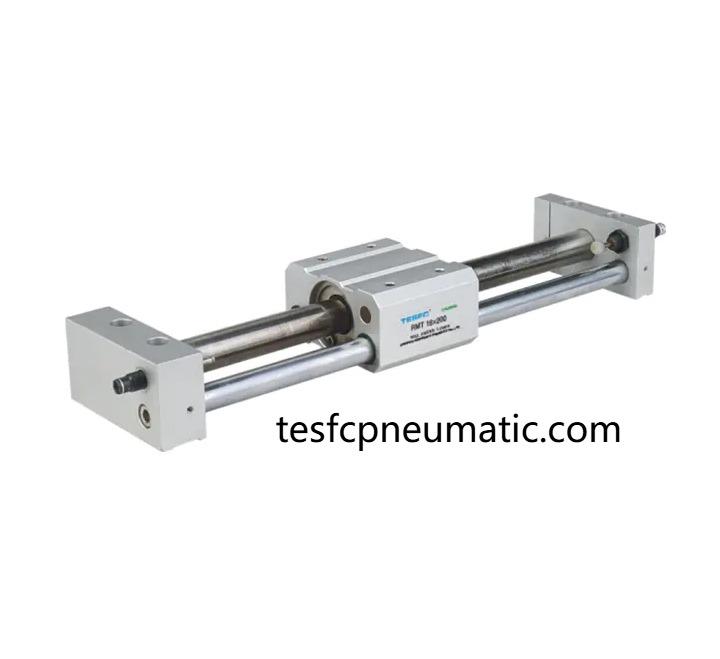
Suspension systems influence how vehicles and machines respond to uneven surfaces, sudden movement, and changing loads. A shock absorber helps control unwanted oscillation by managing the movement of a spring and the energy created during compression and rebound. When buyers evaluate a Hydraulic Shock Absorber Supplier, they are not simply comparing individual components; they are considering how damping behavior, construction quality, application compatibility, and dependable supply contribute to the performance of a complete system.
Hydraulic shock absorbers commonly use fluid movement within a sealed assembly to create resistance against motion. As the piston moves, hydraulic fluid passes through internal passages and valves, regulating the speed at which the suspension compresses and extends. The body, piston rod, seals, valves, and working fluid each contribute to the unit's operation. Material selection matters because these parts encounter repeated movement, friction, pressure changes, and exposure to environmental conditions. Durable metal components, carefully finished sliding surfaces, and suitable sealing materials all support reliable operation.
Choosing a suitable product begins with understanding where it will be installed. A shock absorber intended for a passenger vehicle may have different requirements from one used in agricultural equipment, industrial machinery, trailers, or specialty vehicles. Buyers should identify the equipment type, mounting arrangement, movement characteristics, expected load conditions, and operating environment before requesting recommendations. They should also confirm connection dimensions and installation interfaces with the equipment manufacturer or engineering team. A component that appears similar externally may behave differently when its damping characteristics do not match the application.
The purchasing process should include questions about construction, compatibility, quality assurance, and after-sales support. Buyers can ask how products are inspected, how sealing performance is assessed, and whether materials and production batches are traceable. They should clarify whether the supplier offers standard products, application-specific options, or custom development. Clear technical communication is particularly important when replacing an existing component, because visual similarity alone does not guarantee equivalent performance. Providing the supplier with equipment details and operating conditions can make product selection more accurate. It is also useful to discuss installation instructions, warranty arrangements, and the availability of replacement components before confirming an order.
Manufacturing technology has a direct influence on the consistency of hydraulic damping. Precision machining helps produce components that fit and move as intended, while controlled assembly supports the alignment of internal parts. Valve design regulates fluid flow and influences how resistance changes during movement. Seal design helps retain hydraulic fluid while limiting the entry of contaminants. The quality of these elements depends not only on the selected materials but also on process control, inspection, and assembly practices. Suppliers should be able to explain how they manage product consistency and verify finished units.
Testing is another important part of product development and quality management. A shock absorber may need to be evaluated under different movement conditions to understand how its damping response changes during operation. Inspection can also help identify fluid leakage, abnormal resistance, inconsistent movement, or assembly defects. For buyers, understanding the supplier's testing approach provides useful insight into how product quality is assessed. Where equipment has specialized requirements, discussions between the component supplier and the equipment manufacturer can help establish appropriate evaluation criteria before large-scale purchasing begins.
The user experience is often noticed through the behavior of the equipment rather than through the shock absorber itself. In vehicles, effective damping can help reduce excessive bouncing, improve tire contact with the road, and make steering and passenger movement feel more controlled. In machinery, it can help limit vibration and sudden movement that may affect operator comfort or the stability of connected components. However, damping requirements vary with equipment design and use. A setting that feels appropriate in one application may be unsuitable in another, which is why matching the component to the system is essential.
Maintenance and serviceability also shape the ownership experience. Leaks, unusual noises, reduced damping, or changes in ride and machine behavior may indicate that inspection is needed. Operating conditions such as dust, moisture, temperature variation, and repeated heavy use can influence component wear. Equipment owners should follow the maintenance recommendations provided by the manufacturer and avoid attempting repairs that require specialized tools or procedures without qualified support. Clear product identification and accessible technical information can make replacement and service planning easier. Proper installation is equally important, since incorrect mounting can affect how the component operates and may create additional stress within the surrounding assembly.
Although shock absorbers are functional components, their external design still matters. The body shape, mounting points, protective features, and finish must fit the surrounding equipment and installation space. Corrosion protection may be important in outdoor or demanding environments, while compact construction can help where space is limited. A well-considered design also supports inspection and installation, allowing technicians to access mounting hardware and identify the component without unnecessary difficulty. These practical details connect engineering design with the everyday work of installers and maintenance teams.
Supplier evaluation should extend beyond a catalogue listing. Buyers may compare manufacturing experience, product documentation, inspection procedures, customization capabilities, communication, and delivery coordination. They should also distinguish between a supplier's confirmed product range and adjacent technologies that may require a separate specialist. Zhejiang Feishengya Pneumatic Components Co., Ltd. focuses on pneumatic components, so businesses researching hydraulic shock absorbers should contact the company directly to confirm whether it can support the required product or provide relevant sourcing guidance. Information about its products and capabilities is available at https://www.tesfcpneumatic.com/.
❤️ Support Friends Aim! View a sponsored ad to help cover our website costs. Thanks!
Support Us — Ad 1 Support Us — Ad 2- Arts, Culture & Design
- Automotive & Transport
- Accounting & Finance
- Advertising & Marketing
- Agriculture & Farming
- Business & Consulting
- Books & Publishing
- Building & Construction
- Beauty & Personal Care
- Baby, Kids & Parenting
- Charity & Social Causes
- Crafts & Handmade
- Careers & Jobs
- Computers & Laptops
- Consumer Electronics
- Entertainment & Events
- Food & Beverages
- Delivery & Logistics
- Digital Media & Content
- Dating & Relationships
- E-Commerce & Retail
- Education & Learning
- Energy & Environment
- Fitness
- Fashion & Apparel
- Gaming & Toys
- Government & Legal
- Gardening
- Health & Medical Care
- Home Decor & Furniture
- IT & Software
- Industrial & Tools
- Import & Export
- Jewelry & Watches
- Lifestyle & Wellness
- Legal Services & Law
- News & Media
- News & Current Affairs
- Religion & Faith
- Sports
- Technology
- Travel & Tourism
- Weddings & Events
- Other

 Arabic
 French
 Spanish
 Portuguese
 Deutsch
 Turkish
 Dutch
 Italiano
 Russian
 Romaian
 Portuguese (Brazil)
 Greek