


 About
 Terms
 Privacy
Is Chemical Peel Treatment Good for Sensitive Skin?
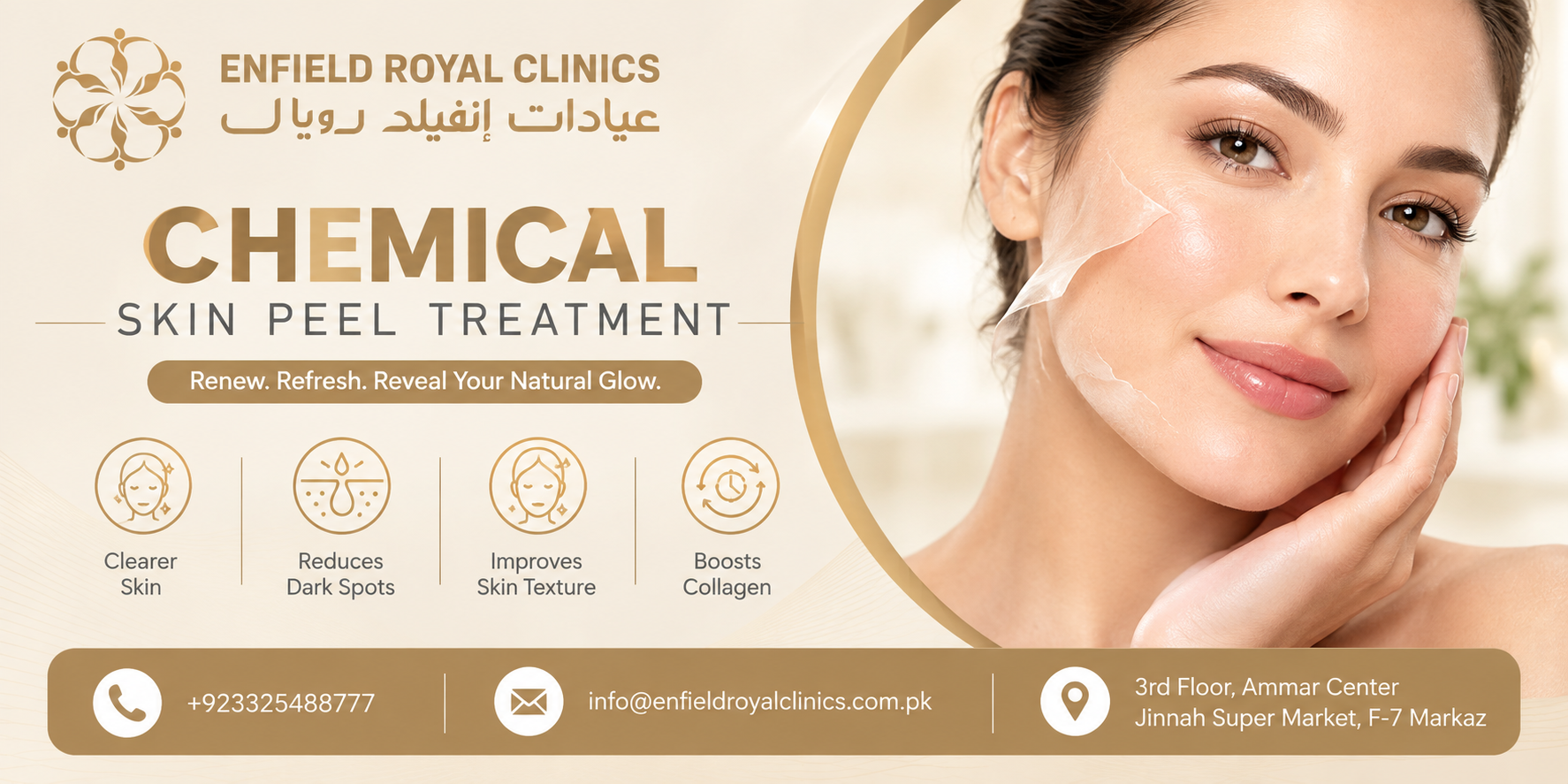
Sensitive skin often requires extra care because it can react quickly to skincare products, environmental changes, and cosmetic procedures. Redness, itching, dryness, burning sensations, and irritation are common concerns for people with easily irritated skin. When such individuals consider exfoliating treatments, they may wonder whether chemical peels are a safe option.
Chemical peel treatment in Islamabad can be considered for some people with sensitive skin, but the right approach depends on the skin's condition, sensitivity level, and treatment goals. Chemical peels use specially formulated solutions to remove dead skin cells and improve concerns such as dullness, uneven texture, and mild pigmentation. However, not every peel is suitable for sensitive skin, and choosing an unsuitable formula can cause irritation or damage.
Understanding the different peel types, possible benefits, risks, and aftercare requirements can help individuals make an informed decision.
1. What Makes Skin Sensitive?
Sensitive skin is more likely to react to products or external conditions that other skin types may tolerate without difficulty. This sensitivity can occur when the skin barrier becomes weakened, allowing moisture to escape more easily and making the surface more vulnerable to irritants.
Several factors can contribute to sensitive skin:
-
A weakened skin barrier: When the protective barrier is damaged, the skin may become dry, irritated, and more reactive.
-
Harsh skincare products: Strong cleansers, exfoliating acids, fragrances, and certain active ingredients can trigger discomfort.
-
Environmental exposure: Sunlight, pollution, wind, and extreme temperatures may increase skin sensitivity.
-
Underlying skin conditions: Rosacea, eczema, and contact dermatitis can cause redness and irritation.
-
Over-exfoliation: Frequent use of scrubs, retinoids, or chemical exfoliants can make the skin more vulnerable.
People with sensitive skin may experience stinging even when applying ordinary moisturizers. Therefore, professional assessment is important before introducing a chemical peel into their skincare routine.
2. Is Chemical Peel Treatment Safe for Sensitive Skin?
Chemical peel treatment may be suitable for selected individuals with sensitive skin when the formulation, concentration, and treatment depth are carefully chosen. However, it is not automatically safe for everyone.
Superficial peels are generally less intensive than medium or deep peels because they target the outermost skin layers. A professional may consider a gentle formulation for someone with mild sensitivity and a stable skin barrier.
Before treatment, the skin should be assessed for redness, inflammation, dryness, active irritation, and other concerns. If the skin is already inflamed or damaged, exfoliation may worsen the condition.
A chemical peel should generally be postponed when someone has:
-
Active eczema or dermatitis in the treatment area
-
Severe redness or unexplained skin irritation
-
Open cuts, wounds, or active skin infections
-
Recent sunburn
-
A damaged or extremely dry skin barrier
People with rosacea or a history of strong reactions to skincare ingredients need additional caution. In some cases, a chemical peel may not be the most appropriate treatment, and barrier-repair skincare may be a better starting point.
3. Which Chemical Peels Are Better for Sensitive Skin?
Different chemical peel ingredients work in different ways. The most suitable option depends on the person's skin condition and the concern being treated. A gentler peel is not necessarily risk-free, but certain formulations may be easier for selected sensitive skin types to tolerate.
Lactic acid peel: Lactic acid is an alpha-hydroxy acid (AHA) that exfoliates the outer skin layer. It may help improve mild dullness and rough texture. Its moisturizing properties can make it a consideration for some people with dry or mildly sensitive skin.
Mandelic acid peel: Mandelic acid has a larger molecular structure than glycolic acid, which can result in slower skin penetration. It may be considered for selected individuals who want to address mild uneven tone or surface texture.
Low-strength glycolic acid peel: Glycolic acid helps loosen dead skin cells and improve skin texture. However, it can cause stinging or irritation, particularly when the skin barrier is already compromised. A cautious approach is necessary.
Salicylic acid peel: Salicylic acid is commonly used for oily and acne-prone skin because it helps clear clogged pores. It may not be the first choice for someone with very dry, reactive, or easily irritated skin.
Stronger formulations, including medium-depth TCA peels, generally require more careful consideration and may not be appropriate for sensitive skin. The treatment should be selected according to the individual's needs rather than popularity or peel strength.
4. What Are the Benefits of Chemical Peels for Sensitive Skin?
When an appropriate superficial peel is selected for a suitable candidate, it may offer several skin-improvement benefits.
Gentle removal of dead skin cells: A carefully selected peel can reduce surface buildup, helping the skin appear smoother and fresher.
Improved skin texture: Controlled exfoliation may soften rough areas and improve the appearance of uneven surface texture.
Brighter complexion: Some superficial peels can reduce mild dullness by removing older surface cells.
Support for uneven skin tone: Certain formulations may help improve the appearance of superficial discoloration over time.
Better management of selected skin concerns: Depending on the ingredient, a peel may help with mild acne-related congestion or surface irregularities.
However, sensitive skin requires a balanced approach. The goal should be gradual improvement without causing excessive dryness, inflammation, or irritation. Chemical peels do not strengthen the skin barrier by themselves, so suitable moisturizing and barrier-supporting skincare remain important.
5. What Precautions Should Be Taken Before a Chemical Peel?
Preparation is particularly important for individuals with sensitive skin. A proper consultation helps identify possible triggers and reduces the chance of an unwanted reaction.
Before receiving Chemical peel treatment in Islamabad, individuals should discuss their skincare routine, allergies, previous cosmetic procedures, and history of skin conditions. They should also mention any medications or topical products that may affect skin sensitivity.
Important precautions may include:
-
Avoiding facial scrubs and strong exfoliating products before treatment.
-
Discussing the use of retinoids and other active skincare ingredients.
-
Avoiding waxing or aggressive facial treatments shortly before the procedure.
-
Protecting the skin from excessive sun exposure.
-
Informing the practitioner about previous reactions to chemical products.
-
Following any recommended preparation routine.
A small-area test may sometimes be considered to check how the skin responds, although it cannot guarantee that a full treatment will be reaction-free.
The skin should not be peeled simply because a person wants faster results. If the barrier is irritated, allowing it to recover first is usually the safer approach.
6. What Aftercare Helps Protect Sensitive Skin?
Aftercare plays a major role in recovery, especially for people who experience frequent irritation. Mild redness, dryness, tightness, or flaking may occur after a superficial peel. These effects generally depend on the formulation and individual skin response.
A simple skincare routine is usually preferable during recovery.
Use a gentle cleanser: A fragrance-free cleanser can help remove impurities without unnecessary irritation.
Apply a suitable moisturizer: A gentle moisturizer supports hydration and helps maintain the skin barrier.
Wear sunscreen daily: Broad-spectrum sunscreen with SPF 30 or higher helps protect the recovering skin from ultraviolet exposure and reduces the risk of pigmentation.
Avoid additional exfoliation: Scrubs, retinoids, and exfoliating acids should be avoided until the skin has recovered and the practitioner advises restarting them.
Do not pick peeling skin: Pulling or scratching flaky areas can cause irritation, discoloration, and possible scarring.
Avoid excessive heat: Hot showers, saunas, and intense heat exposure may increase discomfort during early recovery.
If severe burning, blistering, significant swelling, worsening redness, or signs of infection develop, medical assessment is necessary.
For more information visit Enfield royal clinic in islamabad
Frequently Asked Questions
1. Can people with sensitive skin get a chemical peel?
Yes, some individuals with sensitive skin may be suitable candidates for carefully selected superficial peels. However, active irritation, skin conditions, and barrier damage must be assessed before treatment.
2. Which chemical peel is best for sensitive skin?
Lactic acid and mandelic acid formulations may be considered for selected people with mild sensitivity. The best option depends on the skin condition, concentration, and individual tolerance.
3. Can chemical peels make sensitive skin worse?
Yes. An unsuitable peel, excessive concentration, or incorrect application can cause redness, burning, dryness, irritation, and pigmentation changes. Proper assessment and aftercare help reduce these risks.
4. How long does sensitive skin take to recover after a chemical peel?
Recovery depends on the peel's depth and the person's skin response. Mild redness or dryness may settle within a few days after a superficial peel, while stronger treatments can require longer recovery.
5. Should sensitive skin use moisturizer after a chemical peel?
Yes. A gentle, fragrance-free moisturizer can help reduce dryness and support the skin barrier during recovery. The selected product should be suitable for the individual's skin.
6. Can chemical peels remove pigmentation from sensitive skin?
Some superficial peels may improve mild pigmentation, but sensitive skin requires careful treatment selection. Incorrect use can worsen discoloration, particularly in people prone to post-inflammatory hyperpigmentation.
Conclusion
Chemical peels can help improve dullness, rough texture, and mild uneven pigmentation, but sensitive skin needs a more cautious treatment approach. Gentle formulations, appropriate concentrations, professional assessment, and consistent aftercare are essential for reducing irritation.
People considering Chemical peel treatment in Islamabad should first determine whether their skin barrier is healthy enough for exfoliation. With suitable treatment selection and proper skin protection, some individuals with sensitive skin may achieve smoother and healthier-looking results without unnecessary irritation.
❤️ Support Friends Aim! View a sponsored ad to help cover our website costs. Thanks!
Support Us — Ad 1 Support Us — Ad 2- Arts, Culture & Design
- Automotive & Transport
- Accounting & Finance
- Advertising & Marketing
- Agriculture & Farming
- Business & Consulting
- Books & Publishing
- Building & Construction
- Beauty & Personal Care
- Baby, Kids & Parenting
- Charity & Social Causes
- Crafts & Handmade
- Careers & Jobs
- Computers & Laptops
- Consumer Electronics
- Entertainment & Events
- Food & Beverages
- Delivery & Logistics
- Digital Media & Content
- Dating & Relationships
- E-Commerce & Retail
- Education & Learning
- Energy & Environment
- Fitness
- Fashion & Apparel
- Gaming & Toys
- Government & Legal
- Gardening
- Health & Medical Care
- Home Decor & Furniture
- IT & Software
- Industrial & Tools
- Import & Export
- Jewelry & Watches
- Lifestyle & Wellness
- Legal Services & Law
- News & Media
- News & Current Affairs
- Religion & Faith
- Sports
- Technology
- Travel & Tourism
- Weddings & Events
- Other

 Arabic
 French
 Spanish
 Portuguese
 Deutsch
 Turkish
 Dutch
 Italiano
 Russian
 Romaian
 Portuguese (Brazil)
 Greek