


 About
 Terms
 Privacy
Primary Maths Online: Building Confidence Before Secondary School
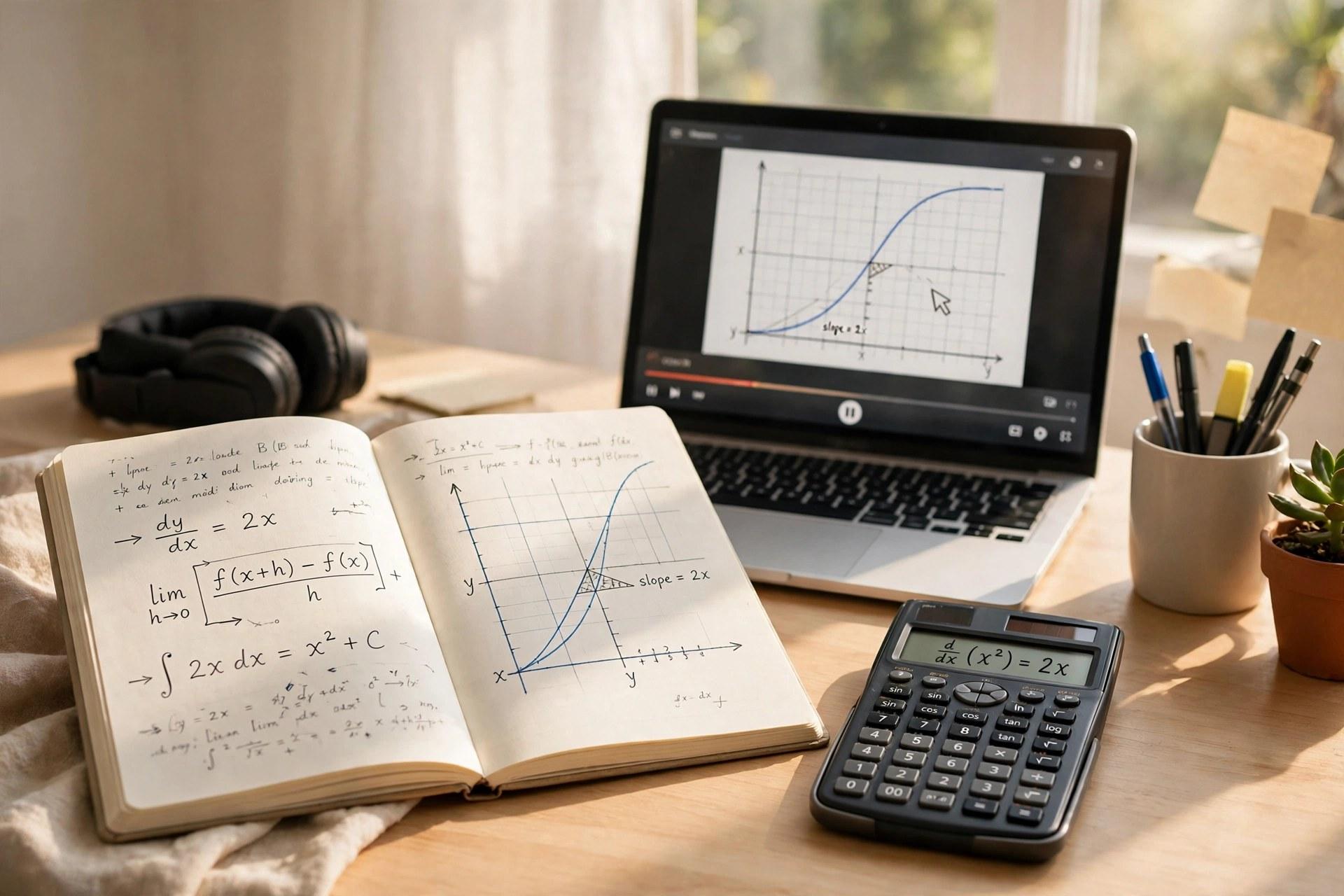
The jump from primary to secondary school is one of the biggest steps in a child's education, and maths is the subject where gaps show up first. A child who leaves primary school unsure of fractions or shaky on times tables will meet algebra, ratio and multi-step problem solving within the first term. The good news is that primary maths responds very well to short, regular, one-to-one support, because most difficulties at this age are small gaps in understanding rather than a lack of ability.
Start With Times Tables Fluency
Times tables are the engine room of primary maths. When a child has to stop and work out 7 x 8 from scratch, they lose the thread of the problem they were solving. Fluency means instant recall, and it is built through short daily practice rather than long weekend sessions. Five to ten minutes a day of mixed questions, games and quick-fire challenges works far better than an hour once a week.
A useful routine is to practise tables in a different order every day, then apply them straight away to real questions: sharing 36 sweets between 4 friends, working out the cost of 6 pencils at 15p each, or finding three-quarters of 48. When children see tables as a tool rather than a test, the facts stick faster and anxiety drops.
Word Problems: Reading Before Calculating
Many primary children can do the arithmetic but still get word problems wrong. The issue is usually reading, not maths. They grab the numbers, guess an operation and hope. A better approach is to slow the first step down: read the question twice, underline what is being asked, and say in plain words what needs to be found before touching any numbers.
Parents can help by asking one question: "What is this problem really asking?" Drawing the problem helps too. Bar models, number lines and simple sketches turn an abstract question into something a child can see. Once a child can represent a problem, the calculation that follows is usually straightforward.
Short Sessions That Match Young Attention Spans
Young learners do not benefit from marathon lessons. Sessions of 25 to 40 minutes, two or three times a week, keep energy high and give the brain time to consolidate between lessons. Each session works best with one clear focus: today we master dividing by 4 and 8, next time we use that skill inside word problems.
This is where one-to-one online lessons work particularly well for families. With primary tutors online, a child gets a session built entirely around their current school topic and their specific gaps, with no waiting for the rest of a class and no embarrassment about asking questions. Short homework tasks between sessions, ten minutes at most, keep the momentum going.
Combo Tutors Academy has provided one-to-one online tutoring since 2020 across IGCSE, GCSE, A Level and IB. Lessons start from $15 per hour, begin with a free 30-minute trial, and matching normally happens within 24 hours. There is a free rematch if the tutor is not a fit, and female tutors are available on request.
The Parent's Role Between Lessons
Parents do not need to teach the maths, but they shape the habits around it. A fixed short practice slot, praise for effort rather than speed, and a calm response to mistakes all build the confidence that lessons alone cannot. It also helps to share information with the tutor: which topics the school is covering this term, where homework caused tears, and which methods the class teacher uses, so the child is not caught between two different approaches.
Watch for the confidence signals: a child who starts attempting questions without being asked, who explains a method back to you, or who stops saying "I'm bad at maths" is making real progress, even before test scores move.
FAQ
How long should a primary maths session be?
For most children aged 7 to 11, 25 to 40 minutes is the sweet spot. It is long enough to cover one topic properly and short enough to keep focus and energy high.
How quickly will times tables improve with daily practice?
With five to ten minutes of mixed practice a day, most children show noticeably faster recall within three to four weeks. The key is variety: different orders, timed challenges and applying the facts inside real problems.
What should my child have ready before secondary school maths?
Secure times tables, confident methods for the four operations, a solid grasp of fractions and decimals, and the habit of reading word problems carefully. These four foundations make the first year of secondary maths far less stressful.
❤️ Support Friends Aim! View a sponsored ad to help cover our website costs. Thanks!
Support Us — Ad 1 Support Us — Ad 2- Arts, Culture & Design
- Automotive & Transport
- Accounting & Finance
- Advertising & Marketing
- Agriculture & Farming
- Business & Consulting
- Books & Publishing
- Building & Construction
- Beauty & Personal Care
- Baby, Kids & Parenting
- Charity & Social Causes
- Crafts & Handmade
- Careers & Jobs
- Computers & Laptops
- Consumer Electronics
- Entertainment & Events
- Food & Beverages
- Delivery & Logistics
- Digital Media & Content
- Dating & Relationships
- E-Commerce & Retail
- Education & Learning
- Energy & Environment
- Fitness
- Fashion & Apparel
- Gaming & Toys
- Government & Legal
- Gardening
- Health & Medical Care
- Home Decor & Furniture
- IT & Software
- Industrial & Tools
- Import & Export
- Jewelry & Watches
- Lifestyle & Wellness
- Legal Services & Law
- News & Media
- News & Current Affairs
- Religion & Faith
- Sports
- Technology
- Travel & Tourism
- Weddings & Events
- Other

 Arabic
 French
 Spanish
 Portuguese
 Deutsch
 Turkish
 Dutch
 Italiano
 Russian
 Romaian
 Portuguese (Brazil)
 Greek