


 About
 Terms
 Privacy
Advanced Farming Market Trends Transforming Modern Agriculture
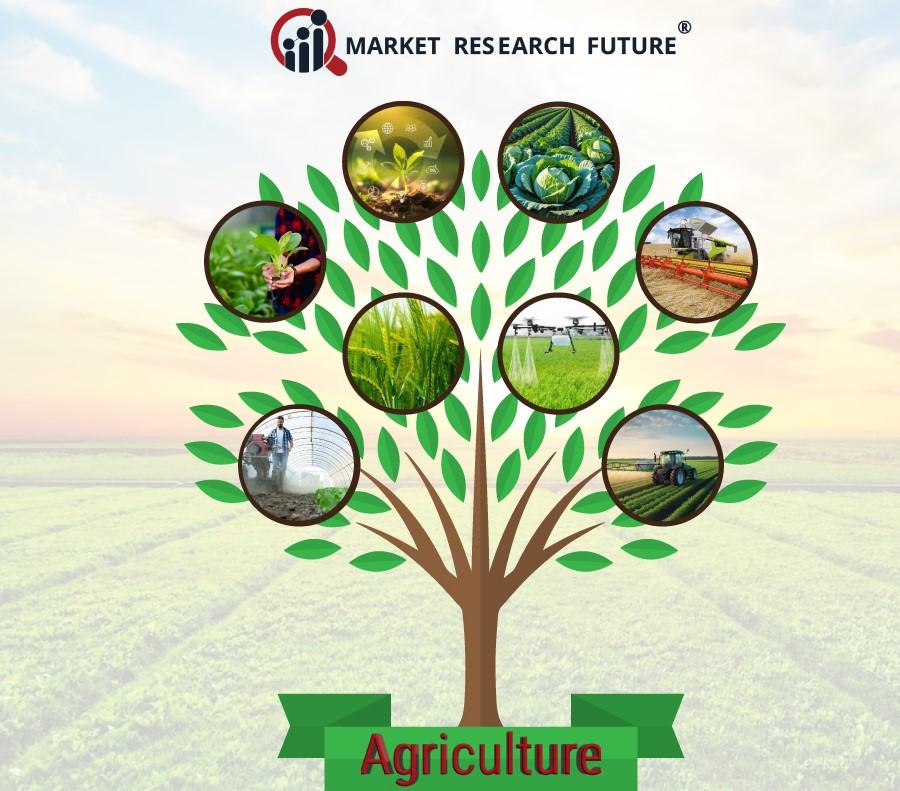
Advanced Farming Market is gaining attention as agricultural producers increasingly adopt modern technologies to improve productivity, manage resources, and address changing food production requirements. Traditional farming practices are evolving through the integration of digital platforms, automated equipment, smart sensors, and data-driven agricultural management systems. Farmers are exploring innovative approaches to monitor crop conditions, manage irrigation, and improve operational efficiency. These developments are becoming increasingly relevant as the agricultural industry faces challenges associated with climate variability, labour availability, and growing food requirements. Technology-driven agriculture is creating opportunities for equipment manufacturers, software developers, and agricultural service providers.
The growing adoption of digital agricultural solutions is encouraging businesses to explore smart agriculture technologies and precision crop management as part of modern farming strategies. These solutions help farmers collect information about soil conditions, weather patterns, crop health, and irrigation requirements. Digital monitoring systems can support more informed decisions and help agricultural businesses identify operational issues earlier. Technology providers are developing integrated platforms that connect machinery, sensors, and farm management software. As farmers become increasingly interested in data-supported agricultural practices, advanced farming technologies are gaining relevance across different agricultural production systems.
Precision agriculture is an important component of modern farming development. It uses technologies such as GPS, satellite imagery, remote sensing, and field mapping to help farmers manage agricultural activities according to specific field conditions. Instead of applying the same inputs uniformly across an entire field, precision farming can support more targeted management of water, fertilizers, and other agricultural resources. This approach may help reduce unnecessary input use while improving operational planning. Farmers can also use collected information to understand variations in soil quality and crop performance, supporting more informed decisions throughout the growing season.
Artificial intelligence is creating additional opportunities within the agricultural technology landscape. AI-based platforms can analyze agricultural information and identify patterns that may be difficult to recognize through manual observation. Applications include crop monitoring, disease identification, yield estimation, and agricultural planning. Machine learning systems can also process information from connected sensors and imaging technologies to support farm management decisions. Although these solutions require reliable data and suitable infrastructure, they provide opportunities for farmers to improve monitoring and planning capabilities. Technology companies are increasingly exploring agricultural applications that combine AI with connected equipment and digital platforms.
Smart irrigation is another important area of advanced farming development. Water management has become a significant consideration for agricultural producers, particularly in regions experiencing irregular rainfall and water availability challenges. Automated irrigation systems can use soil moisture sensors, weather information, and programmable controls to manage water delivery according to crop requirements. Drip irrigation and other efficient watering technologies can also support more targeted resource management. These solutions allow farmers to monitor irrigation activities and make adjustments based on changing conditions. Companies developing connected irrigation equipment are therefore finding opportunities within technology-driven agricultural systems.
Robotics and automation are also influencing modern agricultural operations. Automated machinery, robotic harvesters, and autonomous field equipment are being developed to support repetitive and labour-intensive farming activities. These technologies can assist with planting, harvesting, spraying, and crop monitoring, depending on the equipment and agricultural application. Labour shortages and the need for consistent farm operations are encouraging producers to examine automation solutions. However, equipment costs, maintenance requirements, connectivity, and technical skills can influence adoption. Manufacturers that develop practical and adaptable automation systems may find opportunities among commercial farms and large agricultural enterprises.
The adoption of advanced farming technologies differs across geographical regions according to agricultural infrastructure, investment capacity, and government initiatives. North America benefits from established agricultural technology providers and the adoption of precision equipment. Europe is exploring digital farming alongside resource efficiency and sustainable agricultural practices. Asia-Pacific offers opportunities through large agricultural populations, growing food requirements, and increasing interest in mechanization. Emerging markets are also examining affordable digital tools and smart irrigation solutions. Technology providers must consider local farming conditions, connectivity, affordability, and technical support when introducing products across different regions.
The future of the Advanced Farming Market will be influenced by digital innovation, automation, resource management, and increasing demand for efficient agricultural production. Farmers are likely to explore integrated technologies that combine sensors, connected machinery, artificial intelligence, and farm management platforms. Collaboration between agricultural producers, technology developers, research institutions, and governments can further support adoption. Businesses that offer practical solutions, accessible technology, and dependable technical services may strengthen their competitive position. As agriculture continues to modernize, advanced farming technologies are expected to play an increasingly important role in transforming agricultural operations.
Frequently Asked Questions
What is driving the adoption of advanced farming technologies?
Increasing food requirements, labour challenges, resource management needs, and digital innovation are encouraging farmers to adopt modern agricultural technologies.
How does precision farming help agricultural producers?
Precision farming uses data and digital tools to support targeted irrigation, fertilizer application, crop monitoring, and field management.
What role does artificial intelligence play in advanced farming?
AI can support crop monitoring, disease identification, agricultural planning, and data analysis, helping farmers make more informed operational decisions.
❤️ Support Friends Aim! View a sponsored ad to help cover our website costs. Thanks!
Support Us — Ad 1 Support Us — Ad 2- Arts, Culture & Design
- Automotive & Transport
- Accounting & Finance
- Advertising & Marketing
- Agriculture & Farming
- Business & Consulting
- Books & Publishing
- Building & Construction
- Beauty & Personal Care
- Baby, Kids & Parenting
- Charity & Social Causes
- Crafts & Handmade
- Careers & Jobs
- Computers & Laptops
- Consumer Electronics
- Entertainment & Events
- Food & Beverages
- Delivery & Logistics
- Digital Media & Content
- Dating & Relationships
- E-Commerce & Retail
- Education & Learning
- Energy & Environment
- Fitness
- Fashion & Apparel
- Gaming & Toys
- Government & Legal
- Gardening
- Health & Medical Care
- Home Decor & Furniture
- IT & Software
- Industrial & Tools
- Import & Export
- Jewelry & Watches
- Lifestyle & Wellness
- Legal Services & Law
- News & Media
- News & Current Affairs
- Religion & Faith
- Sports
- Technology
- Travel & Tourism
- Weddings & Events
- Other

 Arabic
 French
 Spanish
 Portuguese
 Deutsch
 Turkish
 Dutch
 Italiano
 Russian
 Romaian
 Portuguese (Brazil)
 Greek