


 About
 Terms
 Privacy
How Protective Relays Help Detect and Isolate Electrical System Faults
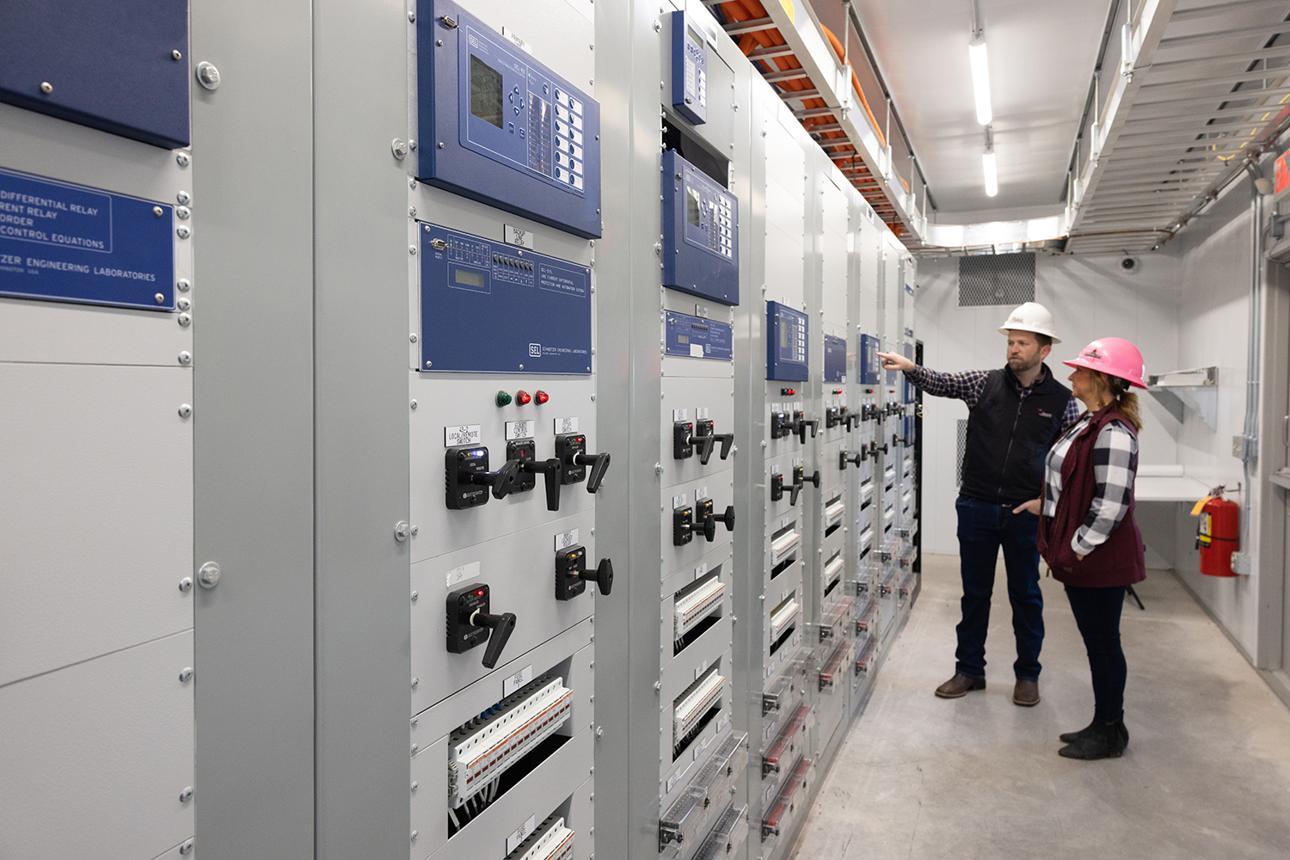
Electrical power systems are designed to deliver electricity safely and continuously, but unexpected faults can occur at any point in the network. Short circuits, ground faults, insulation failures, equipment damage, and abnormal operating conditions can interrupt power delivery and create serious safety risks. Without an effective protection system, even a relatively small electrical fault can damage expensive equipment, disrupt operations, and potentially lead to widespread outages.
Protective relays play a critical role in preventing these problems. They continuously monitor electrical system conditions, identify abnormal behavior, and initiate the isolation of faulty sections before damage spreads. Working alongside circuit breakers, current transformers, and voltage transformers, these intelligent devices help maintain the stability and reliability of modern electrical networks.
Understanding how protective relays operate is essential for engineers, utilities, industrial facilities, and organizations responsible for dependable electricity infrastructure.
1. Understanding Protective Relays and Their Role in Electrical Systems
A protective relay is an electrical monitoring and control device designed to recognize abnormal operating conditions and respond when predefined protection limits are exceeded. It receives electrical measurements, such as current and voltage, and evaluates them against configured protection settings.
Under normal operating conditions, current and voltage remain within expected limits. However, when a fault develops, these values may change significantly. For example, a short circuit can produce an extremely high current, while a ground fault may cause an imbalance between phase currents.
The protective relay identifies these abnormal conditions and sends a trip command to the associated circuit breaker. The breaker then opens its contacts, disconnecting the affected equipment or circuit from the electrical network.
This process happens extremely quickly, helping minimize equipment damage and reducing the possibility of a fault affecting other parts of the system.
Protective relays are commonly installed in transmission lines, distribution feeders, transformers, generators, motors, and substations. Their primary responsibility is to detect faults accurately and ensure that only the necessary section of the electrical network is disconnected.
2. How Protective Relays Detect Different Types of Electrical Faults
Effective fault detection begins with continuous monitoring of electrical parameters. Protective relays use measurements from instrument transformers to identify abnormal conditions and determine whether protective action is necessary.
Different protection functions are designed to recognize specific fault types.
Overcurrent faults: These occur when current exceeds an established threshold, often because of short circuits or excessive electrical loading. Overcurrent relays detect the increased current and operate according to predefined instantaneous or time-delayed settings.
Ground faults: These develop when electrical current flows through an unintended path to earth. Earth-fault protection identifies residual or zero-sequence current conditions and helps disconnect the affected circuit.
Differential faults: Differential protection compares current entering and leaving a protected zone. A significant difference may indicate an internal fault within a transformer, generator, busbar, or other protected equipment.
Distance protection: Commonly used on transmission lines, distance relays estimate the electrical impedance between the relay location and the fault. Since impedance is related to the distance along the protected line, the relay can identify faults within designated protection zones.
Undervoltage and overvoltage conditions: Voltage protection functions monitor abnormal voltage levels and initiate appropriate responses when operating limits are exceeded.
By combining these protection functions, engineers can develop comprehensive power system fault protection strategies that address different operating risks across an electrical network.
3. How Protective Relays Isolate Faults and Prevent Equipment Damage
Detecting a fault is only the first step. The next priority is isolating the affected section without unnecessarily interrupting the remaining electrical network.
When a protective relay identifies a fault, it evaluates the measured conditions against its protection settings. If the fault meets the operating criteria, the relay activates its output contacts or sends a digital trip signal to the associated circuit breaker.
The circuit breaker interrupts the electrical current and separates the faulty equipment from the energized system.
For example, consider a transformer experiencing an internal insulation failure. A differential protection relay detects an imbalance between the incoming and outgoing currents. Once the operating threshold is reached, it sends a trip command to the relevant breakers, disconnecting the transformer from the network.
This selective isolation is extremely important. Instead of shutting down an entire substation or electrical facility, the protection system aims to disconnect only the affected equipment or circuit.
Proper coordination between relays and circuit breakers also ensures that backup protection remains available if the primary protection system fails. This layered approach improves operational security and reduces the risk of widespread electrical interruptions.
4. Different Types of Protective Relays Used in Substations
Modern substations use several types of protective relays, each designed to address particular electrical conditions and equipment requirements.
Electromechanical relays: These traditional devices use electromagnetic forces and mechanical components to detect abnormal electrical conditions. Although older than modern alternatives, they remain relevant in some existing installations.
Static relays: Static relays use electronic components instead of moving mechanical parts to perform protection functions. They offer improved operating speed and reduced mechanical wear.
Digital relays: Digital relays process electrical signals electronically and provide more flexible protection functionality. They can support multiple protection elements, event recording, and communication features.
Numerical relays: These advanced microprocessor-based devices combine several protection, monitoring, measurement, and control functions within a single unit. They support programmable logic, fault recording, communication protocols, and integration with substation automation systems.
Selecting the appropriate relay depends on equipment characteristics, network configuration, fault levels, protection requirements, and operational objectives.
A properly engineered substation relay protection scheme ensures that each device performs its intended function while coordinating effectively with other protection equipment.
5. Why Relay Coordination and Accurate Protection Settings Matter
Installing protective relays does not automatically guarantee reliable fault protection. Their settings and coordination must be carefully engineered to ensure the correct device operates at the correct time.
Relay coordination establishes a logical operating sequence between primary and backup protection devices. Ideally, the relay closest to the fault should operate first, isolating the smallest possible section of the network.
If primary protection fails, backup protection should operate after an appropriate time delay.
Engineers consider several technical factors when developing protection settings, including:
-
Maximum and minimum short-circuit current levels.
-
Transformer and transmission line characteristics.
-
Current transformer and voltage transformer ratios.
-
Relay pickup values and operating time characteristics.
-
Circuit breaker operating times.
-
Normal and emergency network configurations.
-
Coordination between primary and backup protection.
Accurate calculations and detailed engineering studies help prevent unnecessary relay operations, delayed fault clearance, and inadequate equipment protection.
This is where professional substation protection design becomes particularly important. Engineers must evaluate network conditions, protection philosophies, equipment ratings, and system operating scenarios before finalizing relay settings.
Protection coordination studies, short-circuit analysis, and relay testing also help verify that the complete protection scheme performs as intended.
6. The Importance of Protective Relays in Modern Grid Reliability
Electrical networks are becoming more complex as renewable energy resources, distributed generation, battery storage, and advanced automation technologies become increasingly integrated into power systems.
These developments introduce new operating conditions and protection challenges. Bidirectional power flows, changing fault-current contributions, and inverter-based generation can affect how conventional protection schemes respond to faults.
Modern numerical relays help address these challenges through programmable protection functions, communication capabilities, event recording, and advanced monitoring features.
When integrated with supervisory control and data acquisition (SCADA) systems and substation automation platforms, protective relays provide valuable information about equipment conditions and system events. Engineers can use this information to investigate disturbances, evaluate protection performance, and improve maintenance strategies.
Reliable protection also supports personnel safety, limits equipment damage, reduces outage durations, and helps utilities maintain consistent electricity delivery.
However, advanced relay technology must be supported by sound engineering practices. Proper configuration, accurate system models, regular testing, and periodic review of protection settings remain essential for dependable operation.
Conclusion
Protective relays are fundamental components of safe and reliable electrical power systems. By continuously monitoring electrical conditions, identifying abnormal behavior, and initiating circuit breaker operations, they help detect and isolate faults before they cause extensive damage or widespread outages.
From overcurrent and ground-fault detection to differential and distance protection, each relay function contributes to a coordinated protection strategy. When supported by accurate engineering studies, appropriate settings, and effective coordination, these devices significantly improve electrical system performance.
As modern power networks continue to evolve, dependable protection solutions will remain essential for maintaining grid stability, equipment security, and uninterrupted electricity delivery. Investing in properly engineered protection systems is therefore an important step toward building safer and more resilient electrical infrastructure.
❤️ Support Friends Aim! View a sponsored ad to help cover our website costs. Thanks!
Support Us — Ad 1 Support Us — Ad 2- Arts, Culture & Design
- Automotive & Transport
- Accounting & Finance
- Advertising & Marketing
- Agriculture & Farming
- Business & Consulting
- Books & Publishing
- Building & Construction
- Beauty & Personal Care
- Baby, Kids & Parenting
- Charity & Social Causes
- Crafts & Handmade
- Careers & Jobs
- Computers & Laptops
- Consumer Electronics
- Entertainment & Events
- Food & Beverages
- Delivery & Logistics
- Digital Media & Content
- Dating & Relationships
- E-Commerce & Retail
- Education & Learning
- Energy & Environment
- Fitness
- Fashion & Apparel
- Gaming & Toys
- Government & Legal
- Gardening
- Health & Medical Care
- Home Decor & Furniture
- IT & Software
- Industrial & Tools
- Import & Export
- Jewelry & Watches
- Lifestyle & Wellness
- Legal Services & Law
- News & Media
- News & Current Affairs
- Religion & Faith
- Sports
- Technology
- Travel & Tourism
- Weddings & Events
- Other

 Arabic
 French
 Spanish
 Portuguese
 Deutsch
 Turkish
 Dutch
 Italiano
 Russian
 Romaian
 Portuguese (Brazil)
 Greek