


 About
 Terms
 Privacy
Does Fat Transfer Treatment Provide Lasting Results?
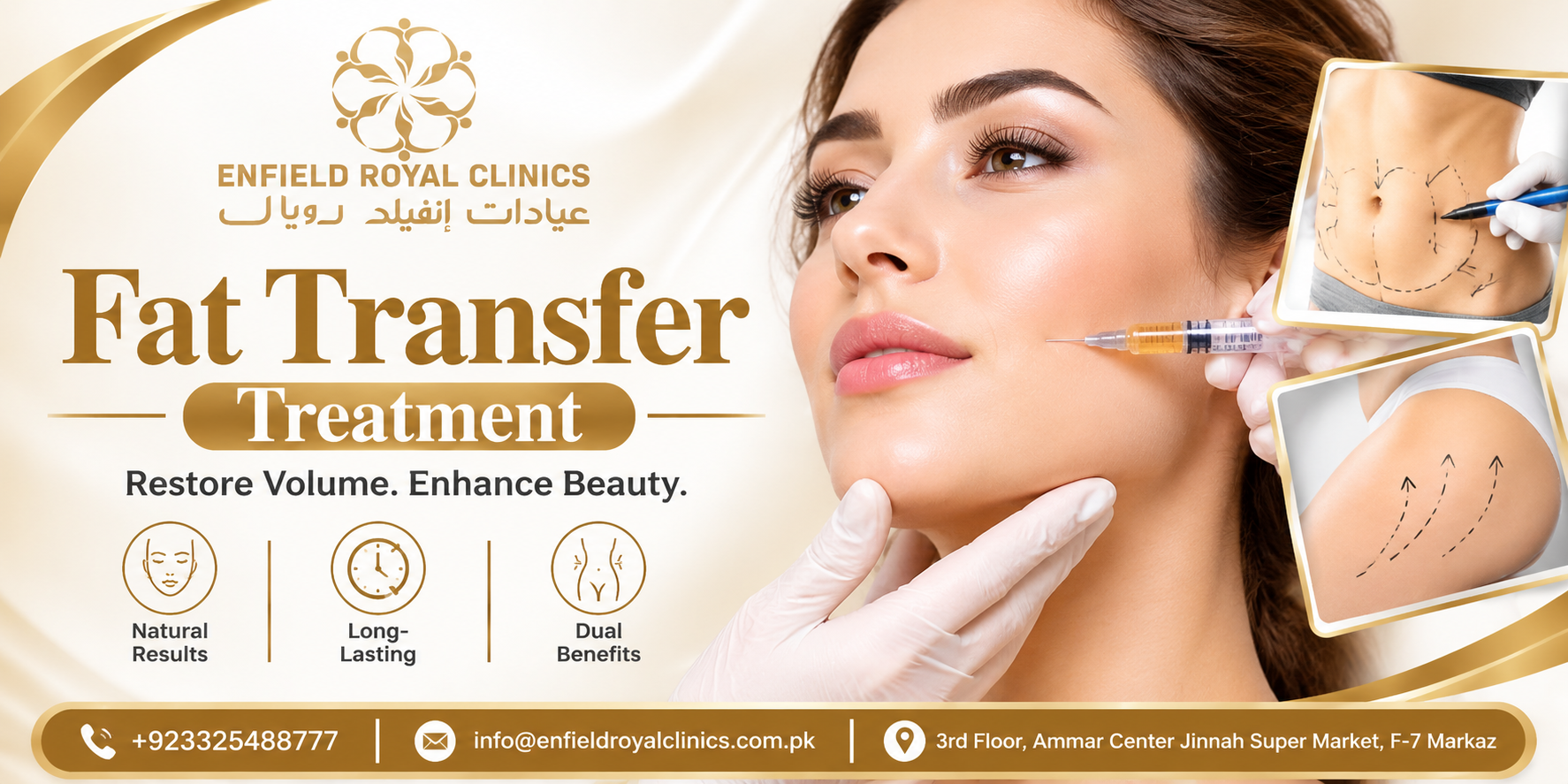
Many people exploring cosmetic enhancement want results that look natural and remain noticeable for years. Fat transfer treatment has become an appealing option because it uses a person's own fat to restore volume, improve body contours, and enhance selected facial features. Unlike temporary cosmetic treatments, fat grafting can provide long-lasting improvements when the transferred fat successfully establishes a blood supply.
People considering Fat Transfer Treatment in Islamabad often have questions about how long the results last, whether the body absorbs the transferred fat, and what factors influence the final appearance. Understanding these aspects can help individuals make informed decisions before choosing the procedure.
Fat transfer involves collecting excess fat from one area of the body, processing it, and carefully injecting it into another area that needs additional volume. Although some transferred fat is naturally absorbed during recovery, the remaining fat cells can become part of the treated tissue and provide lasting enhancement.
1. What Is Fat Transfer Treatment and How Does It Work?
Fat transfer treatment, also known as fat grafting or fat injection, is a cosmetic procedure that uses the patient's own fat to improve volume and body proportions. It is commonly used for facial rejuvenation, body contouring, and selected areas that have lost natural fullness.
The procedure generally involves three main steps:
Fat Harvesting: The process begins with collecting excess fat from donor areas such as the abdomen, thighs, hips, or flanks. A specialized liposuction technique is used to remove fat carefully.
Fat Purification: The collected fat is processed to separate suitable fat cells from blood, excess fluid, and damaged tissue. This helps prepare the fat for transfer.
Fat Injection: The purified fat is injected into the selected area using specialized instruments. Small amounts are placed in different tissue layers to encourage proper integration and blood supply.
The procedure can be used to enhance the cheeks, temples, lips, breasts, hips, and buttocks, depending on individual suitability.
For individuals considering Fat Transfer Treatment in Islamabad, a consultation helps determine the appropriate donor area, treatment location, and amount of fat required.
2. Does Fat Transfer Treatment Provide Permanent Results?
Fat transfer can provide long-lasting results, but it is important to understand that not all transferred fat cells survive. After injection, the transferred fat needs to develop a new blood supply to receive oxygen and nutrients from the surrounding tissues.
During the initial healing period, the body naturally absorbs some of the injected fat. The surviving fat cells can remain in the treated area for many years.
This means that fat transfer is not necessarily a temporary cosmetic treatment. Once the surviving fat cells become established, they generally behave like fat cells elsewhere in the body.
However, the final results vary from person to person. Several factors influence how much transferred fat survives, including:
-
The quality of harvested fat.
-
The technique used during fat collection and injection.
-
The amount of fat transferred.
-
The blood supply in the receiving area.
-
Individual healing responses.
-
Lifestyle and weight stability.
Patients should understand that permanent results cannot be guaranteed. Some may achieve the desired volume after one session, while others may require additional treatment.
3. How Long Do Fat Transfer Treatment Results Last?
The longevity of fat transfer results depends largely on the survival of the transferred fat cells. Although the initial appearance may change as swelling decreases and the body absorbs some fat, the remaining cells can provide long-term volume enhancement.
The healing process generally develops in different stages:
First Few Days: Swelling, bruising, and tenderness are common. The treated area may initially appear fuller than the expected final result.
First Few Weeks: Swelling gradually decreases, and the body begins adjusting to the transferred fat. Some fat cells may be naturally absorbed during this stage.
One to Three Months: The treated area begins to settle, making the developing contours easier to evaluate.
Three to Six Months: The remaining fat becomes more established, and the final results generally become clearer.
After this period, surviving fat cells can remain for years. However, natural aging, significant weight changes, and other lifestyle factors may influence their appearance.
For example, fat transferred to the cheeks may continue providing fullness for years, while changes in overall body weight can affect the appearance of transferred fat in the hips or buttocks.
4. What Factors Affect the Longevity of Fat Transfer Results?
Several factors determine whether fat transfer provides long-lasting enhancement. Understanding these influences can help patients protect their results and support a smoother recovery.
Fat Survival Rate: Not every transferred fat cell survives. Cells that successfully establish a blood supply are more likely to remain in the treated area.
Surgical Technique: Careful fat harvesting, purification, and injection are important. Placing small amounts of fat in appropriate tissue layers can support better integration.
Body Weight Stability: Significant weight fluctuations can change the size of transferred fat cells. Weight gain may increase their volume, while weight loss may reduce it.
Smoking Habits: Smoking can negatively affect circulation and tissue healing. Avoiding smoking before and after surgery, according to medical advice, may support recovery.
Overall Health: General health, nutrition, circulation, and individual healing responses can influence the final outcome.
Treatment Area: Different body areas have different tissue characteristics and blood supplies. Therefore, fat survival and long-term results may vary depending on where the fat is transferred.
A qualified specialist considers these factors when planning Fat Transfer Treatment in Islamabad and explaining realistic expectations.
5. Which Areas Can Benefit From Long-Lasting Fat Transfer Results?
Fat transfer is a versatile procedure that can improve different facial and body areas. Its suitability depends on the patient's anatomy, available donor fat, and desired enhancement.
Facial Areas
-
Cheeks: Restores fullness in hollow or sunken cheeks.
-
Temples: Improves the appearance of volume loss around the temples.
-
Under-Eyes: May address selected hollows and improve facial freshness.
-
Lips: Adds fullness and improves certain lip contour concerns.
Body Areas
-
Buttocks: Adds volume and improves selected body contours.
-
Hips: Helps enhance hip shape and address certain indentations.
-
Breasts: Provides modest volume enhancement for suitable candidates.
-
Hands: Restores fullness associated with age-related volume loss.
Buttock fat grafting requires particular safety precautions. Fat must be injected only into the subcutaneous tissue above the gluteal muscle, with real-time ultrasound guidance recommended to confirm the injection location because deeper injection can cause life-threatening fat embolism.
The expected longevity also varies according to the treatment area and individual fat survival.
6. How Can Patients Maintain Fat Transfer Treatment Results?
Maintaining results requires appropriate aftercare and healthy lifestyle habits. Although surviving fat cells can remain for years, changes in body weight and general health may influence the treated areas.
Patients can support their results by following several recommendations:
-
Maintain a stable body weight.
-
Follow all postoperative instructions.
-
Eat a balanced diet with adequate nutrients.
-
Avoid smoking during the recovery period.
-
Stay hydrated.
-
Avoid strenuous activities until medically cleared.
-
Protect treated areas from unnecessary pressure when advised.
-
Attend scheduled follow-up appointments.
Compression garments may be recommended for donor areas, but pressure on receiving areas should be managed according to the specific procedure.
Patients should also avoid expecting immediate final results. Swelling and natural fat absorption can temporarily change the appearance during recovery.
Fat transfer is a surgical procedure and carries risks, including infection, bleeding, uneven contours, fat necrosis, and anesthesia-related complications. Choosing a properly qualified surgeon and following safety recommendations are essential.
Frequently Asked Questions (FAQs)
1. Does Fat Transfer Treatment provide permanent results?
Fat transfer can provide long-lasting results because surviving fat cells can remain in the treated area for many years. However, some transferred fat is naturally absorbed during healing, so permanent results cannot be guaranteed.
2. How much fat is usually absorbed after fat transfer?
The amount varies between patients and treatment areas. A portion of transferred fat is naturally reabsorbed during the initial healing period, while the remaining fat may establish a lasting blood supply.
3. When can patients see the final results of fat transfer?
Initial improvements may be visible earlier, but final results generally become clearer within three to six months as swelling decreases and the transferred fat settles.
4. Can transferred fat disappear over time?
Some transferred fat may be absorbed during recovery. Even after successful fat survival, significant weight loss and natural aging can change the volume and appearance of the treated area.
5. Is Fat Transfer Treatment better than temporary fillers?
Fat transfer may provide longer-lasting volume enhancement than many temporary fillers because surviving fat cells can remain for years. However, fillers are less invasive and may be more suitable for certain cosmetic concerns.
6. Can Fat Transfer Treatment be repeated?
Yes, an additional session may be considered if the initial fat survival is insufficient or the patient wants further enhancement. The decision depends on healing, available donor fat, and medical assessment.
Conclusion
Fat transfer treatment can provide long-lasting cosmetic improvements by using the patient's own fat to restore volume, enhance body contours, and improve facial balance. Although some transferred fat is naturally absorbed during recovery, the cells that successfully establish a blood supply can remain in the treated area for many years.
For individuals exploring Fat Transfer Treatment in Islamabad, understanding fat survival, recovery, lifestyle factors, and realistic expectations is important. A personalized consultation with a qualified specialist can help determine whether the procedure is suitable and how to achieve safe, natural-looking, and lasting results.
❤️ Support Friends Aim! View a sponsored ad to help cover our website costs. Thanks!
Support Us — Ad 1 Support Us — Ad 2- Arts, Culture & Design
- Automotive & Transport
- Accounting & Finance
- Advertising & Marketing
- Agriculture & Farming
- Business & Consulting
- Books & Publishing
- Building & Construction
- Beauty & Personal Care
- Baby, Kids & Parenting
- Charity & Social Causes
- Crafts & Handmade
- Careers & Jobs
- Computers & Laptops
- Consumer Electronics
- Entertainment & Events
- Food & Beverages
- Delivery & Logistics
- Digital Media & Content
- Dating & Relationships
- E-Commerce & Retail
- Education & Learning
- Energy & Environment
- Fitness
- Fashion & Apparel
- Gaming & Toys
- Government & Legal
- Gardening
- Health & Medical Care
- Home Decor & Furniture
- IT & Software
- Industrial & Tools
- Import & Export
- Jewelry & Watches
- Lifestyle & Wellness
- Legal Services & Law
- News & Media
- News & Current Affairs
- Religion & Faith
- Sports
- Technology
- Travel & Tourism
- Weddings & Events
- Other

 Arabic
 French
 Spanish
 Portuguese
 Deutsch
 Turkish
 Dutch
 Italiano
 Russian
 Romaian
 Portuguese (Brazil)
 Greek