


 About
 Terms
 Privacy
What Makes Digital Broadcasting Different From Traditional Television Signals?
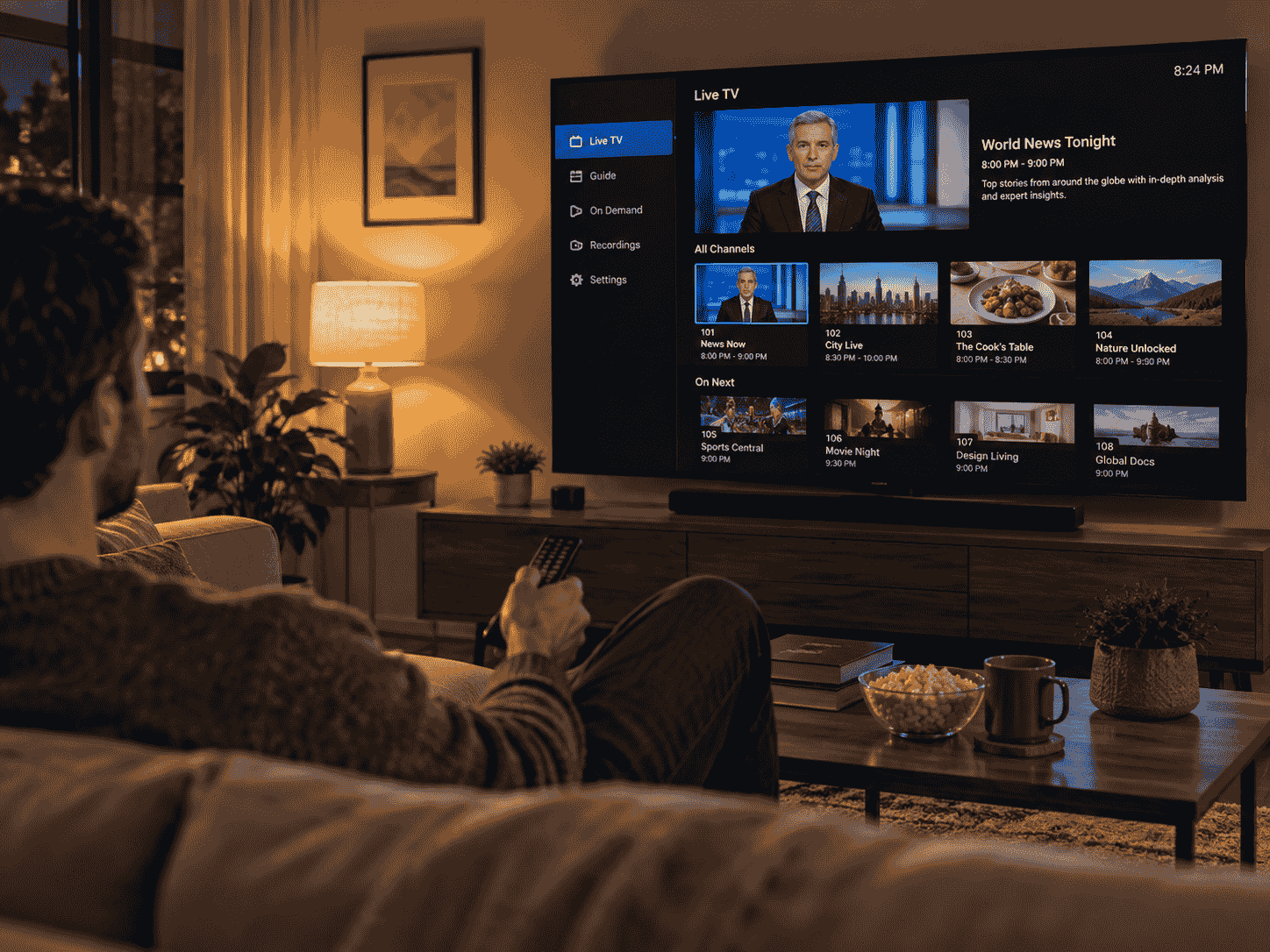
Television technology has changed considerably over the years. Earlier television systems relied on analogue signals to transmit pictures and sound, while modern broadcasting increasingly uses digital formats. This transition has influenced how television content is delivered, received, and displayed in homes.
Although both systems serve the same basic purpose, their technical methods are quite different. Traditional analogue television transmits continuously varying signals, whereas digital television converts audio and video into data that can be processed and transmitted electronically. These differences affect signal quality, channel capacity, reception, and the range of services available to viewers.
Understanding how these technologies work helps explain why modern television systems offer features that were difficult or impractical with older broadcasting methods.
Understanding How Digital Broadcasting Works
At its core, digital broadcasting involves converting television content into digital data before transmitting it to viewers. Video and audio are encoded, compressed, and organised into a digital signal that can travel through terrestrial transmitters, satellites, or cable networks.
A compatible television or receiver then processes the incoming data and converts it into images and sound.
Unlike analogue transmission, digital broadcasting uses binary information represented by ones and zeros. This makes it possible to apply compression techniques, error correction, and other technologies that help use available transmission capacity efficiently.
Digital television can also carry additional information alongside the main programme. Depending on the broadcasting standard and service, this may include electronic programme guides, subtitles, multiple audio tracks, and accessibility features.
The specific capabilities depend on the transmission system, receiver, and broadcaster.
How Traditional Analogue Television Signals Worked
Traditional analogue television systems transmitted pictures and sound through continuously changing electrical or radio signals. The signal represented visual information through variations in amplitude, frequency, or other characteristics, depending on the broadcasting standard.
A television receiver interpreted these signals and displayed the corresponding image on the screen.
Analogue broadcasting was widely used for decades because it provided a practical way to distribute television content to large audiences. However, it had several technical limitations.
Signal quality could gradually deteriorate as reception conditions became worse. Viewers might notice:
-
Snow-like interference across the screen.
-
Ghosting or duplicated images.
-
Horizontal lines and visual distortion.
-
Static or unclear audio.
-
Colour changes caused by poor reception.
The quality of an analogue picture generally reflected the strength and condition of the received signal. Even when reception was weak, a recognisable image could sometimes remain visible, although with noticeable interference.
Differences in Picture and Sound Quality
One of the most noticeable differences between analogue and digital television is how picture and sound quality behave under changing reception conditions.
Analogue signals can become progressively noisier as interference increases or signal strength decreases. Digital systems use error correction to help recover transmitted information, allowing receivers to maintain a stable picture when reception conditions remain within acceptable limits.
When the digital signal is sufficiently strong, the picture and sound can remain clear without the gradual interference associated with analogue reception.
However, digital broadcasting is not immune to signal problems. If reception becomes too poor, viewers may experience:
-
Pixelation or block-like image distortion.
-
Frozen frames.
-
Audio interruptions.
-
Missing channels.
-
Complete signal loss.
This behaviour is sometimes described as the digital cliff effect. Instead of gradually becoming less clear, a digital broadcast may work normally until reception falls below the level required for reliable decoding.
Digital transmission also supports different video resolutions and audio formats, depending on the broadcasting standard and service. This allows broadcasters to offer higher-definition content where sufficient capacity and compatible equipment are available.
Channel Capacity and Efficient Use of Bandwidth
Another important difference concerns how much information can be transmitted through a limited amount of broadcasting spectrum.
Traditional analogue television generally required a separate frequency allocation for each channel. This restricted the number of programmes that could be distributed within a particular frequency range.
Digital broadcasting can use compression to reduce the amount of data required for each programme. Multiple television services can therefore be transmitted within the capacity that might previously have been used for a single analogue channel.
This is known as multiplexing.
A digital multiplex combines several television and radio services into one transmission stream. Compatible receivers separate the information and display the selected programme.
The number of channels supported depends on factors such as video resolution, compression efficiency, transmission conditions, and the amount of available bandwidth.
This improved efficiency has helped broadcasters expand channel choices and introduce additional services without requiring an entirely separate transmission frequency for every programme.
Differences in Broadcasting Equipment and Compatibility
Analogue and digital television systems also require different types of receiving equipment.
Older analogue televisions were designed to interpret analogue signals directly. Digital broadcasts require a compatible digital tuner or an external receiver that can decode the relevant transmission standard.
For example, terrestrial digital television may use standards such as DVB-T or DVB-T2 in many regions. Satellite and cable services can use different standards, so compatibility should always be checked before purchasing equipment.
A television that supports one digital broadcasting format may not necessarily support every other format.
Viewers using older television sets can sometimes continue using them with an external digital receiver. The receiver processes the digital signal and sends the resulting picture and sound to the television through a compatible connection.
This approach allows existing screens to remain useful even when broadcasting infrastructure changes.
Digital Broadcasting Supports Additional Features
Digital transmission can carry more than basic television pictures and sound. It can also include information that improves navigation and accessibility.
Some common features include:
Electronic Programme Guides: These provide information about current and upcoming programmes, helping viewers understand what is available without relying on printed schedules.
Subtitles: Digital broadcasts can transmit subtitle information that receivers display when enabled.
Multiple Audio Tracks: Certain services provide alternative languages or audio options, depending on broadcaster support.
Accessibility Services: Features such as audio description and specialised subtitle formats can make television more accessible to different audiences.
Programme Information: Receivers may display details such as programme titles, descriptions, and scheduling information.
The availability of these features varies by broadcaster, country, transmission standard, and receiving equipment.
How Transmission Methods Affect Television Reception
Both traditional and digital television can be delivered through different transmission networks. The main methods include terrestrial broadcasting, satellite transmission, and cable distribution.
Terrestrial television uses transmitters and antennas to distribute signals across geographical areas. Digital terrestrial broadcasting can provide several channels through a single multiplex.
Satellite television sends signals from satellites to compatible receiving dishes. It can cover large geographical areas, although reception may be affected by dish alignment, obstacles, and severe weather.
Cable television distributes signals through a physical network connected to homes and buildings. Digital cable services can carry numerous channels and additional information through the same infrastructure.
Internet-based television is another method of delivering video content, but it works differently from conventional broadcasting. Instead of receiving a continuous broadcast signal through an antenna, satellite dish, or cable connection, viewers access content through an internet network.
Although both internet television and digital broadcasting use digital data, they should not be treated as identical technologies.
Reliability and Common Reception Problems
Digital television can provide consistent picture quality, but reliable reception still depends on several technical conditions.
For terrestrial broadcasting, antenna placement, distance from transmitters, buildings, and surrounding obstacles can affect signal strength. Satellite services depend on suitable dish positioning and an unobstructed signal path.
Cable reception may be influenced by damaged connections, network faults, or equipment problems.
When a digital television service experiences interruptions, viewers can begin with a few basic checks:
-
Confirm that the television is using the correct input and tuner mode.
-
Check antenna, cable, or satellite connections.
-
Inspect cables for visible damage or loose fittings.
-
Run a channel scan if the broadcaster has changed its transmission arrangements.
-
Check whether other channels are affected or only one service.
These steps can help identify whether the problem is related to the receiving equipment, local signal conditions, or the broadcasting network.
The Continuing Development of Television Transmission
Television broadcasting continues to develop as compression methods, transmission standards, and receiver technology improve.
Newer digital standards can support more efficient use of spectrum, improved reception performance, and additional technical capabilities. Broadcasters can also introduce higher-resolution services and more advanced audio formats when their infrastructure and available capacity allow.
At the same time, internet-based delivery is expanding the ways viewers access television content. Traditional broadcasting remains important for distributing live channels to large audiences, while online platforms provide alternative methods for accessing live and on-demand programming.
These technologies may operate alongside each other rather than completely replacing one another.
Conclusion
Digital broadcasting differs from traditional analogue television mainly in how information is encoded, transmitted, and received. Digital systems use compressed data, error correction, and multiplexing to improve transmission efficiency and support additional features.
Analogue television provided a practical broadcasting solution for many decades, but its susceptibility to interference and limited channel capacity created challenges as viewer expectations changed.
Digital broadcasting has made it possible to deliver clearer pictures, more efficient channel distribution, programme information, and additional accessibility features. Although reception still depends on compatible equipment and reliable signals, the technology provides a more flexible foundation for modern television services.
❤️ Support Friends Aim! View a sponsored ad to help cover our website costs. Thanks!
Support Us — Ad 1 Support Us — Ad 2- Arts, Culture & Design
- Automotive & Transport
- Accounting & Finance
- Advertising & Marketing
- Agriculture & Farming
- Business & Consulting
- Books & Publishing
- Building & Construction
- Beauty & Personal Care
- Baby, Kids & Parenting
- Charity & Social Causes
- Crafts & Handmade
- Careers & Jobs
- Computers & Laptops
- Consumer Electronics
- Entertainment & Events
- Food & Beverages
- Delivery & Logistics
- Digital Media & Content
- Dating & Relationships
- E-Commerce & Retail
- Education & Learning
- Energy & Environment
- Fitness
- Fashion & Apparel
- Gaming & Toys
- Government & Legal
- Gardening
- Health & Medical Care
- Home Decor & Furniture
- IT & Software
- Industrial & Tools
- Import & Export
- Jewelry & Watches
- Lifestyle & Wellness
- Legal Services & Law
- News & Media
- News & Current Affairs
- Religion & Faith
- Sports
- Technology
- Travel & Tourism
- Weddings & Events
- Other

 Arabic
 French
 Spanish
 Portuguese
 Deutsch
 Turkish
 Dutch
 Italiano
 Russian
 Romaian
 Portuguese (Brazil)
 Greek