


 About
 Terms
 Privacy
A Complete Guide to Safer Deliveries and Better Customer Experiences
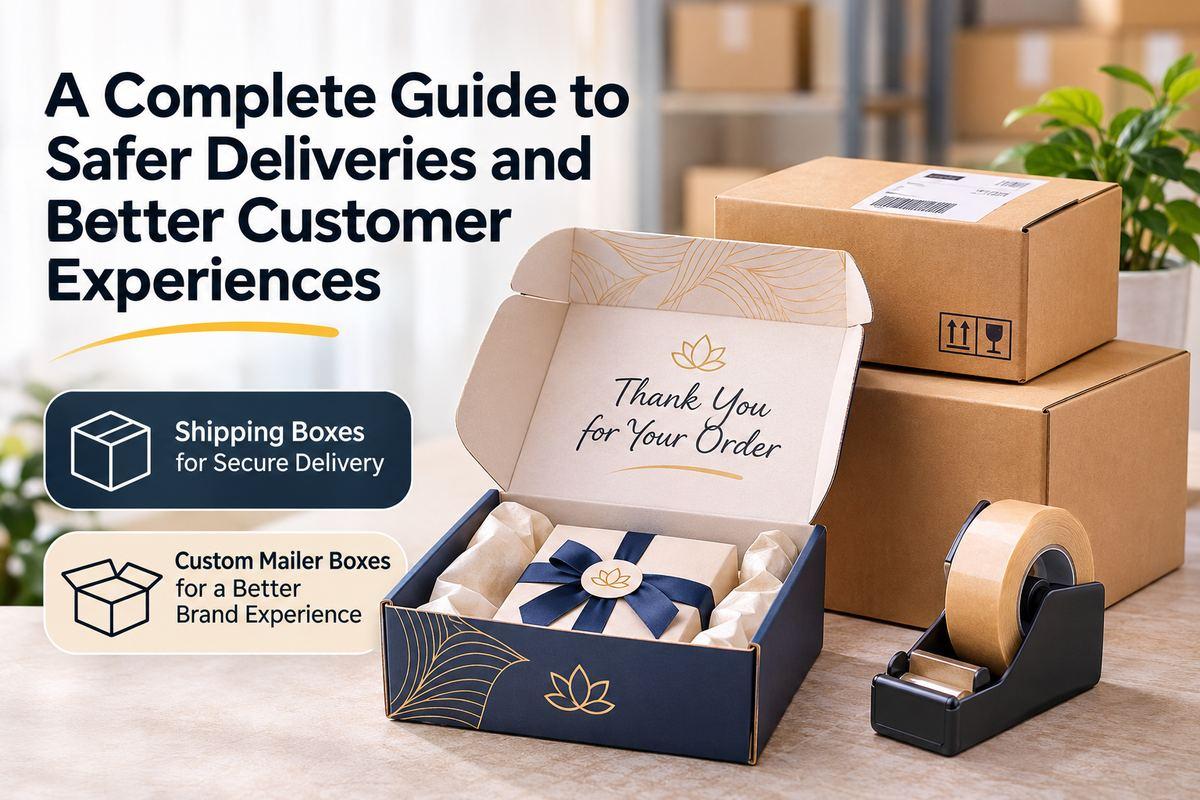
Online shopping has changed what customers expect from businesses. People want their orders to arrive quickly, but speed is only one part of a successful delivery. They also expect products to arrive clean, secure and in the same condition they were shown when they placed the order.
For businesses selling online, delivery is an important part of the customer experience. A carefully prepared order can create confidence, while a damaged product or poorly handled parcel can lead to disappointment, complaints and returns.
The good news is that safer deliveries do not always require complicated systems. Businesses can improve results by understanding their products, choosing suitable materials, preparing orders carefully and regularly reviewing what happens during transportation.
Why Safer Delivery Matters
The journey from a warehouse to a customer's doorstep can involve several stages. A parcel may be picked from storage, packed by an employee, moved to a dispatch area, loaded into a vehicle and handled at different points before final delivery.
Each stage creates an opportunity for damage.
Products can be exposed to pressure, movement, moisture or impact depending on the delivery environment. Fragile items may need additional support, while clothing, books and other less delicate products may have different requirements.
Businesses should therefore think about the complete journey rather than only how the parcel looks when it leaves the packing area.
Understand Your Product Before Choosing a Box
There is no single packaging format that works perfectly for every product. The right choice depends on the product's size, weight, shape, fragility and delivery requirements.
Before selecting a format, businesses should record accurate product measurements. Consider the length, width and height, as well as the product's weight.
The amount of empty space inside the parcel also matters. Too much space can allow the product to move during transportation, while a box that is too tight may make packing difficult or place unnecessary pressure on the product.
Testing different sizes can help identify a practical balance between protection, storage and delivery efficiency.
Choose Shipping Boxes Based on Real Requirements
Shipping Boxes are an important part of the delivery process because they provide the outer structure that protects an order during handling.
Businesses should consider how the box performs when stacked, moved and transported. The material and construction should be suitable for the product rather than chosen only because the box looks attractive.
For heavier products, stronger construction may be necessary. Lightweight products may not require the same level of protection.
Businesses should also consider how boxes are stored before use. A design that is easy to stack and organise can make the packing area more efficient, especially when order volumes increase.
Make the Box Fit the Product
A correctly sized box can improve both protection and practicality. If the product has too much room to move, it may shift during transportation and become damaged.
On the other hand, excessive filling material can increase material use, packing time and parcel size.
The best approach is to test the actual product inside the selected box. Move the packed parcel carefully and inspect the product afterwards.
Businesses can also simulate common handling conditions. The aim is not to predict every possible delivery situation, but to identify obvious weaknesses before customers experience them.
Consider Custom Mailer Boxes for Ecommerce
For online retailers, presentation can continue to matter even after the customer has placed an order.
Custom Mailer Boxes can combine practical product protection with a branded presentation. They can be designed around the dimensions of suitable products and can carry colours, logos or other visual elements that reinforce brand recognition.
This can be particularly useful for ecommerce businesses where the parcel may be the customer's first physical interaction with the brand.
However, design should never compromise performance. A visually attractive mailer still needs to protect the product and remain practical for staff to pack and customers to open.
Protect Products Without Making Packing Difficult
A good delivery system should work for both the customer and the people preparing orders.
If packing takes too long, fulfilment can become expensive and slow. Staff should be able to understand how products should be positioned and what protective materials are required.
Simple packing instructions can help maintain consistency. For example, a business may establish a standard process for placing the product, adding suitable protection and completing a final check.
The process should be reviewed when new products are introduced because different items may have different requirements.
Test Before Ordering in Large Quantities
One of the most useful steps for businesses is sample testing. Ordering a large quantity before checking whether the format works can create unnecessary costs.
A sample can be tested with the actual product. Check whether it fits properly, whether the closure works and whether the finished parcel is easy to handle.
Businesses can also test the packed order through realistic handling. Afterward, inspect the product and the outer box for signs of movement, crushing or other problems.
Testing does not guarantee that every delivery will be perfect, but it can reveal weaknesses early.
Think About Weight and Delivery Efficiency
Parcel weight and dimensions can influence delivery costs. Businesses should therefore consider the complete packed order rather than looking only at the product itself.
An oversized parcel may require more storage space and may increase transportation requirements. Excessive protective material can also add unnecessary weight.
The goal is not to use the smallest possible format at all costs. Protection remains important. Instead, businesses should aim for an efficient design that provides suitable support without unnecessary excess.
This can improve both operational efficiency and the customer's experience.
Make Opening Easy for Customers
The delivery experience does not end when the parcel reaches the doorstep. Customers still need to open it.
A box that is difficult to open can create frustration, particularly when customers are excited to see their purchase.
Businesses should consider how the customer will interact with the parcel. Closures should be practical, products should be easy to access and important information should be visible where appropriate.
A simple opening experience can contribute to a more positive impression of the brand.
Use Presentation to Build Trust
A parcel can communicate a surprising amount about a business. A clean, organised and well-presented order can suggest that the company pays attention to detail.
Branding can support this impression. A consistent logo, colour scheme or design style can help customers recognise the business immediately.
However, presentation should remain honest. Attractive delivery materials cannot compensate for poor product quality, late shipping or weak customer service.
Trust develops when presentation is supported by reliable performance.
Learn From Returns and Customer Complaints
Returns and complaints can provide useful information about delivery problems.
Businesses should record the reasons behind returns where possible. If several customers report damaged products, the packing process should be reviewed.
The problem may not always be the outer box. It could involve product placement, insufficient internal support, incorrect sizing or handling during fulfilment.
Looking for patterns helps businesses make targeted improvements instead of changing the entire delivery process without evidence.
Train Staff and Review Processes
Employees are an important part of safe fulfilment. Even a well-designed delivery system can fail if staff are unclear about how products should be packed.
Training should cover the basic packing process, product positioning and final checks. New employees should have clear instructions rather than relying entirely on informal learning.
Managers should also review the process periodically. Changes in products, order volumes or delivery requirements may mean that an old packing method is no longer suitable.
Small reviews can prevent minor problems from becoming repeated customer complaints.
Consider Responsible Material Use
Businesses are under increasing pressure to think about waste. Customers may notice excessive packaging, especially when a small product arrives in a very large parcel.
Using an appropriately sized box can help reduce unnecessary material while also improving efficiency.
Where suitable, businesses can consider recyclable or reusable materials. Environmental claims should always be accurate and based on the actual materials and disposal options available to customers.
At the same time, protection should not be sacrificed simply to reduce material use. A damaged product can result in returns, replacements and additional transport.
A balanced approach is more practical.
Keep Improving the Delivery Experience
Customer expectations continue to change, so delivery should not be treated as a process that is designed once and forgotten.
Businesses can review delivery times, damage rates, customer feedback, packing costs and returns to understand where improvements may be possible.
Even small changes can have an impact. Better product measurements, a more suitable box size, clearer packing instructions or a simpler opening process can make everyday fulfilment more efficient.
The strongest improvements usually come from understanding real problems and testing practical solutions.
Creating a Safer and Better Customer Journey
A successful delivery is about more than getting a parcel from one location to another. It is about making sure the product remains protected while creating a reliable experience for the customer.
For ecommerce businesses, the right Shipping Boxes can provide a strong foundation for safe transportation, while Custom Mailer Boxes can add brand recognition and a more considered presentation where appropriate.
The most effective approach is to start with the product, understand its risks, test the chosen format and listen to customer feedback. Businesses that regularly review their delivery process can identify weaknesses before they become expensive problems.
When protection, practical packing, efficient handling and thoughtful presentation work together, customers receive more than an undamaged parcel. They receive a delivery experience that feels dependable from the moment they place an order to the moment they open it.
❤️ Support Friends Aim! View a sponsored ad to help cover our website costs. Thanks!
Support Us — Ad 1 Support Us — Ad 2- Arts, Culture & Design
- Automotive & Transport
- Accounting & Finance
- Advertising & Marketing
- Agriculture & Farming
- Business & Consulting
- Books & Publishing
- Building & Construction
- Beauty & Personal Care
- Baby, Kids & Parenting
- Charity & Social Causes
- Crafts & Handmade
- Careers & Jobs
- Computers & Laptops
- Consumer Electronics
- Entertainment & Events
- Food & Beverages
- Delivery & Logistics
- Digital Media & Content
- Dating & Relationships
- E-Commerce & Retail
- Education & Learning
- Energy & Environment
- Fitness
- Fashion & Apparel
- Gaming & Toys
- Government & Legal
- Gardening
- Health & Medical Care
- Home Decor & Furniture
- IT & Software
- Industrial & Tools
- Import & Export
- Jewelry & Watches
- Lifestyle & Wellness
- Legal Services & Law
- News & Media
- News & Current Affairs
- Religion & Faith
- Sports
- Technology
- Travel & Tourism
- Weddings & Events
- Other

 Arabic
 French
 Spanish
 Portuguese
 Deutsch
 Turkish
 Dutch
 Italiano
 Russian
 Romaian
 Portuguese (Brazil)
 Greek