


 About
 Terms
 Privacy
How Can Nonsurgical Rhinoplasty Enhance Facial Balance?
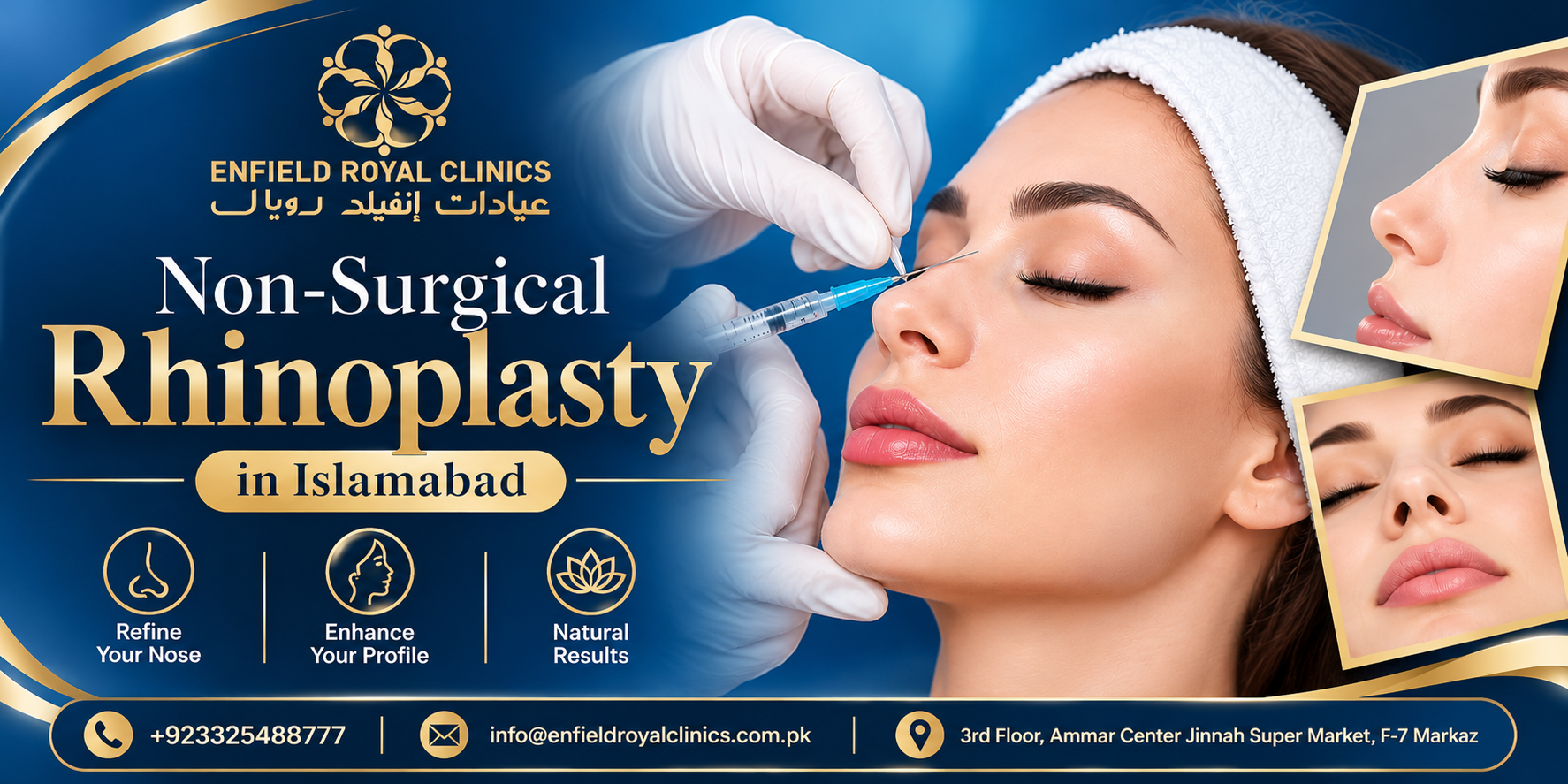
Facial balance plays an important role in overall appearance. The nose is positioned at the centre of the face, so even small changes to its shape can influence how the other facial features appear together. A nose with a slight bump, uneven bridge, or less defined tip may affect facial proportions, even when the rest of the features are naturally attractive. For people who want to improve these details without undergoing surgery, nonsurgical rhinoplasty can be an option worth exploring.
Nonsurgical Rhinoplasty in Islamabad is a cosmetic treatment that uses injectable dermal fillers to adjust selected areas of the nose. Rather than removing bone or cartilage, the procedure adds carefully placed volume to create a smoother and more balanced appearance. When performed on suitable candidates, it can improve certain nose contours while maintaining the person's natural facial characteristics.
However, facial balance is not about achieving a perfectly straight or identical nose. It is about creating harmony between the nose, cheeks, lips, chin, and other features.
1. Understanding the Connection Between Nose Shape and Facial Balance
The nose influences facial proportions because of its central position. Its length, width, projection, bridge, and tip can affect how the entire face is perceived. For example, a noticeable bump on the bridge may attract attention when someone is viewed from the side, while an uneven contour may create an impression of asymmetry from the front.
Facial balance depends on how different features relate to one another. A nose that looks attractive on one person may not suit another because every individual has a different facial structure.
Nonsurgical rhinoplasty focuses on improving selected irregularities rather than completely changing the nose. Dermal fillers can add volume to specific areas, making certain contours appear smoother and more proportionate.
The goal is usually to create a subtle improvement that complements the existing facial structure. This approach may be suitable for individuals who want a refined appearance without the recovery period associated with traditional nose surgery.
2. How Dermal Fillers Improve Nasal Proportions
Dermal fillers are commonly used in nonsurgical rhinoplasty to adjust the appearance of selected nasal areas. Many treatments use hyaluronic acid-based fillers, a substance that attracts and retains moisture within the skin.
A qualified practitioner assesses the nose from different angles before deciding where filler placement may improve its overall shape. Small amounts of filler may be used to create a more continuous contour between different parts of the nose.
For example, a shallow area beside a bridge bump may be filled to make the profile appear smoother. Similarly, selected areas around the nasal bridge or tip may be adjusted to improve visual definition.
The treatment may help with:
-
Creating a smoother-looking nasal bridge.
-
Improving the appearance of minor contour irregularities.
-
Making certain asymmetries less noticeable.
-
Refining the appearance of selected areas of the nasal tip.
-
Creating a more balanced side profile.
These improvements depend on individual anatomy and the amount of correction required. Since fillers add volume rather than remove tissue, they cannot make a large nose physically smaller or narrow a wide nasal structure.
3. Creating Better Harmony Between the Nose, Chin, and Lips
Facial balance involves more than the nose alone. The relationship between the nose, chin, and lips can influence how a person's side profile appears.
For example, a nose may seem more prominent when the chin is naturally less projected. In another person, the same nose shape may appear well proportioned because the chin and other facial features provide a different balance.
Nonsurgical rhinoplasty may improve the appearance of the nasal profile by smoothing selected contours. This can make the nose look more harmonious in relation to the surrounding features.
However, filler treatment cannot correct every facial proportion. If the main concern is a recessed chin, significant jaw imbalance, or another structural issue, nasal filler alone may not create the desired result.
A proper assessment helps determine whether the nose is actually the main factor affecting facial balance. It also prevents unnecessary treatment when another concern may be more relevant.
4. Improving Facial Symmetry Without Changing Natural Features
Perfect facial symmetry is uncommon. Most people have small differences between the two sides of their face, including variations in the eyebrows, cheeks, nostrils, and nasal structure.
In some cases, minor nasal irregularities can make these natural differences more noticeable. Nonsurgical rhinoplasty may help improve the appearance of selected uneven contours by placing filler in carefully assessed areas.
For example, a slight indentation along the nasal bridge may be filled to create a smoother visual line. Certain minor contour differences may also become less noticeable after treatment.
The purpose is not to make both sides of the nose look completely identical. Instead, the treatment aims to improve the overall appearance while respecting the person's natural anatomy.
It is important to understand that fillers cannot correct significant structural deviation or reposition nasal bones. Individuals with substantial asymmetry may require a surgical assessment to understand the available options.
5. Why Facial Assessment Matters Before Treatment
A successful cosmetic result begins with understanding the individual's facial structure and expectations. Not everyone is a suitable candidate for nonsurgical rhinoplasty, and the same filler technique will not produce identical results for different people.
During an assessment, a qualified medical professional may consider:
-
The shape, width, and projection of the nose.
-
The appearance of the nasal bridge and tip.
-
The relationship between the nose and other facial features.
-
Previous nasal surgery or filler treatments.
-
Medical history, allergies, and relevant health concerns.
-
The individual's expectations and desired outcome.
Photographs from the front, side, and angled views may help assess facial proportions. This allows the practitioner to identify whether small contour adjustments could create a meaningful improvement.
An important part of the consultation is discussing realistic expectations. A person hoping to reduce the overall size of the nose, correct breathing difficulties, or address a major structural problem may need a different treatment.
For anyone considering Nonsurgical Rhinoplasty in Islamabad, choosing an appropriately qualified and experienced medical professional is particularly important because the nose contains complex blood vessels and requires specialised injection knowledge.
6. Benefits, Limitations, and Safety Considerations
One reason nonsurgical rhinoplasty attracts attention is that it does not involve the incisions and bone or cartilage changes associated with traditional rhinoplasty. Treatment is generally performed using injections, and downtime is often shorter.
Potential benefits include:
-
A smoother-looking nasal profile.
-
Improvement in selected minor contour irregularities.
-
No surgical incisions.
-
Relatively quick treatment.
-
Temporary results that allow patients to reconsider future cosmetic choices.
Results are not permanent. Depending on the filler used, individual metabolism, and treatment area, improvements may last approximately 6–18 months. Maintenance may be required to preserve the appearance.
Despite being nonsurgical, the procedure is not risk-free. Temporary swelling, bruising, redness, and tenderness may occur. More serious complications can include blocked blood vessels, skin damage, and, in rare cases, vision loss or blindness.
Because of these risks, nasal filler treatment should only be performed by a suitably qualified practitioner with specific experience in nasal injections and the ability to manage complications. Patients should understand the risks and available emergency measures before agreeing to treatment.
Severe pain, unusual skin colour changes, pale or dusky skin, or any visual disturbance after treatment require immediate medical attention.
7. What Results Can Patients Realistically Expect?
Nonsurgical rhinoplasty can create visible changes in selected areas, but the final appearance depends on the individual's anatomy, filler placement, and treatment goals.
Some people may notice a smoother bridge and a more continuous side profile. Others may benefit from subtle adjustments that make minor irregularities less noticeable. The most appropriate results are generally those that improve facial harmony without making the nose look unnatural or excessively prominent.
Patients should also remember that filler adds volume. In certain cases, adding volume may make the nose appear larger rather than smaller. A careful assessment is therefore essential before proceeding.
After treatment, the practitioner may provide instructions about caring for the treated area. Patients are generally advised to avoid unnecessary pressure or massage unless specifically instructed and to attend any recommended follow-up appointment.
For people seeking a non-surgical way to refine selected nasal features, Nonsurgical Rhinoplasty in Islamabad may offer an option when their goals and anatomy are suitable. Understanding both its benefits and limitations helps patients make informed decisions and maintain realistic expectations.
For more information visit Enfield royal clinic in islamabad
Frequently Asked Questions
1. Can nonsurgical rhinoplasty improve overall facial balance?
Yes. By adjusting selected nasal contours, the treatment may help the nose appear more proportionate to the chin, lips, cheeks, and other facial features. The results depend on individual anatomy and treatment suitability.
2. Does nonsurgical rhinoplasty make the nose smaller?
No. Dermal fillers add volume rather than remove tissue. They may smooth certain irregularities, but they cannot reduce the actual size or width of the nose.
3. How long do nonsurgical rhinoplasty results last?
Results commonly last around 6–18 months, although the duration varies according to the filler type, individual metabolism, and treatment area. Some patients may require maintenance to preserve the results.
4. Is nonsurgical rhinoplasty suitable for everyone?
No. It may be suitable for people seeking minor cosmetic contour improvements, but it is not appropriate for every nasal concern. Individuals with significant structural problems, breathing difficulties, or a desire for nose reduction may need a surgical consultation instead.
❤️ Support Friends Aim! View a sponsored ad to help cover our website costs. Thanks!
Support Us — Ad 1 Support Us — Ad 2- Arts, Culture & Design
- Automotive & Transport
- Accounting & Finance
- Advertising & Marketing
- Agriculture & Farming
- Business & Consulting
- Books & Publishing
- Building & Construction
- Beauty & Personal Care
- Baby, Kids & Parenting
- Charity & Social Causes
- Crafts & Handmade
- Careers & Jobs
- Computers & Laptops
- Consumer Electronics
- Entertainment & Events
- Food & Beverages
- Delivery & Logistics
- Digital Media & Content
- Dating & Relationships
- E-Commerce & Retail
- Education & Learning
- Energy & Environment
- Fitness
- Fashion & Apparel
- Gaming & Toys
- Government & Legal
- Gardening
- Health & Medical Care
- Home Decor & Furniture
- IT & Software
- Industrial & Tools
- Import & Export
- Jewelry & Watches
- Lifestyle & Wellness
- Legal Services & Law
- News & Media
- News & Current Affairs
- Religion & Faith
- Sports
- Technology
- Travel & Tourism
- Weddings & Events
- Other

 Arabic
 French
 Spanish
 Portuguese
 Deutsch
 Turkish
 Dutch
 Italiano
 Russian
 Romaian
 Portuguese (Brazil)
 Greek