


 About
 Terms
 Privacy
Fish Tagging Without Unnecessary Handling Stress: Practical Ways to Improve Research Procedures
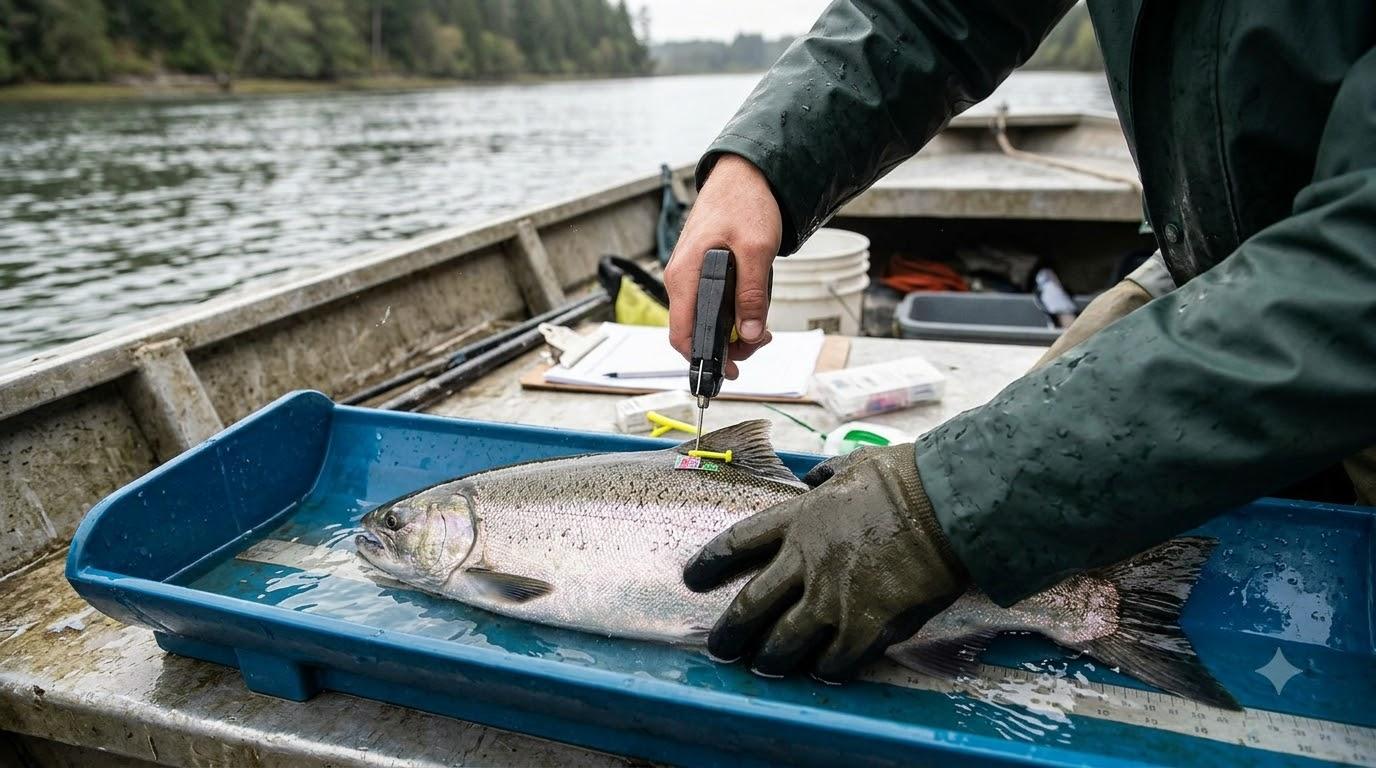
A successful fisheries research project depends on more than collecting fish and recording measurements. Every handling step can affect the quality of the research process, from the moment a fish is captured to its release after identification. Poorly planned procedures may create unnecessary delays, inconsistent tagging results and avoidable stress.
Effective Fish tagging procedures for organised fisheries research and identification begin with a clear handling plan. Researchers need to prepare equipment, organise the work area, train the team and establish a consistent sequence of activities. These steps help reduce unnecessary handling and make it easier to collect dependable information.
The goal is not simply to tag fish faster. It is to create a process that balances research requirements, fish welfare, staff safety and accurate data collection.
1. Understand Where Handling Problems Begin
Handling-related problems can develop at several stages of a research session. A team may focus heavily on the tagging procedure itself while overlooking the time fish spend waiting before or after it.
Common sources of avoidable handling include:
-
Keeping captured fish out of suitable holding conditions for longer than necessary
-
Preparing tags and equipment only after fish have been collected
-
Repeating measurements because the first record was incomplete
-
Searching for identification tools during the procedure
-
Allowing multiple team members to follow different workflows
-
Rehandling fish because records or identifiers were not checked properly
The American Fisheries Society's guidance on fish research highlights the importance of minimising handling and considering the combined effects of capture, handling and marking. It also notes that appropriate recovery time can vary with species and conditions. Researchers should therefore use approved protocols and species-specific guidance rather than assume one handling procedure suits every project.
2. Prepare the Work Area Before Collecting Fish
A well-organised work area can prevent unnecessary interruptions. Before fieldwork begins, the team should decide where each activity will take place and how fish will move through the process.
A practical layout may include separate areas for:
-
Initial fish assessment
-
Temporary holding under suitable conditions
-
Measurement and data recording
-
Tagging or marking
-
Post-procedure observation and release preparation
The exact layout depends on the research environment, available facilities and approved animal-care protocol.
Equipment should be placed where the responsible team member can access it without leaving the work area. Tags, readers, applicators, measurement equipment, record sheets and backup supplies should be checked before sampling begins.
Practical tip: Conduct a short equipment check at the start of every field session. A missing needle, uncharged reader or incomplete record sheet can interrupt the workflow when fish are already being handled.
3. Assign Clear Responsibilities to Each Team Member
When several people work around the same fish, unclear responsibilities can lead to repeated handling and missing information.
A team should decide who is responsible for each task. Depending on the size of the project, roles may include:
-
Capture and transfer
-
Fish assessment and eligibility checks
-
Measurements
-
Tag application by trained personnel
-
Electronic tag reading
-
Data entry and record verification
-
Release and post-procedure observation
In a small team, one person may perform more than one role. The important point is that everyone knows who is responsible for each stage.
A designated data recorder can be especially useful. This person can confirm that the identifier is linked to the correct fish record and that required fields have been completed before the next activity.
4. Establish a Consistent Handling Sequence
A written procedure helps researchers avoid unnecessary variation between team members and field sessions.
A general workflow might follow this sequence:
Step 1: Confirm the research protocol. Check the approved procedure, fish eligibility criteria and any species-specific requirements.
Step 2: Prepare equipment. Check the tag batch, applicator, reader, measurement tools and data-recording system.
Step 3: Assess the fish. Confirm that the fish meets the study's criteria before proceeding.
Step 4: Collect required measurements. Record only the measurements specified by the research design, using a consistent method.
Step 5: Apply the identification method. Tagging should be performed only by trained personnel following the approved procedure.
Step 6: Verify the identification record. Where electronic identification is used, confirm that the identifier can be read and that the correct code is connected to the fish's record.
Step 7: Follow the approved recovery and release procedure. Researchers should monitor fish as required by their protocol and document relevant observations.
The sequence should be adapted to the species, tag type and research setting. It is not a substitute for training or an approved animal-care procedure.
5. Select Equipment That Fits the Fish and Procedure
Equipment selection influences how smoothly the team can work. A tag that is unsuitable for the fish or an applicator that does not match the tag can create complications.
Researchers should consider:
-
Fish species and size range
-
Tag dimensions and housing
-
Intended tag location
-
Compatible applicator and needle
-
Reader compatibility
-
Sterility and handling requirements
-
Equipment maintenance and availability of replacement parts
For example, Voda IQ lists different PIT tag sizes, including its 8 mm x 1.25 mm HQ8 nano tag and 12 mm x 2.12 mm HQ12 tag. Its product range also includes tagging tools and readers. These specifications are product information, not a recommendation that either size is suitable for a particular species. Suitability must be determined by the research protocol and qualified personnel.
6. Reduce Repeated Data Entry and Identification Checks
Data mistakes can create additional handling. If a researcher discovers that an identifier was not recorded correctly, the team may need to repeat a check or investigate the fish record later.
A more reliable approach is to verify the record at the point of collection.
The record should connect the identifier with the relevant measurements, sampling date, location and other study-specific fields. Teams should use a consistent format for dates, species names, locations and measurement units.
Electronic readers can help retrieve tag codes, but the team still needs to ensure that the correct code is associated with the correct fish.
Where digital tools are used, test the reader-to-device connection before fieldwork. Confirm that data can be stored and exported as expected, and establish a backup process for equipment or connectivity problems.
7. Use a Short Pre-Session Checklist
A checklist helps teams prepare without relying entirely on memory.
|
Area |
What to confirm |
|
Protocol |
Current approved procedure is available |
|
Personnel |
Roles and responsibilities are clear |
|
Fish assessment |
Eligibility criteria are understood |
|
Tags |
Correct tag type and batch are available |
|
Applicator |
Compatible, prepared and checked |
|
Reader |
Compatible, charged and tested |
|
Measurements |
Tools and units are standardised |
|
Data |
Required fields and backup process are ready |
|
Holding and recovery |
Suitable arrangements follow the approved protocol |
|
Release |
Release procedure and responsibilities are clear |
The checklist should be short enough to use consistently. If it becomes too complicated, staff may stop using it.
8. Train the Team Before the Main Sampling Period
Training should cover more than how to operate the tagging equipment. Staff should understand the entire workflow, including fish assessment, record keeping, equipment checks and what to do when something does not go according to plan.
A useful training session can include:
-
Reviewing the research protocol
-
Demonstrating equipment checks
-
Practising data entry using sample records
-
Confirming reader and tag compatibility
-
Reviewing the procedure for an unreadable tag
-
Explaining when to pause and consult the project lead
Only appropriately trained personnel should perform procedures requiring specialist skill. The project should also establish who has authority to stop the process if a welfare, equipment or data-quality concern arises.
9. Learn From Problems Instead of Repeating Them
After each field session, the team should briefly review what worked and what caused delays.
Useful questions include:
-
Were any fish held longer than expected?
-
Did equipment preparation cause interruptions?
-
Were any identification codes difficult to read?
-
Were records incomplete or duplicated?
-
Did staff follow the same procedure?
-
Were there unexpected welfare or equipment concerns?
-
What should be changed before the next session?
This review should focus on improving the process rather than blaming individual team members. A recurring problem may indicate that the workflow, equipment layout or training needs to change.
Example 1: Equipment not prepared before sampling
A research team begins collecting fish before checking its reader and applicator. During the session, the reader battery is low and the team has to pause while equipment is replaced.
The revised process includes a pre-session equipment check and a backup reader plan. This does not change the biological research question, but it reduces avoidable interruptions during handling.
Example 2: Incomplete identification records
A team records fish measurements but does not consistently connect them to the electronic tag codes. Later, researchers discover that some observations cannot be matched confidently to individual fish.
The team introduces a designated data recorder and a record-verification step before completing each tagging event. The improvement addresses the source of the data problem instead of relying on later manual corrections.
Illustrative Case Study: A More Organised Field Session
This is a hypothetical example, not a report of an actual Voda IQ customer project.
A fisheries team plans a monitoring session involving several researchers. During an earlier session, staff experienced delays because equipment was not prepared in advance and different team members recorded information in different formats.
Before the next session, the project lead creates a standard workflow, assigns responsibilities and checks the reader, applicator and data-recording equipment. The team also agrees on the required record fields and the procedure for handling an unreadable tag.
During the session, each person knows their role. Identification records are checked before the team moves to the next fish, and any unusual event is documented for later review.
The revised process does not eliminate every field challenge, but it gives the team a more consistent way to identify and address problems.
Frequently Asked Questions
1. Why is minimising fish handling important?
Handling can contribute to stress and may affect fish condition. Reducing unnecessary handling is an important consideration in research planning and should be addressed through approved, species-appropriate procedures.
2. How can a research team make tagging sessions more organised?
Prepare equipment in advance, assign clear responsibilities, use a written workflow and verify identification records at the point of collection.
3. Should every fish be tagged in the same way?
No. The method should reflect the species, fish size, research objective and approved protocol. One procedure should not automatically be applied to every fish.
4. Why should tag and reader compatibility be checked?
A reader must support the tag technology being used. Checking compatibility and testing equipment before sampling can prevent avoidable identification problems during fieldwork.
5. What should researchers do if a tag cannot be read?
They should follow the study's documented troubleshooting and welfare procedures, record the issue and avoid improvising additional handling. The project lead should determine the appropriate next step.
6. How often should field procedures be reviewed?
Teams should review procedures after field sessions, when equipment or staff change, and whenever repeated problems indicate that the workflow needs improvement.
Conclusion
Good research procedures are built around preparation, consistency and careful handling. Researchers can reduce avoidable interruptions by organising the work area, assigning responsibilities, checking equipment and establishing a clear sequence for identification and data recording.
The right equipment also matters, but it must be selected according to the fish, study objectives and approved procedures. A reliable workflow connects the tagging event with later identification and the research records needed for analysis.
By treating Fish tagging as part of a complete research process rather than an isolated task, fisheries teams can make field sessions more organised and support better-quality monitoring data. Researchers can explore Voda IQ's PIT tags and fish identification equipment when evaluating products for their specific project requirements.
❤️ Support Friends Aim! View a sponsored ad to help cover our website costs. Thanks!
Support Us — Ad 1 Support Us — Ad 2- Arts, Culture & Design
- Automotive & Transport
- Accounting & Finance
- Advertising & Marketing
- Agriculture & Farming
- Business & Consulting
- Books & Publishing
- Building & Construction
- Beauty & Personal Care
- Baby, Kids & Parenting
- Charity & Social Causes
- Crafts & Handmade
- Careers & Jobs
- Computers & Laptops
- Consumer Electronics
- Entertainment & Events
- Food & Beverages
- Delivery & Logistics
- Digital Media & Content
- Dating & Relationships
- E-Commerce & Retail
- Education & Learning
- Energy & Environment
- Fitness
- Fashion & Apparel
- Gaming & Toys
- Government & Legal
- Gardening
- Health & Medical Care
- Home Decor & Furniture
- IT & Software
- Industrial & Tools
- Import & Export
- Jewelry & Watches
- Lifestyle & Wellness
- Legal Services & Law
- News & Media
- News & Current Affairs
- Religion & Faith
- Sports
- Technology
- Travel & Tourism
- Weddings & Events
- Other

 Arabic
 French
 Spanish
 Portuguese
 Deutsch
 Turkish
 Dutch
 Italiano
 Russian
 Romaian
 Portuguese (Brazil)
 Greek