


 About
 Terms
 Privacy
Managing Multiple Fish Tag Sizes in a Research Programme: How to Avoid Identification and Inventory Problems
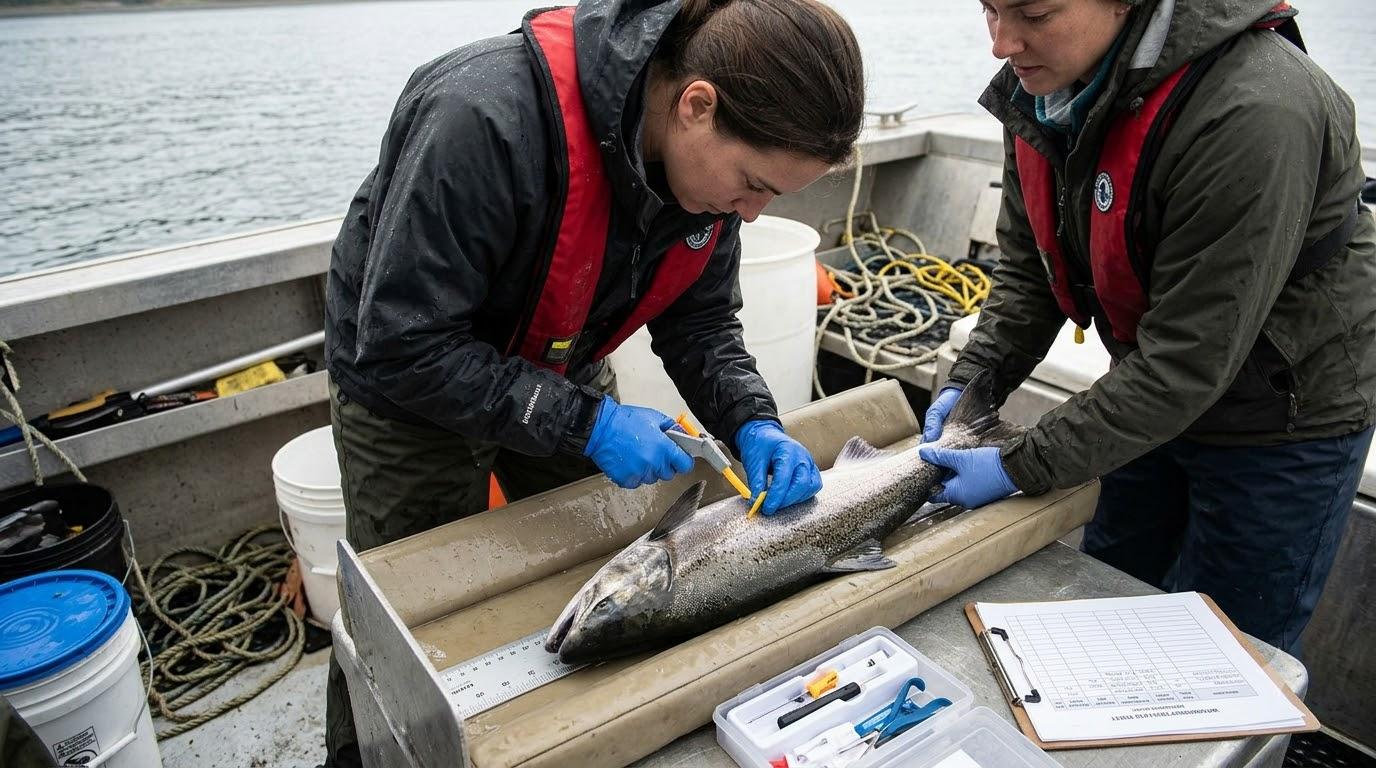
Managing identification equipment becomes increasingly complicated when a fisheries research programme involves several species, different fish sizes, multiple monitoring locations, and more than one field team. A tag that works for one part of the project may not be suitable for another, while inconsistent inventory records can create delays and confusion during sampling.
The solution is to develop an organised procurement and inventory system before fieldwork begins. Researchers evaluating pit tags for multi-species fisheries monitoring programmes should consider physical dimensions, identification standards, reader compatibility, stock availability, batch documentation, and the practical requirements of each study.
This is not simply a purchasing exercise. The way identification equipment is organised can influence the consistency of field procedures and the quality of long-term research records.
1. Why Multi-Species Research Creates Equipment Management Challenges
A project involving one species and one monitoring location may have relatively straightforward equipment requirements.
However, a programme involving several species creates additional considerations.
For example, a research organisation may monitor:
-
Juvenile and adult fish.
-
Different species with different body characteristics.
-
Hatchery-reared and wild populations.
-
Fish across several river systems.
-
Individuals at multiple growth stages.
These groups may not have identical identification requirements.
A single tag model should not automatically be assumed suitable for every fish in the programme.
Researchers need a clear understanding of which products are intended for which study groups.
Without this planning, field teams may accidentally use unsuitable equipment or struggle to identify the correct products during busy sampling periods.
2. Create a Tag Allocation Plan Before Purchasing
One of the most effective ways to prevent inventory problems is to create an allocation plan.
Instead of estimating the total number of tags required for the entire programme, divide the requirement into research activities.
For example:
|
Research activity |
Information required |
|
Juvenile fish monitoring |
Species, size range, approved tag model |
|
Adult fish monitoring |
Species, size range, approved tag model |
|
Hatchery sampling |
Expected processing volume |
|
Field recapture surveys |
Replacement and contingency requirements |
|
Additional research sites |
Site-specific inventory allocation |
This structure makes purchasing decisions easier to review.
It also helps project managers identify whether one team has been allocated equipment that is needed elsewhere.
The allocation plan should be updated when research objectives, sample sizes, or field schedules change.
3. Understand Why Tag Dimensions Matter
Physical dimensions are an important part of product selection.
Different tag models may have different lengths and diameters. These differences can affect their suitability for particular fish and implantation applications.
Researchers should compare the available specifications against the biological requirements of the target species.
Voda IQ lists several models, including:
-
HQ8: approximately 8 mm in length and 1.25 mm in diameter.
-
HQ9: approximately 9 mm in length and 2.12 mm in diameter.
-
HQ12: approximately 12 mm in length and 2.12 mm in diameter.
These are product dimensions, not universal recommendations for fish of particular lengths.
The appropriate choice depends on the intended application, species, fish anatomy, and approved research procedures.
A useful procurement document should record the selected model and the reasons it was approved.
4. Avoid Mixing Identification Standards Across Research Teams
Another challenge appears when research organisations expand existing programmes.
A project may already have readers and identification procedures, but a new team may introduce equipment using a different identification standard.
This can complicate data collection if compatibility has not been verified.
Before purchasing additional equipment, establish:
-
Which identification technology is currently used.
-
Which tag models are already approved.
-
Which reader models are available.
-
Which standards the readers support.
-
Whether the new equipment can operate within the existing configuration.
Do not assume that products are interchangeable simply because they belong to the same broad RFID category.
Technical documentation should be checked for the exact reader and tag combination.
5. Build an Inventory Tracking System That Field Teams Can Actually Use
Inventory systems are often designed for office administration rather than field operations.
A complicated tracking process may be ignored when staff are working under time pressure.
The best inventory approach is one that records essential information without creating unnecessary administrative work.
For each product batch, maintain:
-
Product model.
-
Manufacturer or supplier.
-
Batch or package reference, where available.
-
Quantity received.
-
Quantity allocated.
-
Quantity remaining.
-
Storage location.
-
Purchase date.
-
Intended research application.
-
Responsible team.
This information can be stored in a controlled spreadsheet or an appropriate inventory management platform.
The important requirement is consistency.
Different research teams should use the same product names and model references rather than creating informal descriptions.
6. Separate Tag Inventory Records From Individual Fish Records
This distinction is particularly important.
An inventory record describes the products available to the research programme.
An individual fish record describes a biological specimen and its identification history.
These should be connected where relevant, but they should not be treated as the same type of information.
For example, a research database may contain:
Inventory information
-
Product model.
-
Batch reference.
-
Quantity received.
-
Quantity issued.
Fish information
-
Individual identification code.
-
Species.
-
Measurements.
-
Sampling location.
-
Sampling date.
-
Relevant biological observations.
Maintaining this separation makes it easier to investigate problems involving missing inventory, duplicate records, or incorrect identification entries.
7. Organise Equipment for Different Field Locations
Multi-site research creates logistical challenges.
One monitoring station may require a different quantity or format of identification equipment from another.
A central inventory should therefore be supported by site-specific allocation records.
|
Location |
Allocation information |
Review frequency |
|
Main hatchery |
Expected processing requirements |
Before sampling periods |
|
River station A |
Planned fieldwork quantity |
Before deployment |
|
River station B |
Local equipment allocation |
Before deployment |
|
Research laboratory |
Testing and reserve stock |
During inventory reviews |
The project manager should know which team has received which products.
This helps prevent unnecessary purchases and makes it easier to redistribute available stock when research schedules change.
8. Establish a Procedure for Receiving and Checking New Stock
Inventory errors can begin when new products arrive.
A package may contain a different model from the one ordered, or the quantity received may not match the purchase documentation.
Establish a simple receiving procedure.
A five-step stock verification process
Step 1: Compare the delivery with the purchase order.
Check the product description, model, and quantity.
Step 2: Review the packaging information.
Confirm the product identifiers and relevant documentation.
Step 3: Record the received inventory.
Enter the quantity, product model, and applicable batch details.
Step 4: Allocate storage locations.
Keep different models clearly identified to reduce accidental mixing.
Step 5: Update the central inventory.
Ensure the available quantity reflects the new delivery.
This procedure is especially useful when several people are responsible for purchasing and field preparation.
9. Consider Storage and Handling Requirements
Identification products should be stored according to the supplier's instructions.
Research teams should avoid assuming that every model has identical packaging or handling requirements.
The inventory procedure should cover:
-
Original packaging.
-
Protection from physical damage.
-
Environmental storage conditions.
-
Separation of different models.
-
Access to product documentation.
-
Stock inspection before deployment.
The project should also define who is responsible for issuing equipment to field teams.
Clear responsibility reduces the possibility of stock being misplaced or incorrectly allocated.
10. Plan Procurement Around Research Timelines
Purchasing too late can disrupt a field season.
However, ordering excessive quantities without understanding future requirements can also create unnecessary inventory costs.
A better procurement strategy begins with the research calendar.
Consider the following:
-
Expected sampling dates.
-
Planned numbers of fish.
-
Species-specific requirements.
-
Existing stock.
-
Delivery timelines confirmed by the supplier.
-
Potential changes in project scope.
-
Reserve requirements justified by the research plan.
Maintain a reorder point for regularly used products.
For example, a hatchery that processes fish throughout the year may need a different stock-management approach from a research team conducting one seasonal survey.
Avoid using an arbitrary reorder quantity for every product.
11. Evaluate Suppliers Based on Technical Information, Not Just Availability
Product availability matters, but it should not be the only purchasing consideration.
Researchers should also assess whether a supplier provides enough technical information to support the intended application.
Useful questions include:
-
Are product dimensions clearly documented?
-
Are identification standards specified?
-
Are compatible accessories identified?
-
Is technical assistance available?
-
Can the supplier clarify product differences?
-
Are ordering and delivery arrangements clearly explained?
Voda IQ provides a range of identification products for fish and wildlife research, including different tag formats and associated equipment.
Researchers can review the Voda IQ product catalogue and identification equipment when comparing available options.
Product selection should still be based on the study's technical requirements rather than the supplier's general product descriptions.
12. A Practical Inventory Management Workflow
The following process can help a research organisation standardise inventory management.
-
List every research location and participating team.
-
Identify the target species and study requirements.
-
Approve the relevant tag models.
-
Estimate quantities for each research activity.
-
Check existing inventory.
-
Purchase only the products required to fill the identified gaps.
-
Verify incoming deliveries.
-
Allocate stock to individual locations.
-
Record products issued and remaining.
-
Review stock after each sampling period.
The process should be simple enough for field staff to follow.
An inventory procedure that is too complicated may create more administrative problems than it solves.
13. Two Examples of Better Inventory Planning
Example 1: A hatchery expanding its monitoring programme
A hatchery initially monitors one species but later introduces two additional species.
The original equipment allocation is no longer appropriate because the fish groups have different identification requirements.
The hatchery reviews the research protocols, separates product allocations by study group, and documents the approved models.
The new system makes it easier to prepare equipment before each sampling session.
Example 2: A research organisation operating across several rivers
A research organisation has multiple field teams working independently.
Previously, teams ordered their own equipment, resulting in inconsistent product records and difficulty determining remaining stock.
The organisation introduces a central inventory with site-specific allocations.
Team members can now report the quantity received, quantity used, and remaining stock after fieldwork.
This improves purchasing visibility and reduces administrative confusion.
Illustrative Case Study: Preventing Equipment Shortages During a Multi-Site Survey
Imagine a hypothetical fisheries programme preparing to conduct a seasonal survey at four river locations.
The project manager initially plans to purchase the same quantity of identification products for every location.
However, a review of previous sampling records reveals that the sites have different processing requirements.
One location handles substantially more fish than another, while a third site only conducts occasional monitoring.
The project manager changes the allocation plan, reviews existing stock, and creates separate equipment records for each field team.
The team also establishes a procedure for reporting unused stock after each survey.
Expected outcome: Equipment can be distributed according to actual research requirements, making purchasing decisions more transparent and reducing avoidable shortages.
Transferable lesson: Inventory should reflect the research workload rather than relying on identical allocations for every monitoring location.
Common Inventory Management Mistakes
|
Mistake |
Potential consequence |
Better solution |
|
Ordering before reviewing study requirements |
Unsuitable products or excess stock |
Prepare an allocation plan |
|
Mixing different models |
Incorrect product selection |
Separate and label inventory |
|
Ignoring compatibility |
Equipment integration problems |
Check technical specifications |
|
Tracking only total stock |
Poor visibility between locations |
Maintain site-level records |
|
Failing to verify deliveries |
Incorrect inventory information |
Introduce receiving checks |
|
Purchasing too late |
Delayed fieldwork |
Plan around the research calendar |
Frequently Asked Questions
1. Why should fisheries projects maintain separate inventory records?
Inventory records help teams track product models, quantities, batches, and allocations independently of individual fish identification records.
2. Should different fish species use the same tag model?
Not automatically. Suitability depends on species, fish size, anatomy, tag dimensions, and the approved research protocol.
3. How should researchers track identification products across multiple sites?
Use a central inventory supported by individual location allocations and regular stock updates.
4. Why are product dimensions important?
Dimensions help researchers evaluate whether a particular model is appropriate for the intended application.
5. What should be checked when receiving new stock?
Verify the product model, quantity, packaging information, and relevant documentation against the purchase order.
6. How often should inventory be reviewed?
Review it before major sampling periods and after fieldwork, with more frequent checks where products are used regularly.
Conclusion
Managing identification equipment across a fisheries research programme requires more than maintaining a list of products in storage. Researchers need a structured approach that connects biological requirements, product specifications, inventory allocation, purchasing schedules, and field operations.
A central inventory, clear product identification, site-specific allocation, and regular stock reviews can make multi-team research easier to organise.
The most effective approach is to establish these procedures before the monitoring programme expands, rather than attempting to correct inventory problems during an active field season.
❤️ Support Friends Aim! View a sponsored ad to help cover our website costs. Thanks!
Support Us — Ad 1 Support Us — Ad 2- Arts, Culture & Design
- Automotive & Transport
- Accounting & Finance
- Advertising & Marketing
- Agriculture & Farming
- Business & Consulting
- Books & Publishing
- Building & Construction
- Beauty & Personal Care
- Baby, Kids & Parenting
- Charity & Social Causes
- Crafts & Handmade
- Careers & Jobs
- Computers & Laptops
- Consumer Electronics
- Entertainment & Events
- Food & Beverages
- Delivery & Logistics
- Digital Media & Content
- Dating & Relationships
- E-Commerce & Retail
- Education & Learning
- Energy & Environment
- Fitness
- Fashion & Apparel
- Gaming & Toys
- Government & Legal
- Gardening
- Health & Medical Care
- Home Decor & Furniture
- IT & Software
- Industrial & Tools
- Import & Export
- Jewelry & Watches
- Lifestyle & Wellness
- Legal Services & Law
- News & Media
- News & Current Affairs
- Religion & Faith
- Sports
- Technology
- Travel & Tourism
- Weddings & Events
- Other

 Arabic
 French
 Spanish
 Portuguese
 Deutsch
 Turkish
 Dutch
 Italiano
 Russian
 Romaian
 Portuguese (Brazil)
 Greek