


 About
 Terms
 Privacy
Singapore’s Water Recovery Industry Advances Through Membrane Filtration and Resource Efficiency
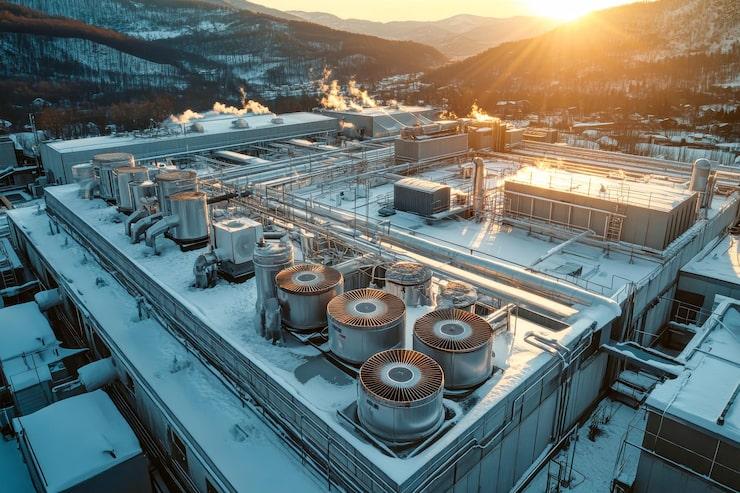
Growing water demand, industrial development, and climate-related pressures are encouraging countries to improve water recycling and recovery capabilities. Water recovery systems help treat used water so it can be reused in industrial processes, commercial facilities, and other applications, reducing dependence on conventional freshwater sources. Singapore has developed an established water-reuse framework through advanced treatment technologies and long-term infrastructure planning. As industries seek more efficient water management, membrane filtration, wastewater recycling, and resource recovery are becoming increasingly important to the country’s water sustainability efforts.
Insights published by Markntel Advisor indicate that the Singapore Water Recovery Systems Market is valued at USD 145 million in 2026 and is projected to reach USD 239 million by 2032, registering a CAGR of 8.7% during 2026–2032. The Singapore Water Recovery Systems Market Research Report identifies membrane filtration as the leading technology segment and examines the trends and opportunities shaping the industry throughout the forecast period.
Membrane Filtration Supports Advanced Water Recovery
Membrane filtration separates particles and contaminants from water by passing it through specialised membranes. Depending on the system design, membrane technologies can remove suspended solids, microorganisms, and other unwanted substances, supporting applications ranging from wastewater treatment to high-grade water reclamation. Microfiltration, ultrafiltration, and reverse osmosis serve different functions within treatment systems and may be combined to achieve the required water quality.
Singapore’s NEWater programme illustrates the role of advanced membrane technologies in water reuse. According to the Ministry of Sustainability and the Environment, NEWater uses microfiltration, reverse osmosis, and disinfection to produce high-grade reclaimed water. The government’s overview of Singapore’s water strategy explains how reclaimed water strengthens water resilience and supports industrial requirements.
For system operators, membrane filtration can help improve treatment consistency and enable water to be reused in applications with specific quality requirements. Efficient filtration and recovery performance are important considerations when evaluating system design, operating expenditure, maintenance requirements, and long-term reliability.
Industrial Demand Strengthens Recovery Requirements
Industrial users can require significant quantities of water for manufacturing, cooling, cleaning, and process operations. Recovering suitable water streams can help businesses reduce freshwater consumption, manage wastewater discharge, and improve resource efficiency. Industries with stringent water-quality requirements may also need advanced treatment systems to support reliable operations.
In Singapore, water reuse is particularly relevant to high-technology manufacturing and other water-intensive activities. Recovered water can support selected industrial uses when it meets the required specifications, helping businesses manage water demand while contributing to broader sustainability objectives.
The country’s experience demonstrates how industrial water recycling can complement centralised water infrastructure. Organisations considering recovery projects need to assess the quality and variability of incoming wastewater, the required output quality, and the potential for reuse within their operations. These factors influence the choice of membrane systems, pretreatment methods, and monitoring equipment.
Infrastructure and Policy Encourage Water Reuse
Singapore’s water-management approach combines treatment infrastructure, technology development, and long-term planning. The national water agency, PUB, continues to improve water reclamation processes and expand infrastructure to support future demand. Its NEWater programme overview describes the development of reclaimed water as a component of Singapore’s water resilience strategy and explains the treatment processes used to produce it.
Infrastructure planning is important because recovery systems need to operate as part of a wider water network. Collection, treatment, storage, distribution, and end-user requirements must be coordinated to ensure recovered water can be used reliably. Advanced monitoring and process automation can also help operators track water quality, identify performance issues, and manage treatment operations.
Investment in research and technology improvements may further support more efficient water recovery. However, each project must be evaluated according to its specific water source, intended application, energy requirements, and operational conditions.
Challenges and Emerging Opportunities
Despite the benefits of water recovery, system operators face challenges involving installation costs, membrane fouling, maintenance, energy consumption, and the management of treatment residuals. Membranes require appropriate cleaning and replacement practices, while pretreatment and process controls can be necessary to maintain performance. The economics of a project depend on both the cost of recovery and the value of the water that can be reused.
These requirements create opportunities for technology providers, engineering firms, equipment manufacturers, and operations and maintenance specialists. Solutions that improve membrane durability, increase recovery rates, reduce energy use, and support digital monitoring may help businesses manage water more efficiently.
Lifecycle cost and operational reliability are likely to remain key considerations for organisations investing in recovery systems. Effective project planning should account for maintenance, water-quality monitoring, system integration, and the needs of end users.
Conclusion
Singapore’s water recovery industry is supported by its established water-reuse infrastructure, industrial requirements, and emphasis on efficient resource management. The report projects growth from USD 145 million in 2026 to USD 239 million by 2032, with membrane filtration identified as the leading technology segment. Continued development will depend on improvements in treatment efficiency, reliable infrastructure, and the commercial value of recovered water. Advanced filtration, industrial recycling, and long-term water planning will remain central to the sector’s future opportunities.
❤️ Support Friends Aim! View a sponsored ad to help cover our website costs. Thanks!
Support Us — Ad 1 Support Us — Ad 2- Arts, Culture & Design
- Automotive & Transport
- Accounting & Finance
- Advertising & Marketing
- Agriculture & Farming
- Business & Consulting
- Books & Publishing
- Building & Construction
- Beauty & Personal Care
- Baby, Kids & Parenting
- Charity & Social Causes
- Crafts & Handmade
- Careers & Jobs
- Computers & Laptops
- Consumer Electronics
- Entertainment & Events
- Food & Beverages
- Delivery & Logistics
- Digital Media & Content
- Dating & Relationships
- E-Commerce & Retail
- Education & Learning
- Energy & Environment
- Fitness
- Fashion & Apparel
- Gaming & Toys
- Government & Legal
- Gardening
- Health & Medical Care
- Home Decor & Furniture
- IT & Software
- Industrial & Tools
- Import & Export
- Jewelry & Watches
- Lifestyle & Wellness
- Legal Services & Law
- News & Media
- News & Current Affairs
- Religion & Faith
- Sports
- Technology
- Travel & Tourism
- Weddings & Events
- Other

 Arabic
 French
 Spanish
 Portuguese
 Deutsch
 Turkish
 Dutch
 Italiano
 Russian
 Romaian
 Portuguese (Brazil)
 Greek