


 About
 Terms
 Privacy
Designing Workshop Ventilation Around Production Processes and Daily Operations
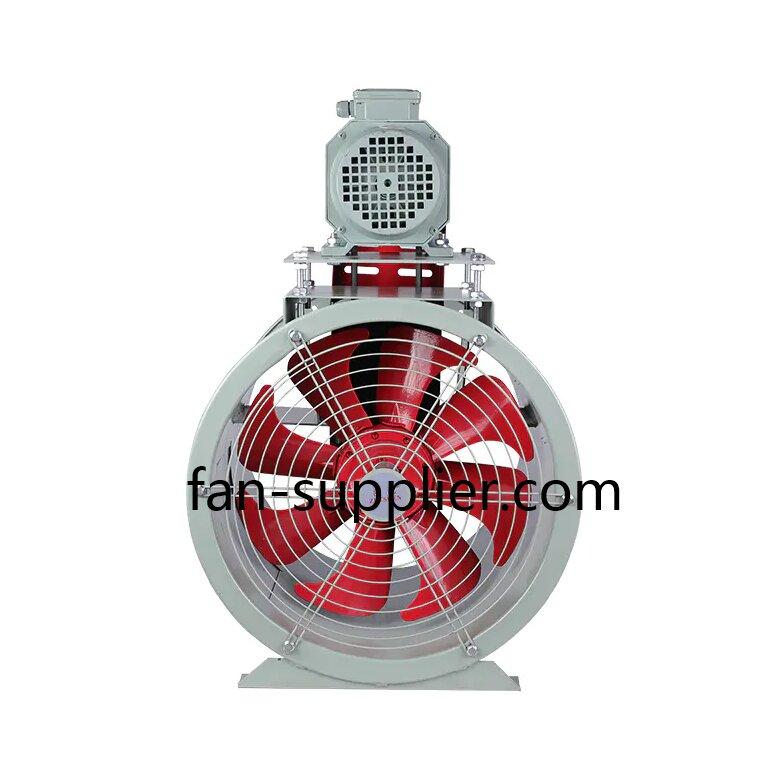
Every workshop develops its own operating environment through the combination of production processes, equipment arrangements, and employee activities. A metalworking space, for example, may experience heat and airborne particles, while an assembly workshop may place greater emphasis on maintaining comfortable conditions around workstations. When businesses evaluate a Workshop Ventilation Fan, they should consider how ventilation supports the entire production workflow rather than viewing it as an isolated piece of equipment. The relationship between fan construction, air distribution, working zones, and maintenance planning can influence the usefulness of the overall installation.
The materials used in fan construction should reflect the conditions in which the equipment will operate. Steel is often considered for structural housings because it provides rigidity and supports industrial applications. Stainless steel may be suitable for environments where moisture or certain corrosive substances require additional resistance. Aluminum components can offer a lighter construction, while engineered materials may be used for selected internal or protective parts. The choice of blade material should account for mechanical strength, environmental exposure, and the characteristics of the air being handled. Protective coatings can help preserve exterior surfaces, but their suitability depends on the surrounding conditions. Buyers should also examine the quality of joints, fasteners, guards, and mounting components because these details contribute to the integrity of the complete assembly.
A useful purchasing process begins with mapping the workshop's production activities. Instead of selecting identical ventilation equipment for every area, facility managers can identify where heat, dust, fumes, or other airborne contaminants are generated. Different work zones may require different approaches to air movement. A machining area, storage section, packaging station, and employee break area do not necessarily share the same ventilation needs. Buyers should also consider how production layouts may change as machinery is relocated or new processes are introduced. Discussing these operational details with an experienced supplier can help identify equipment that fits the current installation while allowing reasonable flexibility for future adjustments.
Airflow management is not simply a matter of increasing air movement throughout a building. The direction and distribution of air can affect whether unwanted substances are carried away from occupied work areas or moved toward other parts of the facility. Ventilation planning should therefore consider the location of air sources, exhaust points, fresh-air openings, and physical barriers. In applications involving process-generated contaminants, local extraction may be necessary alongside general ventilation. The appropriate arrangement depends on the substance, the process, and applicable workplace requirements. A professional assessment can help determine whether the proposed system provides suitable air movement and whether additional filtration or extraction equipment is needed.
From a technical perspective, axial fans use rotating blades to move air along the direction of the fan shaft. Their operating arrangement can support air circulation or extraction where the installation provides a suitable airflow path. The motor drives the impeller, while the housing and blade geometry guide the movement of air through the equipment. In a complete ventilation system, performance is also affected by connected ducts, grilles, filters, bends, and other sources of resistance. Controls may be incorporated to coordinate operation with working schedules or other facility equipment. Where the environment presents particular electrical or mechanical hazards, the fan's protective design and certification must be appropriate for the installation. These requirements should be verified through relevant product documentation and professional guidance.
The experience of workshop personnel depends on how ventilation interacts with their daily tasks. Air movement should support working comfort without creating unnecessary drafts, disturbing lightweight materials, or interfering with sensitive production activities. Equipment placement should leave sufficient room for employees to move safely and for technicians to access nearby machinery. Noise is another consideration, especially in workshops where several machines operate simultaneously. Clear operating instructions and accessible maintenance information can help staff understand normal equipment behavior. Routine inspection should cover visible damage, accumulated dust, loose connections, and unusual changes in sound or vibration. Maintenance work must follow appropriate isolation procedures and the manufacturer's instructions.
The physical design of a ventilation fan also affects how naturally it fits into a workshop. Housing shape, mounting brackets, protective guards, and connection positions determine how the unit can be integrated with walls, ceilings, or supporting structures. A carefully arranged exterior can make the equipment easier to inspect and clean, while a practical mounting design can reduce complications during installation. Surface finishes should suit the working environment and allow technicians to identify visible deterioration. In facilities with multiple ventilation units, consistent product identification and an organized installation layout can make equipment management more straightforward. Design decisions should support accessibility and functional compatibility rather than focus on appearance alone.
Zhejiang Shenli Explosion proof Electromechanical Co., Ltd. provides industrial fan products for businesses planning ventilation systems in different working environments. When discussing a project with the company, buyers can explain their production processes, workshop layout, environmental conditions, maintenance practices, and any special protection requirements. This information can support a more focused evaluation of suitable fan constructions and installation arrangements. For workshops operating in potentially hazardous areas, equipment selection should also be checked against the relevant area classification and safety requirements. Further information about the company's products and industrial ventilation solutions is available at https://www.fan-supplier.com.
❤️ Support Friends Aim! View a sponsored ad to help cover our website costs. Thanks!
Support Us — Ad 1 Support Us — Ad 2- Arts, Culture & Design
- Automotive & Transport
- Accounting & Finance
- Advertising & Marketing
- Agriculture & Farming
- Business & Consulting
- Books & Publishing
- Building & Construction
- Beauty & Personal Care
- Baby, Kids & Parenting
- Charity & Social Causes
- Crafts & Handmade
- Careers & Jobs
- Computers & Laptops
- Consumer Electronics
- Entertainment & Events
- Food & Beverages
- Delivery & Logistics
- Digital Media & Content
- Dating & Relationships
- E-Commerce & Retail
- Education & Learning
- Energy & Environment
- Fitness
- Fashion & Apparel
- Gaming & Toys
- Government & Legal
- Gardening
- Health & Medical Care
- Home Decor & Furniture
- IT & Software
- Industrial & Tools
- Import & Export
- Jewelry & Watches
- Lifestyle & Wellness
- Legal Services & Law
- News & Media
- News & Current Affairs
- Religion & Faith
- Sports
- Technology
- Travel & Tourism
- Weddings & Events
- Other

 Arabic
 French
 Spanish
 Portuguese
 Deutsch
 Turkish
 Dutch
 Italiano
 Russian
 Romaian
 Portuguese (Brazil)
 Greek