


 About
 Terms
 Privacy
What Questions Should You Ask Before Purchasing Used Extrusion Equipment?
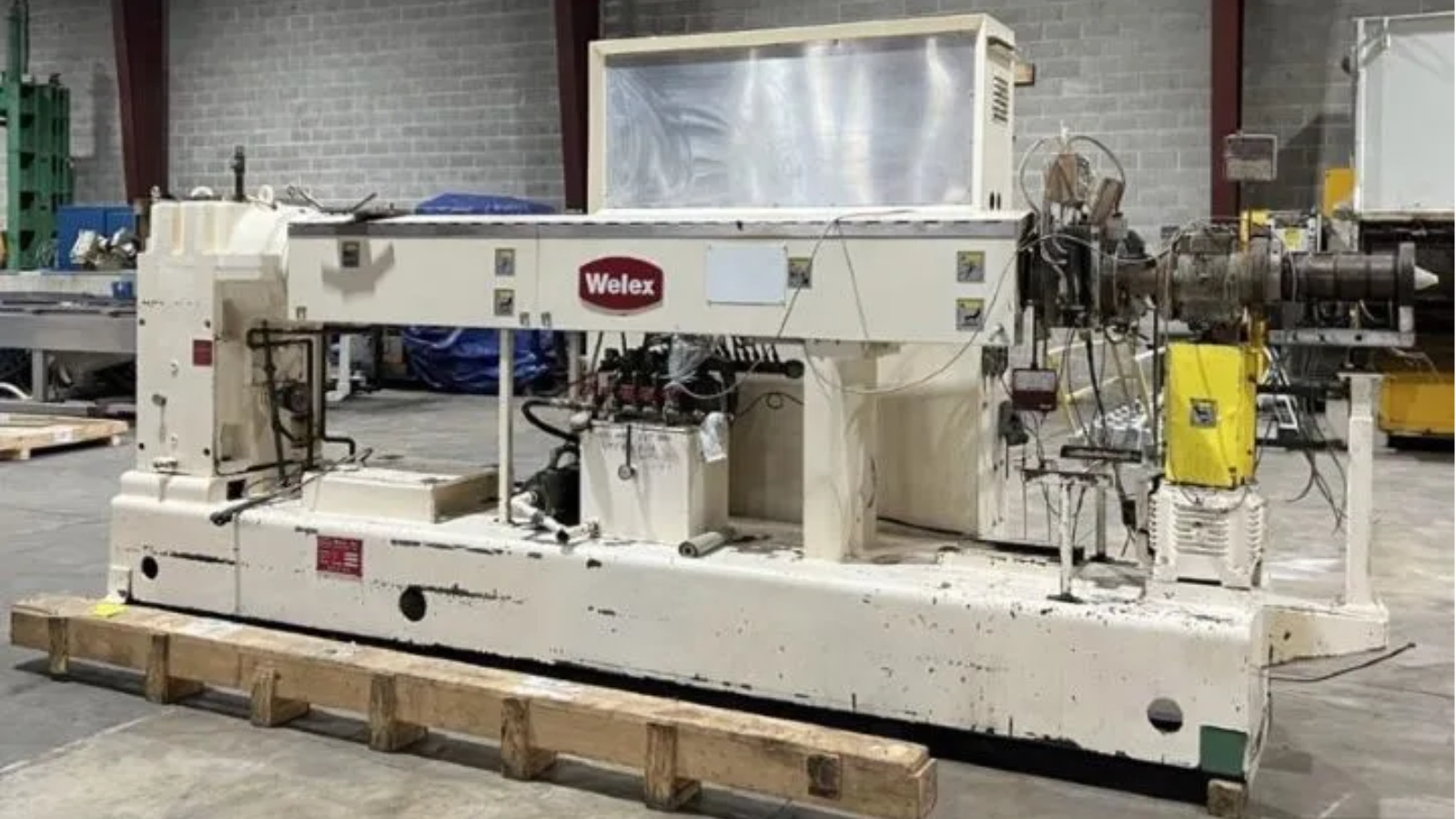
Buying industrial equipment requires careful evaluation because the machine's condition and capabilities can directly affect production efficiency. Before investing in Used Plastic Extrusion Machines, manufacturers should ask sellers specific questions about operating history, technical specifications, maintenance, and included components.
Getting clear answers before making a purchase can help identify potential problems, prevent unexpected expenses, and determine whether the equipment is suitable for the intended application.
1. What Products and Materials Can the Machine Process?
Start by confirming the machine's intended application. Ask which plastic materials it can process and what products it was previously used to manufacture.
The answer should align with your production requirements, whether you manufacture pipes, profiles, sheets, films, or other extruded products.
Also ask whether changes to the screw, barrel, die, or other components would be necessary to accommodate your materials.
2. What Are the Machine's Technical Specifications?
Request the machine's model, manufacturing year, screw diameter, motor power, rated output, and control-system details.
Ask the seller to explain the conditions under which the stated output capacity was measured. Production rates can vary depending on material properties, product dimensions, and process settings.
Compare the specifications against your actual requirements rather than relying only on general capacity claims.
3. What Is the Current Operating Condition?
Ask whether the machine is currently operational and when it was last used in production.
Find out whether the equipment has been tested recently and whether any faults were identified during operation. Request photographs or videos showing the machine running, if available.
If an operational test cannot be arranged, ask why and consider whether an independent inspection is appropriate.
4. What Maintenance or Repairs Have Been Completed?
The machine's maintenance history can reveal potential risks that are not visible in photographs.
Ask whether the screw and barrel have been inspected, whether the gearbox has received servicing, and whether the motor, heaters, sensors, or controls have been repaired or replaced.
Request available maintenance records and details of any recurring issues. This information helps you estimate future maintenance requirements and the cost of restoring the machine to production-ready condition.
5. Which Accessories and Components Are Included?
Confirm whether the purchase includes the die, feeders, dryers, cooling units, calibration equipment, haul-offs, cutters, and other necessary accessories.
For a complete production line, verify that the individual components work together and are compatible with your manufacturing process.
Also ask whether spare parts, tooling, manuals, and electrical diagrams are included. Missing components can add unexpected costs after delivery.
6. Are Replacement Parts and Technical Support Available?
Ask whether compatible replacement parts are available and whether the manufacturer or supplier provides technical assistance.
This is particularly important for older equipment with discontinued controls or specialized components.
Clarify whether the supplier can assist with installation, commissioning, troubleshooting, or operator training. Understanding the available support helps you plan for future maintenance.
7. What Is Included in the Quoted Price?
Ask whether the quotation covers the machine alone or a complete production line. Confirm the payment terms, transportation arrangements, loading costs, and delivery schedule.
Clarify any warranty provisions and the process for addressing undisclosed defects, where applicable. Obtain important commitments in writing.
You should also calculate installation, repairs, tooling, and operating expenses before comparing quotations.
8. Can the Machine Be Inspected Before Purchase?
Ask whether you can visit the facility, arrange a test run, or appoint an independent technician to inspect the equipment.
An inspection should assess mechanical condition, electrical safety, process controls, and relevant auxiliary components.
Document any concerns and request clarification before finalizing the transaction.
Conclusion
Asking detailed questions before purchasing industrial machinery helps manufacturers understand what they are buying and what additional investment may be required. Clear documentation, realistic performance information, and an opportunity to inspect the equipment all contribute to a better purchasing decision.
Before committing to Used Plastic Extrusion Machines For Sale, use a checklist covering specifications, maintenance history, testing, accessories, and total cost. This approach makes it easier to compare suppliers and select equipment that meets your operational needs.
❤️ Support Friends Aim! View a sponsored ad to help cover our website costs. Thanks!
Support Us — Ad 1 Support Us — Ad 2- Arts, Culture & Design
- Automotive & Transport
- Accounting & Finance
- Advertising & Marketing
- Agriculture & Farming
- Business & Consulting
- Books & Publishing
- Building & Construction
- Beauty & Personal Care
- Baby, Kids & Parenting
- Charity & Social Causes
- Crafts & Handmade
- Careers & Jobs
- Computers & Laptops
- Consumer Electronics
- Entertainment & Events
- Food & Beverages
- Delivery & Logistics
- Digital Media & Content
- Dating & Relationships
- E-Commerce & Retail
- Education & Learning
- Energy & Environment
- Fitness
- Fashion & Apparel
- Gaming & Toys
- Government & Legal
- Gardening
- Health & Medical Care
- Home Decor & Furniture
- IT & Software
- Industrial & Tools
- Import & Export
- Jewelry & Watches
- Lifestyle & Wellness
- Legal Services & Law
- News & Media
- News & Current Affairs
- Religion & Faith
- Sports
- Technology
- Travel & Tourism
- Weddings & Events
- Other

 Arabic
 French
 Spanish
 Portuguese
 Deutsch
 Turkish
 Dutch
 Italiano
 Russian
 Romaian
 Portuguese (Brazil)
 Greek