


 About
 Terms
 Privacy
NABL Certified Labs: What Patients Should Check Before Testing
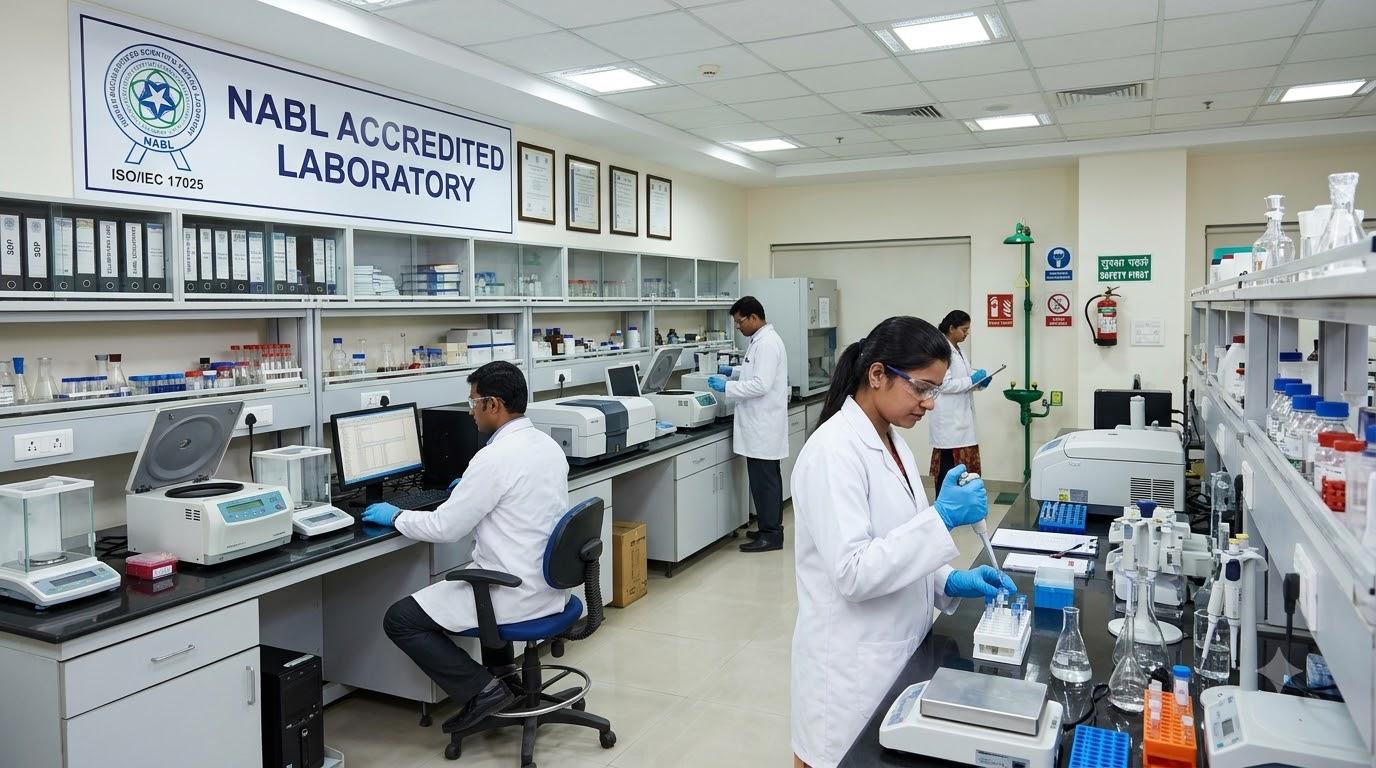
NABL Certified Labs: Understanding Quality Credentials Before Your Next Test
Choosing nabl certified labs for medical testing and quality assurance can help patients make more informed decisions about diagnostic services. The important step is to understand what the credential means, verify the laboratory's current accreditation status, and check whether the specific investigation you need falls within its accredited scope.
The distinction matters because laboratory results often influence medical consultations, treatment monitoring, and decisions about further investigation. Patients do not need to understand laboratory science in depth to make a sensible choice, but they should know which credentials to check and which questions to ask before providing a sample.
Accreditation, Certification, and Quality: What Is the Difference?
People often use the words certified and accredited interchangeably when searching for diagnostic services. In laboratory quality management, however, these terms can refer to different forms of assessment.
NABL, the National Accreditation Board for Testing and Calibration Laboratories, provides accreditation services for laboratories against applicable standards. For medical laboratories, ISO 15189 addresses quality and competence in medical testing.
Accreditation involves an assessment against defined requirements and a documented scope. A separate management-system certification may evaluate whether an organisation follows a particular management standard. These credentials should not automatically be treated as equivalent.
When evaluating a medical testing provider, look for the actual accreditation status and scope rather than relying on the wording of a website headline.
Why the scope is important
A laboratory may perform many different investigations, but its accreditation scope identifies the activities covered by the relevant assessment.
The scope may specify particular disciplines, methods, or investigations. Therefore, the fact that a provider has an accredited laboratory does not automatically establish that every service advertised by the organisation is included.
This distinction is particularly relevant when a patient requires a specialised investigation, a test performed at another branch, or a service arranged through a referral laboratory.
How Laboratory Quality Affects Your Test Experience
A laboratory result is the end product of several connected steps. Quality depends on more than the analytical equipment used during testing.
Before the sample is collected
The correct test must be identified, the patient must receive appropriate preparation instructions, and the specimen requirements must be understood.
For example, some investigations depend on fasting or a particular collection time, while others do not. Incorrect preparation can make a result harder to interpret or require another appointment.
During collection and transport
The specimen must be correctly identified and collected using suitable procedures. It may also need specific storage or transport conditions.
A collection service should explain any requirements that could affect the sample. For time-sensitive or specialised investigations, ask whether the proposed collection method is appropriate.
During analysis and reporting
Laboratories use defined procedures to analyse samples and assess whether results meet relevant quality requirements. Reports should identify the investigation and provide the information needed for appropriate interpretation.
Even with suitable laboratory procedures, no test is perfect. Analytical limitations, biological variation, sample quality, and the timing of testing can all affect the meaning of a result.
After the report is issued
A laboratory provides test results; it does not necessarily provide a complete diagnosis. A clinician interprets the findings in the context of symptoms, examination findings, medical history, and other relevant evidence.
Patients should seek medical advice when a result is unexpected, abnormal, or difficult to understand.
A Practical Framework for Checking Laboratory Credentials
Use this framework when comparing providers.
|
What to check |
Useful question |
Why it matters |
|
Accreditation status |
Is the accreditation current? |
Prevents reliance on outdated claims |
|
Laboratory identity |
Which organisation and address are covered? |
Establishes whether the credential matches the facility |
|
Scope |
Is my requested investigation covered? |
Avoids assuming that every advertised test is accredited |
|
Testing arrangements |
Is the test performed here or referred elsewhere? |
Clarifies who will analyse the sample |
|
Preparation |
Do I need fasting or timed collection? |
Helps reduce avoidable collection problems |
|
Reporting |
When and how will the result be provided? |
Supports planning for consultations |
|
Clinical support |
Who should interpret my result? |
Separates laboratory reporting from diagnosis |
This framework is useful for routine blood investigations as well as specialised laboratory testing. The questions may take only a few minutes to ask, but they can clarify important details before an appointment.
Six Steps to Verify a Laboratory Before Booking
-
Identify your exact test. Use the name on the doctor's prescription. If the test name is unclear, ask the prescribing clinician to clarify it rather than selecting a similar-sounding investigation.
-
Find the actual testing laboratory. Establish whether the facility you contact performs the test itself or collects the sample for another laboratory.
-
Review official accreditation information. Check the laboratory's identity, current status, relevant standard, and documented scope using appropriate official sources.
-
Ask about specimen requirements. Confirm whether the test requires fasting, timed collection, a particular specimen type, or any other preparation.
-
Clarify the practical arrangements. Ask about appointment availability, charges, expected reporting time, and how the report will be delivered.
-
Plan for clinical follow-up. Confirm when you need the result and arrange to discuss it with the healthcare professional who requested the investigation.
Do not stop prescribed medicines or make significant dietary changes solely to prepare for testing unless your clinician has advised you to do so.
Example 1: Choosing a Laboratory for Regular Monitoring
A patient needs periodic blood testing as part of ongoing medical care. The patient has previously used a nearby facility but discovers that another provider offers home collection.
Rather than switching solely for convenience, the patient confirms that the required investigation is available, checks the relevant accreditation details, and asks how samples collected at home are handled.
The patient also verifies that reports can be accessed in time for scheduled follow-up appointments. The final choice balances quality verification, convenience, and continuity of care.
The lesson is that the best arrangement depends on the patient's actual needs. A familiar facility can remain suitable, while a new provider may be useful if its services and credentials meet the same requirements.
Example 2: A Specialised Test Is Not Listed Online
Consider someone who has been prescribed a specialised blood investigation that does not appear on a local diagnostic centre's website.
The patient should contact the provider with the exact test name and ask whether it is available, where it will be performed, and whether any special preparation or collection timing applies.
If the test is referred elsewhere, the patient should clarify the receiving laboratory and the expected reporting time. If the provider cannot establish these details, contacting another laboratory may be more practical than booking an uncertain substitute.
This approach avoids choosing an alternative test based on an assumption that two similarly named investigations are interchangeable.
Illustrative Case Study: Avoiding Confusion Between Quality Claims
Initial problem: A patient compares two diagnostic providers. Both advertise high-quality testing, but their websites use different descriptions of their credentials.
Circumstances: The patient assumes that the wording on both websites means exactly the same thing and prepares to book without further checks.
Solution: The patient asks each provider for the specific accreditation or certification details, identifies the actual testing laboratory, and checks the scope relevant to the prescribed investigation.
Expected outcome: The patient gains a clearer basis for comparing the providers without relying on ambiguous marketing language.
Practical lesson: A credential should be evaluated by its issuing body, applicable standard, validity, and scope—not simply by the label used in promotional content.
This is an illustrative scenario, not a documented patient outcome.
What Accreditation Does Not Tell You
Accreditation is an important quality indicator, but it should not be used as the only selection criterion.
It does not establish that every advertised service is included in the accredited scope. It does not mean that every result will be available immediately, that every test is suitable for every person, or that a laboratory can eliminate all possible errors.
It also does not replace clinical judgement. A technically valid result may still require repeat testing or further investigation when it conflicts with symptoms or other findings.
Patients should therefore combine credential verification with practical checks about test availability, sample handling, turnaround time, and the suitability of the requested investigation.
Exploring EcoTown Diagnostics
EcoTown Diagnostics publishes information about its laboratory testing and diagnostic services in Bangalore. Its website describes the provider's laboratory services and gives contact information for its Ramamurthy Nagar and Kalyan Nagar locations. <Cite refs={["turn875438search2","turn875438search8","turn875438search4"]}/>
You can review its services through the official EcoTown Diagnostics website.
If you are considering the provider, contact the relevant location to confirm the current accreditation documentation, the scope applicable to your test, any referral arrangements, preparation instructions, and reporting timelines. These checks should be completed before relying on a general accreditation statement.
Mistakes That Can Undermine an Otherwise Good Choice
-
Relying on a logo alone: Ask for current accreditation details and verify the relevant scope.
-
Assuming all branches are equivalent: Check the actual facility and where your sample will be processed.
-
Choosing tests without medical guidance: More testing is not always better; unnecessary investigations can create confusion and additional costs.
-
Ignoring preparation instructions: Ask for clarification before the appointment rather than guessing.
-
Expecting identical turnaround times: Different investigations can require different processing periods.
-
Interpreting results independently: Reference ranges provide context but do not establish a diagnosis by themselves.
Conclusion
Understanding laboratory credentials helps patients move beyond promotional claims and make better-informed decisions about diagnostic testing. Verify the issuing organisation, current accreditation status, relevant scope, and actual testing location. Then consider sample handling, preparation, reporting, and access to appropriate clinical follow-up.
When evaluating nabl certified labs, the goal is not simply to find a facility displaying a quality credential. It is to establish whether the specific service you need is supported by appropriate quality arrangements and fits your healthcare requirements.
Frequently Asked Questions
What does NABL stand for?
NABL stands for the National Accreditation Board for Testing and Calibration Laboratories. It provides accreditation services for laboratories against applicable standards and requirements.
Are accreditation and certification the same thing?
No. They can refer to different assessment arrangements. Accreditation evaluates competence within a defined scope, while certification generally confirms conformity with a specified standard or set of requirements. The exact credential should always be checked.
Does a laboratory's accreditation cover every investigation?
Not necessarily. Accreditation applies to a documented scope. Patients should verify whether the particular test and testing location are included.
Is ISO 15189 relevant to medical laboratories?
Yes. ISO 15189 is a standard addressing quality and competence in medical laboratories. The applicable accreditation status and scope should still be verified.
Should I choose a laboratory before speaking to my doctor?
You can compare providers in advance, but the appropriate investigation should be determined with suitable clinical guidance. Ask your clinician if you are unsure which test is required.
What should I do if my report is abnormal?
Discuss the findings with the healthcare professional who requested the test. Interpretation depends on the result, symptoms, medical history, and other relevant information.
❤️ Support Friends Aim! View a sponsored ad to help cover our website costs. Thanks!
Support Us — Ad 1 Support Us — Ad 2- Arts, Culture & Design
- Automotive & Transport
- Accounting & Finance
- Advertising & Marketing
- Agriculture & Farming
- Business & Consulting
- Books & Publishing
- Building & Construction
- Beauty & Personal Care
- Baby, Kids & Parenting
- Charity & Social Causes
- Crafts & Handmade
- Careers & Jobs
- Computers & Laptops
- Consumer Electronics
- Entertainment & Events
- Food & Beverages
- Delivery & Logistics
- Digital Media & Content
- Dating & Relationships
- E-Commerce & Retail
- Education & Learning
- Energy & Environment
- Fitness
- Fashion & Apparel
- Gaming & Toys
- Government & Legal
- Gardening
- Health & Medical Care
- Home Decor & Furniture
- IT & Software
- Industrial & Tools
- Import & Export
- Jewelry & Watches
- Lifestyle & Wellness
- Legal Services & Law
- News & Media
- News & Current Affairs
- Religion & Faith
- Sports
- Technology
- Travel & Tourism
- Weddings & Events
- Other
❤️ Support Friends Aim! View a sponsored ad to help cover our website costs. Thanks!
Support Us — Ad 1 Support Us — Ad 2
 Arabic
 French
 Spanish
 Portuguese
 Deutsch
 Turkish
 Dutch
 Italiano
 Russian
 Romaian
 Portuguese (Brazil)
 Greek