


❤️ Support Friends Aim! View a sponsored ad to help cover our website costs. Thanks!
Support Us — Ad 1 Support Us — Ad 2 About
 Terms
 Privacy
What to Expect During a Professional Hair Consultation
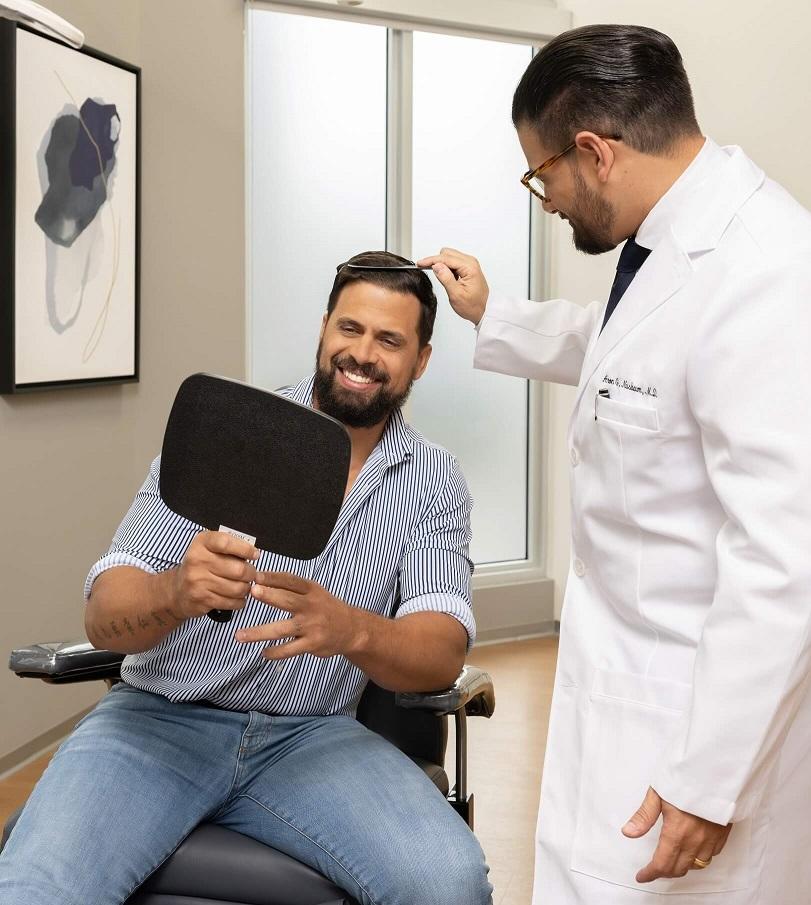
Taking the first step toward hair restoration often feels uncertain for people who have not navigated this process before. Knowing what to expect during a professional hair consultation transforms an anxious unknown into a manageable and productive first step. A well-conducted consultation is far more than a sales conversation about products or procedures. It is a comprehensive clinical and aesthetic evaluation that forms the foundation of every effective hair restoration journey. Understanding the process helps prospective patients prepare effectively and engage with confidence.
The Purpose of a Professional Hair Consultation
A professional hair consultation serves multiple distinct purposes that together create the foundation for effective treatment. It establishes the clinical basis of the patient’s hair loss through examination, questioning, and diagnostic assessment. It reveals the individual aesthetic goals and expectations that will guide treatment selection and design. It builds the patient-provider relationship that ongoing treatment management depends upon. And it creates the informed consent framework necessary for any responsible treatment to begin.
The consultation is also a bidirectional information exchange rather than a passive presentation. Patients provide information about their medical history, hair loss timeline, previous treatments, and personal goals. Providers offer clinical assessment, diagnostic findings, treatment options, and realistic expectation setting. When both parties engage fully and honestly with this exchange, the resulting treatment plan is as well-matched to the individual’s needs as possible.
Who Conducts Professional Hair Consultations
Professional hair consultations may be conducted by specialists from several different clinical backgrounds. Dermatologists with specific expertise in hair disorders, trichologists, and hair restoration surgeons all conduct comprehensive consultations. In non-surgical restoration contexts, trained hair restoration technicians may also conduct initial consultations within their scope of practice. Understanding the professional background of the person conducting the consultation helps patients interpret the advice they receive appropriately.
Consultations conducted by surgeons will naturally include surgical options alongside non-surgical alternatives. Those conducted by trichologists or non-surgical specialists will focus primarily on non-invasive approaches. Patients seeking a complete picture of all available options may benefit from consultations with providers from more than one background. This comparison shopping approach is entirely appropriate and often produces better-informed final decisions.
The Medical History and Symptom Assessment Component
Every comprehensive hair consultation begins with a thorough medical history and symptom assessment. The provider will ask detailed questions about when hair loss was first noticed and how it has progressed over time. Family history of hair loss on both maternal and paternal sides provides important genetic context. Current medications, supplements, and health conditions may all contribute to hair loss and must be disclosed completely.
Lifestyle factors including diet, stress levels, sleep quality, and exercise habits are all clinically relevant to hair health assessment. Nutritional deficiencies, chronic stress, and sleep disruption can all contribute to hair loss independently of or alongside genetic factors. Women who consult about hair loss should be prepared to discuss their menstrual cycle history, contraceptive use, and hormonal health. These reproductive and hormonal factors frequently influence the type and severity of female hair loss patterns.
Hormonal Health as a Hair Loss Factor
Hormonal health is a particularly important component of hair loss assessment that a thorough consultation will explore in depth. Thyroid dysfunction, androgenetic hormonal patterns, and reproductive hormonal changes are all significant contributors to hair loss. Women experiencing hair thinning during perimenopause or menopause are experiencing a direct hormonal consequence rather than purely a genetic one. Understanding the hormonal dimension of their hair loss guides appropriate treatment selection beyond hair-specific interventions.
Men whose hair loss has accelerated alongside other potential low-testosterone symptoms deserve evaluation of both concerns simultaneously. The hormonal basis of androgenetic alopecia in men involves DHT sensitivity that hormonal assessment helps clarify. Blood testing ordered during or following a hair consultation may reveal nutritional deficiencies, hormonal imbalances, or thyroid dysfunction that significantly influence treatment planning. This medical dimension of hair consultation distinguishes comprehensive professional care from purely cosmetic approaches.
The Physical Scalp and Hair Examination
The physical examination component of a professional hair consultation is technically comprehensive and diagnostically informative. The provider will examine the scalp under magnification using dermoscopy to assess follicle density, miniaturization patterns, and scalp health. Dermoscopy reveals the follicle-level changes that are invisible to the naked eye but are diagnostically critical. The number of hairs per follicular unit and the proportion of miniaturized versus terminal follicles are particularly informative findings.
Scalp health assessment identifies conditions that may be contributing to hair loss or that would affect treatment response. Seborrheic dermatitis, scalp psoriasis, folliculitis, and chronic inflammation can all impair follicle function independently of genetic factors. These conditions must be identified and addressed as part of any comprehensive hair restoration program. A provider who overlooks scalp health as a treatment factor is missing an important component of comprehensive care.
Pattern Classification and Its Treatment Implications
Hair loss pattern classification is a critical consultation component that guides treatment approach and realistic expectation setting. The Norwood-Hamilton scale classifies male pattern loss from minimal recession to advanced baldness across seven defined stages. The Ludwig scale provides equivalent classification for female diffuse hair thinning from minimal to advanced severity. Understanding where an individual falls on these scales helps both provider and patient identify appropriate treatment targets and realistic achievable outcomes.
Pattern classification also reveals information about the likely progression of hair loss without intervention. Early-stage patients who begin treatment promptly have the most opportunities for meaningful preservation and improvement. Those with more advanced loss may focus treatment goals on maintaining remaining hair and improving its quality rather than recovering lost density. Honest pattern classification and realistic expectation setting at the consultation stage prevents disappointment and builds productive long-term treatment relationships.
Discussing Non-Surgical Treatment Options
The treatment options discussion is often the component of the consultation that patients most anticipate and find most valuable. For non-surgical approaches, the provider will discuss medical treatments, regenerative therapies, energy-based technologies, and hair system options based on the individual’s specific assessment findings. Each option will be explained in terms of its mechanism of action, expected results, treatment timeline, maintenance requirements, and cost implications.
Non-surgical hair replacement encompasses a broad spectrum of approaches that the consultation will help narrow to the most appropriate options for each individual. Medical treatments including finasteride and minoxidil are typically discussed for patients with androgenetic alopecia. PRP therapy options are presented for patients whose follicle assessment suggests viable candidates for regenerative stimulation. Hair system options are discussed for patients who want immediate visual improvement while biological treatments take effect.
Asking the Right Questions During the Consultation
Knowing what questions to ask during a hair consultation significantly improves its value and productivity. Asking about the provider’s specific experience with your type of hair loss and your demographic background is entirely appropriate. Requesting before-and-after documentation of actual patients treated by this provider for similar presentations provides realistic outcome expectations. Asking how results will be monitored and how the treatment plan will be adjusted based on response demonstrates engagement and encourages thorough provider responses.
Financial questions including total treatment costs, maintenance requirements, and financing options should be addressed explicitly during the consultation. Understanding the complete financial commitment before beginning treatment prevents interruption due to unexpected costs. Patients who leave a consultation with clear understanding of what they are committing to financially, practically, and medically are best positioned for successful long-term treatment adherence.
Photographic Documentation and Baseline Establishment
Standardized photographic documentation is a component of professional hair consultations that is easy to underestimate in its importance. Baseline photographs taken under standardized lighting and positioning conditions create the objective reference point against which all future progress is measured. Without this baseline, both provider and patient rely on subjective impression to evaluate treatment effectiveness. With standardized baseline photography, objective comparison reveals changes that subjective assessment consistently misses.
Some consultation settings use additional technology including trichoscopy, phototrichogram assessment, or AI-assisted density analysis to establish more detailed baselines. These technologies provide quantitative measurements of hair density that enable precise tracking of treatment response. Patients who receive consultations that include comprehensive baseline documentation are better positioned to evaluate the objective effectiveness of their treatment over time.
Setting Realistic Expectations Before Treatment Begins
Setting realistic expectations during the consultation is one of the most valuable services a professional provider delivers. Honest discussion of what is realistically achievable given the individual’s current assessment findings prevents future disappointment. A patient with advanced hair loss who expects complete restoration will be disappointed regardless of how effective the treatment is within its appropriate scope. A patient who understands achievable goals maintains realistic satisfaction and continued commitment to treatment.
Timelines for expected results deserve explicit discussion and realistic framing during the consultation. Most non-surgical treatments require three to six months before meaningful visible results become apparent. Full results from comprehensive treatment programs typically require twelve months or more to become fully established. Patients who understand these timelines before beginning treatment maintain their commitment through the period necessary to realize the outcomes that consultation discussed.
Conclusion
A professional hair consultation is a comprehensive clinical and aesthetic assessment that forms the indispensable foundation of successful hair restoration. Medical history review, physical scalp examination, pattern assessment, treatment option discussion, baseline documentation, and expectation setting together create the complete consultation experience. Patients who prepare thoughtfully, ask informed questions, and engage honestly with the process receive the most individualized and effective treatment recommendations. Every person considering hair restoration deserves access to a thorough, honest, and genuinely personalized professional consultation that sets their treatment journey on the most successful possible course.
❤️ Support Friends Aim! View a sponsored ad to help cover our website costs. Thanks!
Support Us — Ad 1 Support Us — Ad 2- Art & Design
- Automotive & Transport
- Accounting & Finance
- Advertising & Marketing
- Agriculture & Farming
- Apps, Software & AI
- Business & Consulting
- Books & Publishing
- Building & Construction
- Beauty & Personal Care
- Baby & Kids Products
- Charity & Social Causes
- Careers & Jobs
- Computers & Laptops
- Consumer Electronics
- Crafts & Handmade
- Crafts
- Entertainment & Events
- Food & Beverages
- Data Science & IT
- Delivery & Logistics
- Digital Media & Content
- Dating & Relationships
- E-Commerce & Retail
- Education & Learning
- Energy & Environment
- Film & Television
- Fitness & Sports
- Fashion & Apparel
- Financial Services
- Gaming & Consoles
- Government & Legal
- Gardening
- Health & Medical Care
- Home Decor & Furniture
- IT & Software
- Industrial & Tools
- IT & Web Services
- Import & Export
- Jewelry & Watches
- Literature
- Lifestyle & Wellness
- Legal Services & Law
- Luxury & Premium Goods
- News & Media
- News & Current Affairs
- Other
- Religion & Faith
- Tech & Telecom
- Travel & Tourism
- Weddings & Events
❤️ Support Friends Aim! View a sponsored ad to help cover our website costs. Thanks!
Support Us — Ad 1 Support Us — Ad 2
 Arabic
 French
 Spanish
 Portuguese
 Deutsch
 Turkish
 Dutch
 Italiano
 Russian
 Romaian
 Portuguese (Brazil)
 Greek