


Already Own the Land? Here’s What to Know Before You Borrow to Build
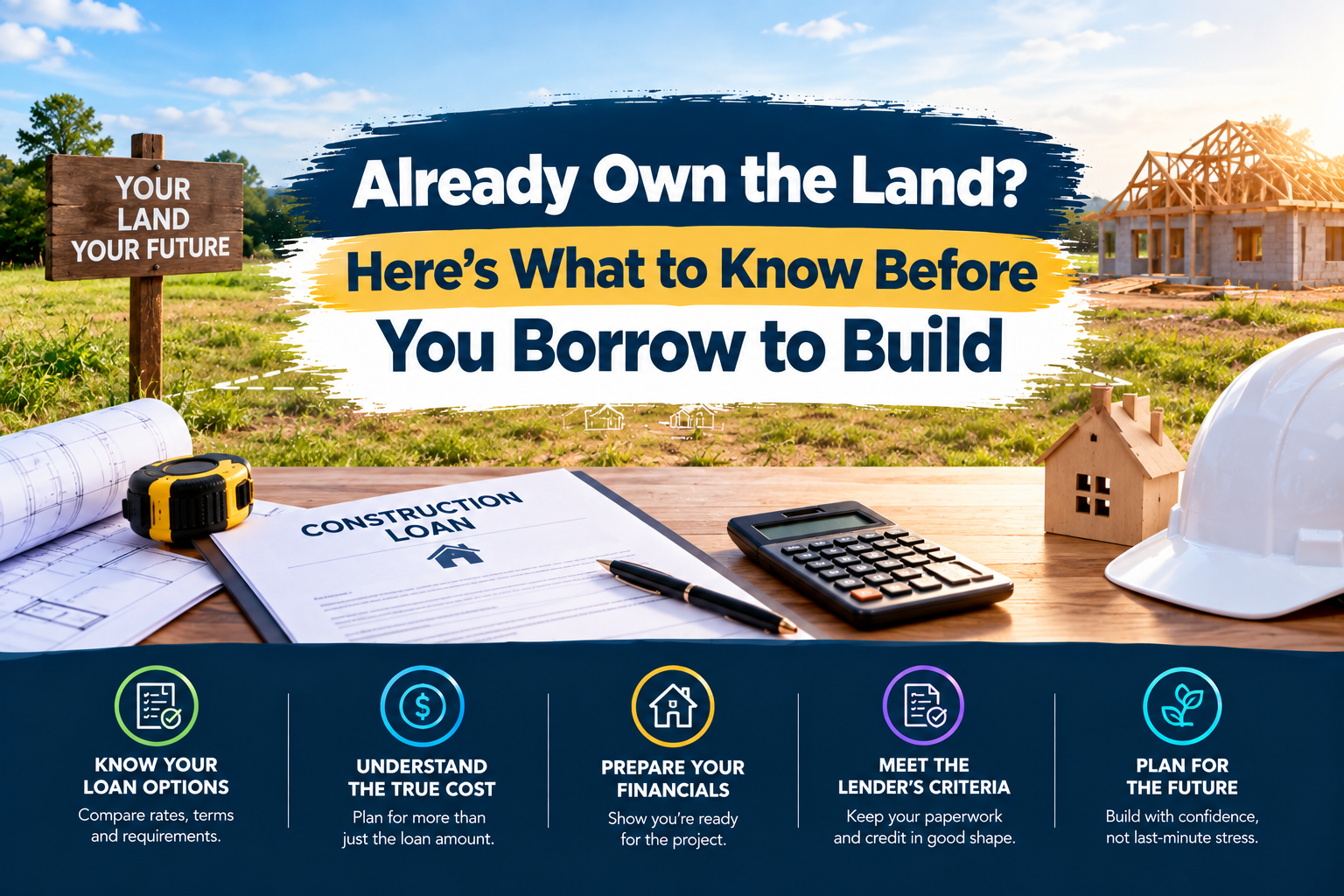
Owning your land feels like crossing the first big hurdle. The location is chosen, the paperwork is settled, and the dream is no longer just a sketch. But when it’s time to actually build, many owners hit a wall: the cost of construction is a different mountain altogether.
Financing is the bridge between a vacant lot and a finished structure. The good news is that owning the land puts you in a stronger position than most borrowers. This guide walks through how that works, what lenders look for, and how to avoid the mistakes that slow people down.
Why Owning the Land Helps You Get Financing
Your Land Counts as Equity
Lenders like security. When you already own the lot, its value can often be applied toward your down payment, which reduces the cash you need to bring to the table. A paid-off or mostly paid-off parcel can make your application noticeably stronger.
Less Risk Means Better Conversations
A borrower with land in hand looks committed and stable. That doesn’t guarantee approval, but it gives you a firmer footing when you sit down with a lender to talk terms.
How a Construction Loan Differs From a Regular Mortgage
It’s Short-Term by Design
A construction loan isn’t a thirty-year commitment. It usually runs about a year, covering the building phase only. Once the structure is finished, you either repay the balance or convert it into a permanent mortgage, depending on the loan type.
Money Arrives in Stages
Instead of receiving everything upfront, you get funds in installments called draws. Each draw is released as work reaches certain milestones, such as the foundation, framing, or major systems. This protects the lender and keeps spending tied to real progress.
If you’d like a deeper walkthrough of the process, this explanation of how a construction loan works when you own the land covers the steps and requirements in detail.
What Lenders Typically Want to See
Proof of Financial Stability
Expect to share income records, your credit history, and details about your assets. The lender needs confidence that you can repay, even if the project hits a snag.
A Down Payment
Requirements vary by lender and loan type, so ask early what they expect. Your land equity may cover some or all of it.
A Solid Construction Plan
This is where many applications stall. Lenders want complete drawings, a clear timeline, and a detailed breakdown of materials and labor. A vague plan raises red flags because it suggests the budget could spiral.
An Appraisal
The lender will assess what the finished property is likely to be worth. If the numbers don’t line up with the loan amount, you may need to adjust the scope or find extra funds.
A Simple Roadmap From Idea to Approval
Step 1: Find Out What Your Land Is Worth
Get a realistic valuation so you know how much equity you’re bringing in.
Step 2: Build a Detailed Plan and Budget
Gather your drawings, pin down your schedule, and itemize costs. The more precise this is, the smoother the approval tends to go.
Step 3: Compare Lenders
Rates, fees, draw procedures, and flexibility differ from one lender to another. Talk to more than one before committing.
Step 4: Apply for Pre-Approval
Pre-approval shows you roughly how much you can borrow and under what terms, which helps you plan realistically.
Step 5: Understand the Draw Schedule
Know exactly when funds will be released and what inspections are required. Surprises here can stall your crew and delay the job.
Costs and Rates: What to Expect
Construction loans generally cost more than traditional mortgages. Interest rates are often variable, which means your payments can rise or fall over time. They also carry more risk for lenders since there’s no finished home to claim if something goes wrong, which is part of why the pricing is higher.
Budget for interest during construction, loan fees, inspection costs, and a cushion for the unexpected. Running tight on every line item is risky when rates can shift mid-project.
Why Accurate Cost Estimates Matter So Much
Your cost estimate is more than a planning tool. It’s a core document in your loan application. Lenders use it to decide how much to lend, and you’ll use it to keep spending under control once building begins.
An inflated or sloppy estimate can leave you underfunded halfway through. That’s why many owners work with a professional construction estimating company to produce detailed, reliable numbers before they approach a lender.
Mistakes Worth Avoiding
Underestimating the Total Cost
Forgetting permits, site prep, utilities, or contingency funds is one of the most common errors. Build a buffer into your budget from the start.
Skipping Lender Comparisons
Taking the first offer you get can cost you thousands over the life of the loan. A little shopping around pays off.
Starting Without a Finished Plan
Changes mid-build cost money and may require lender approval. Settle your design and scope before you break ground.
Final Thoughts
Owning your land gives you a real advantage, but the loan process still rewards preparation. Know your numbers, assemble a thorough plan, compare your options, and understand how the draw schedule will work. With those pieces in place, financing stops being a source of stress and becomes a tool for getting your project built.
For a step-by-step breakdown of the process, read the full guide on how a construction loan works when you own the land before you speak with a lender.

 Arabic
 French
 Spanish
 Portuguese
 Deutsch
 Turkish
 Dutch
Dutch
 Italiano
 Russian
 Romaian
 Portuguese (Brazil)
 Greek
Greek